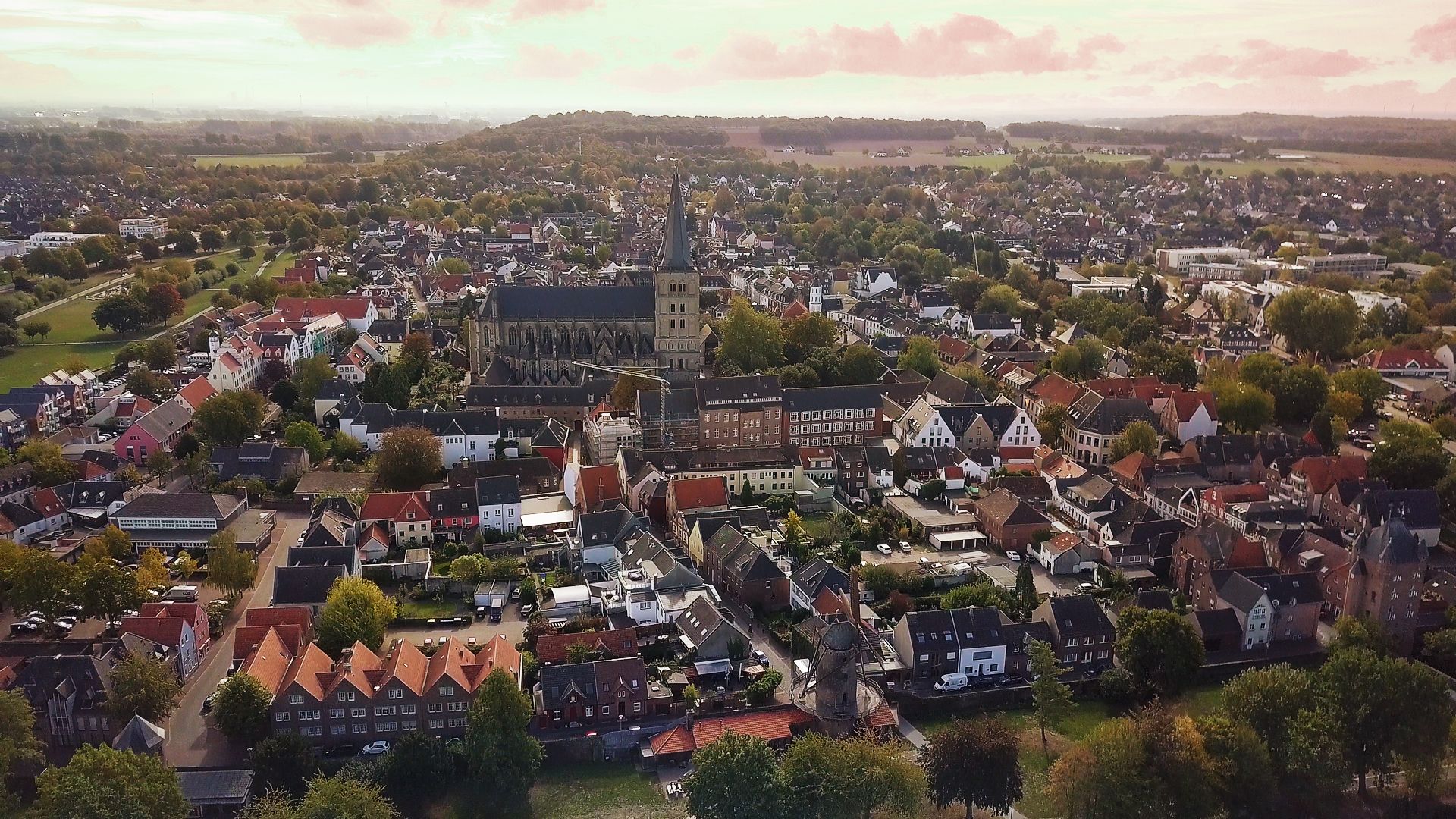
The special thing about the Roman city of Xanten is that it was never built over. As a result, its remains lie hidden in the ground just a few centimetres below the meadows. A real stroke of luck for archaeology. In the city's heyday, in the second century AD, around ten thousand men and women lived here. Temples, baths, residential buildings, workshops, accommodation - countless original finds fit together like mosaic stones to form a picture of life in one of the largest metropolises in the Germanic provinces.
The stones that the Romans brought to Colonia Ulpia Traiana, named after its founder, thanks to the nearby harbour, came from the Rhine slate mountains, but Italian and Greek marble was also brought to the stone-poor Lower Rhine.
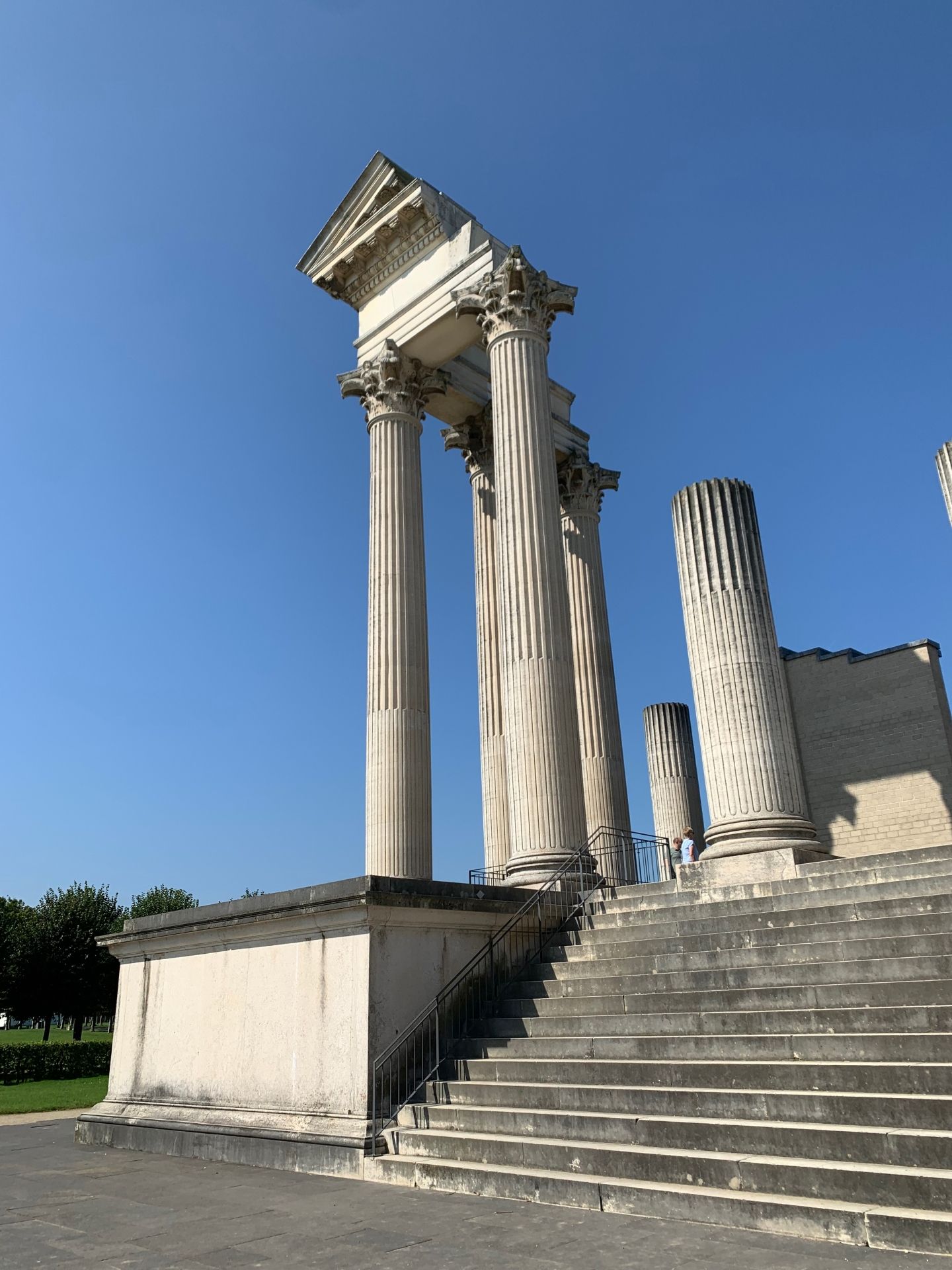
I climb the steps to the harbour temple, a fragment of which was rebuilt thirty years ago in its original size and using the original materials, lean my head far back and get an idea of the dimensions of the buildings in this city almost two thousand years ago from the height and scale of the columns alone. The uncovered thermal baths, which can be visited in the Roman Museum, also tell an eloquent story of the dolce vita of the city's inhabitants, including many former soldiers who had settled on the Rhine with their families after completing their national service.
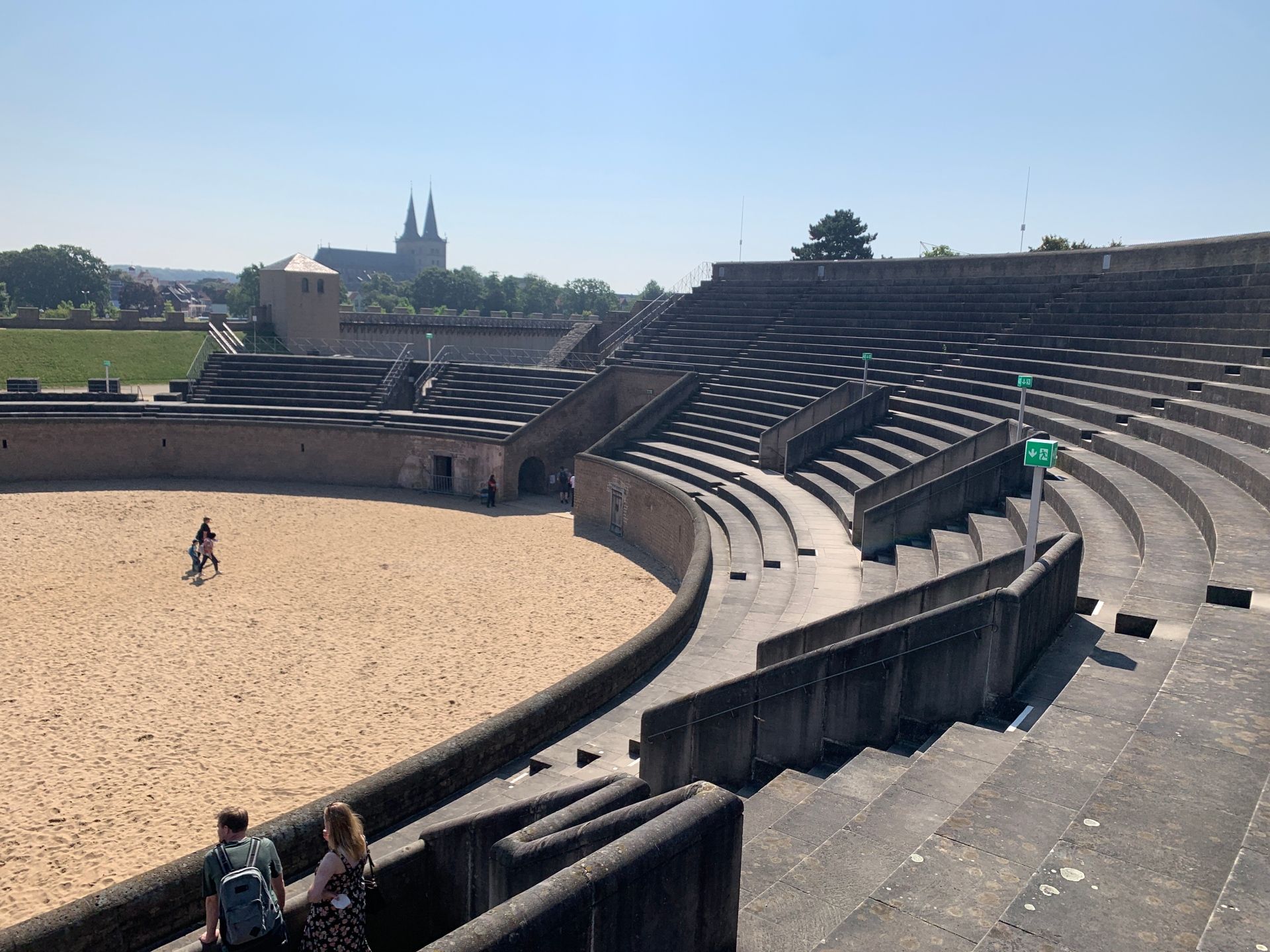
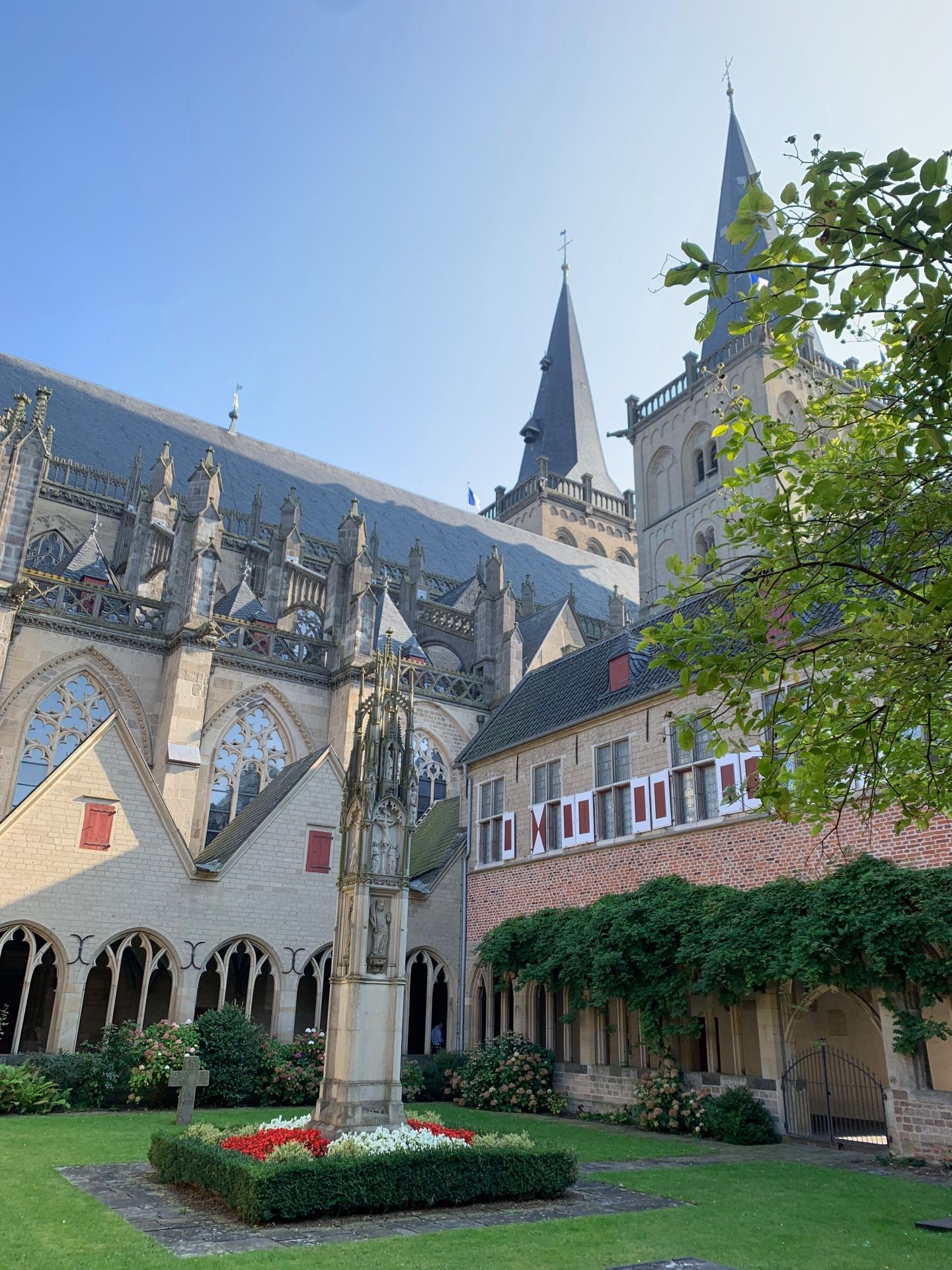
I take a seat on the sun-warmed stone benches of the amphitheatre. The twin towers of the church of Xanten can be seen from here, but film scenes from 'Ben Hur' and 'The Gladiator' play out in my mind's eye. What battles might have taken place in this arena? One thing is certain: The end of the Roman city itself was violent. The migrating Franks attacked and overran the flourishing city at the end of the third century. The building materials, which were difficult to obtain, were carried off in all directions. Some were used in the construction of the neighbouring medieval town.