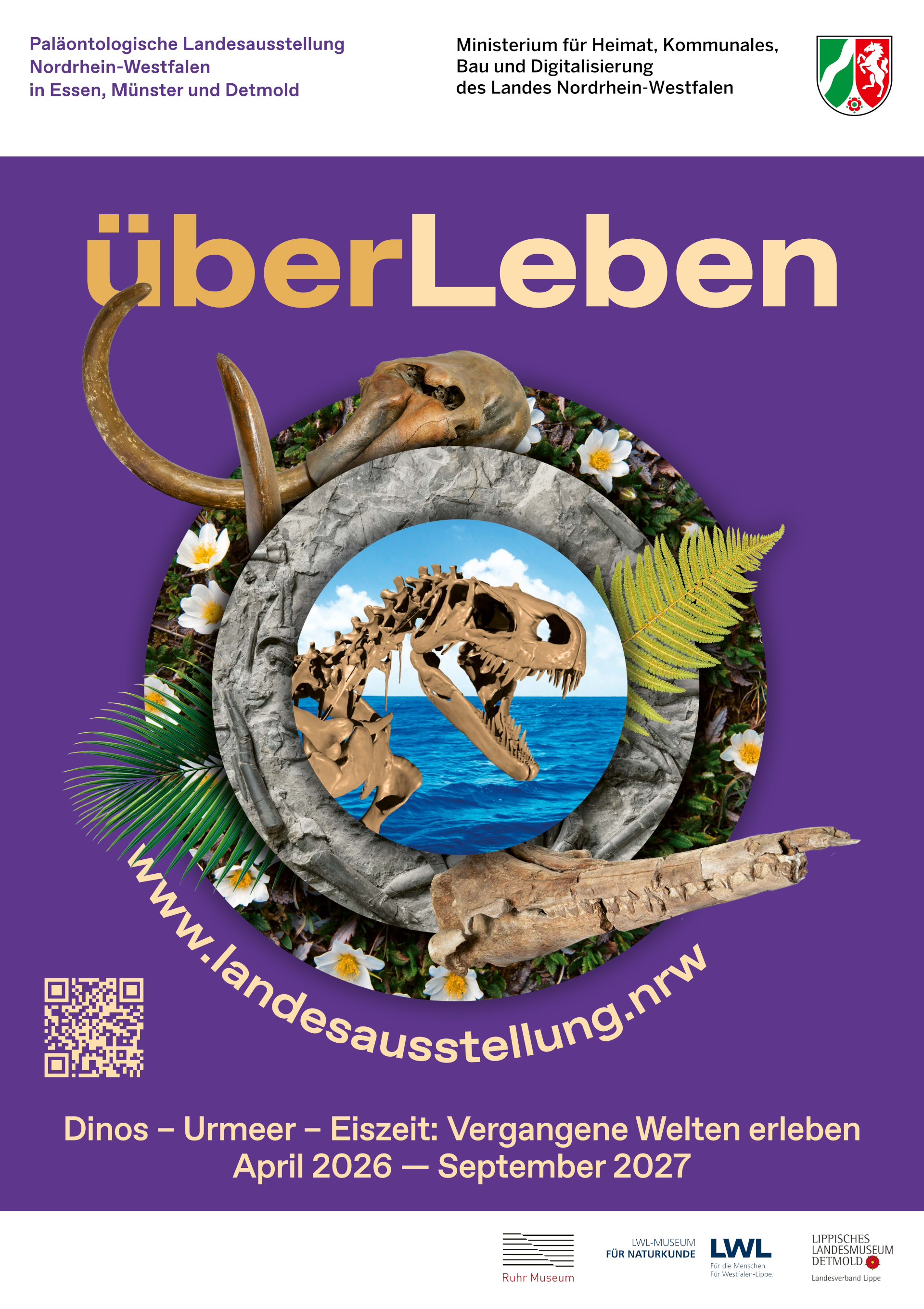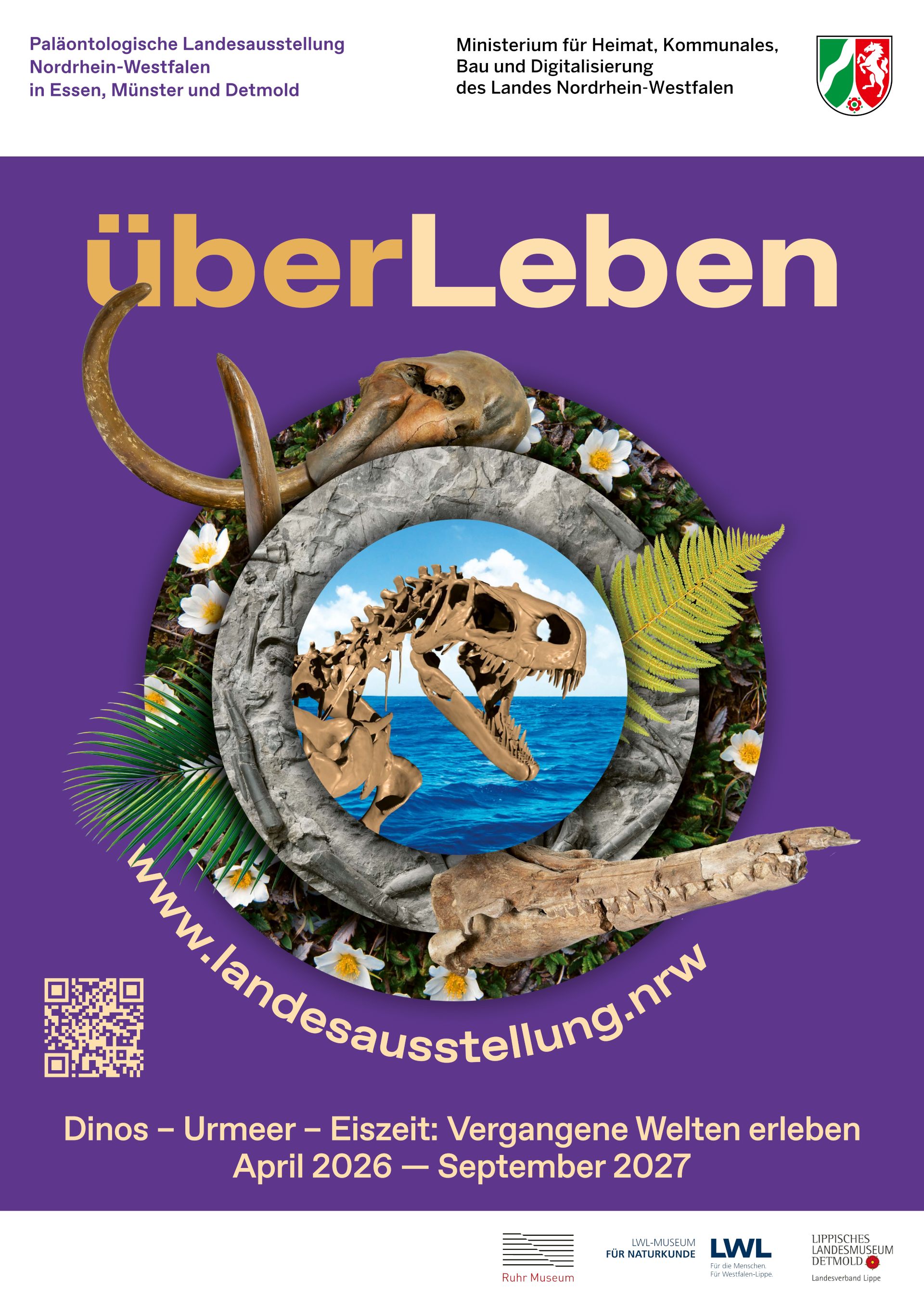
The state paleontology exhibition “überLeben” allows fans of prehistory to journey into the prehistoric worlds of North Rhine-Westphalia: In Essen, Münster, and Detmold, three major museums are presenting a cross-location exhibition showing how life, climate, and landscapes have changed over millions of years.
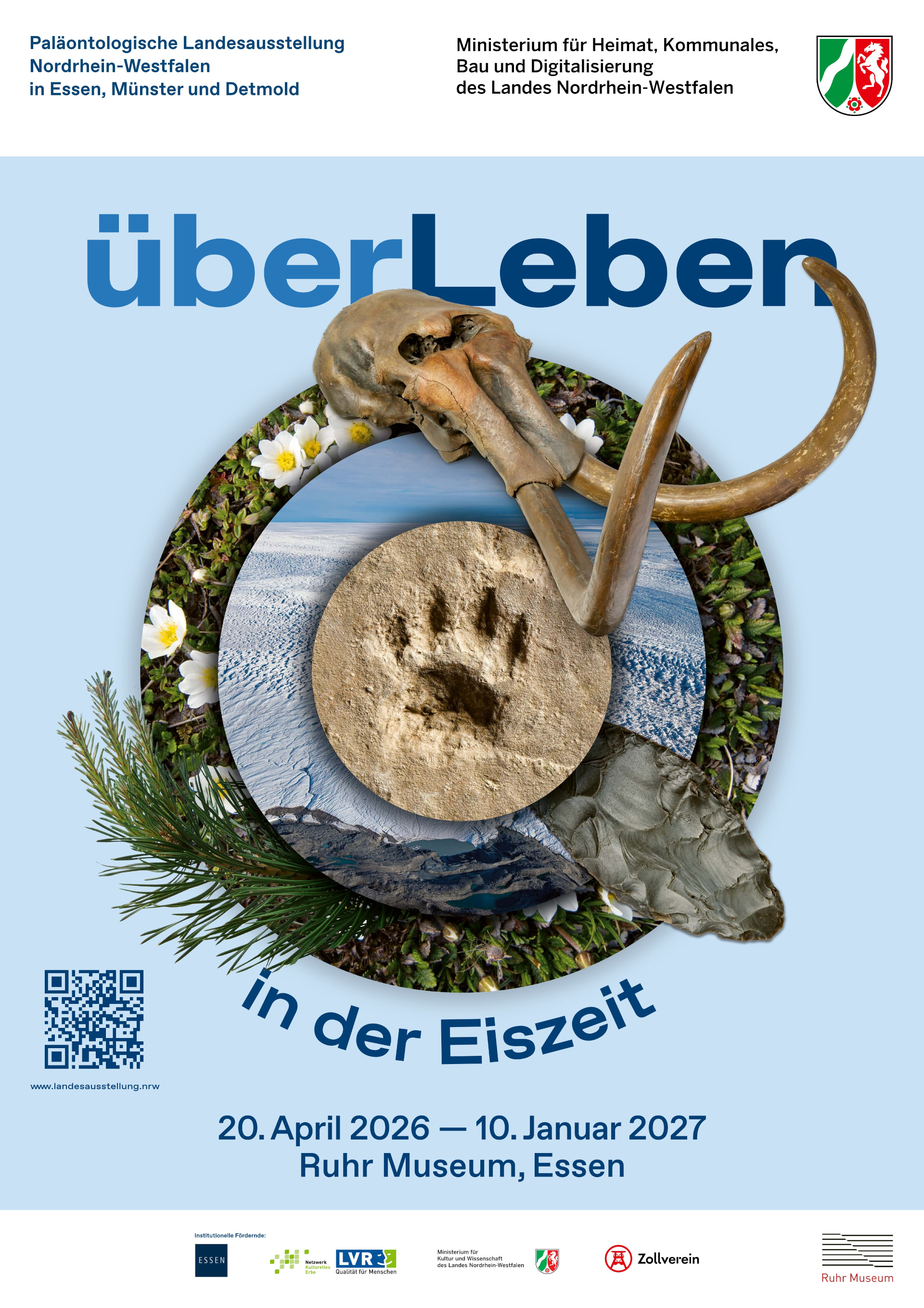
In Essen, the Ruhr Museum at the Zollverein UNESCO World Heritage Site will explore survival during the Ice Age from April 20, 2026, through January 10, 2027: More than 350 exhibits, animations, and models illustrate how animals, plants, and humans responded to cold and warm periods. Whether mammoths, hippos on the Rhine, or early human species, they were all subject to climate fluctuations. The exhibition bridges the gap to the present and also explores how living beings are coping with climate change today.
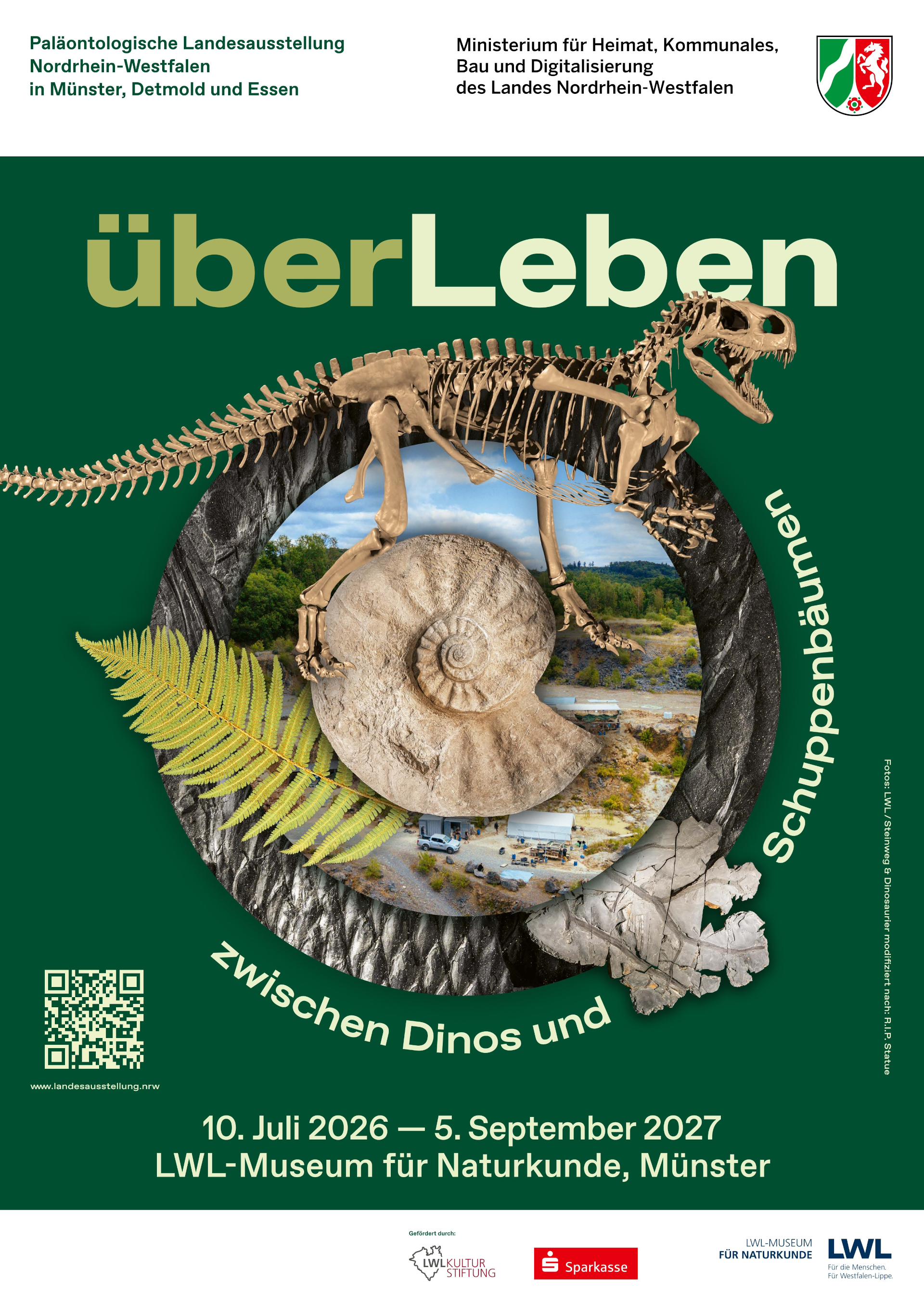
In Münster, meanwhile, the LWL Museum of Natural History will focus on dinosaurs in North Rhine-Westphalia, primeval forests, reefs, and oceans from July 10, 2026, through September 5, 2027. Here, visitors can learn more about the Wiehenvenator, a genus of theropod dinosaurs from the Megalosauridae family that lived in Germany during the Middle Jurassic. The Wiehenvenator albati was nicknamed “the Monster of Minden” because of its large, curved teeth and is one of the largest known predatory dinosaurs in Europe.
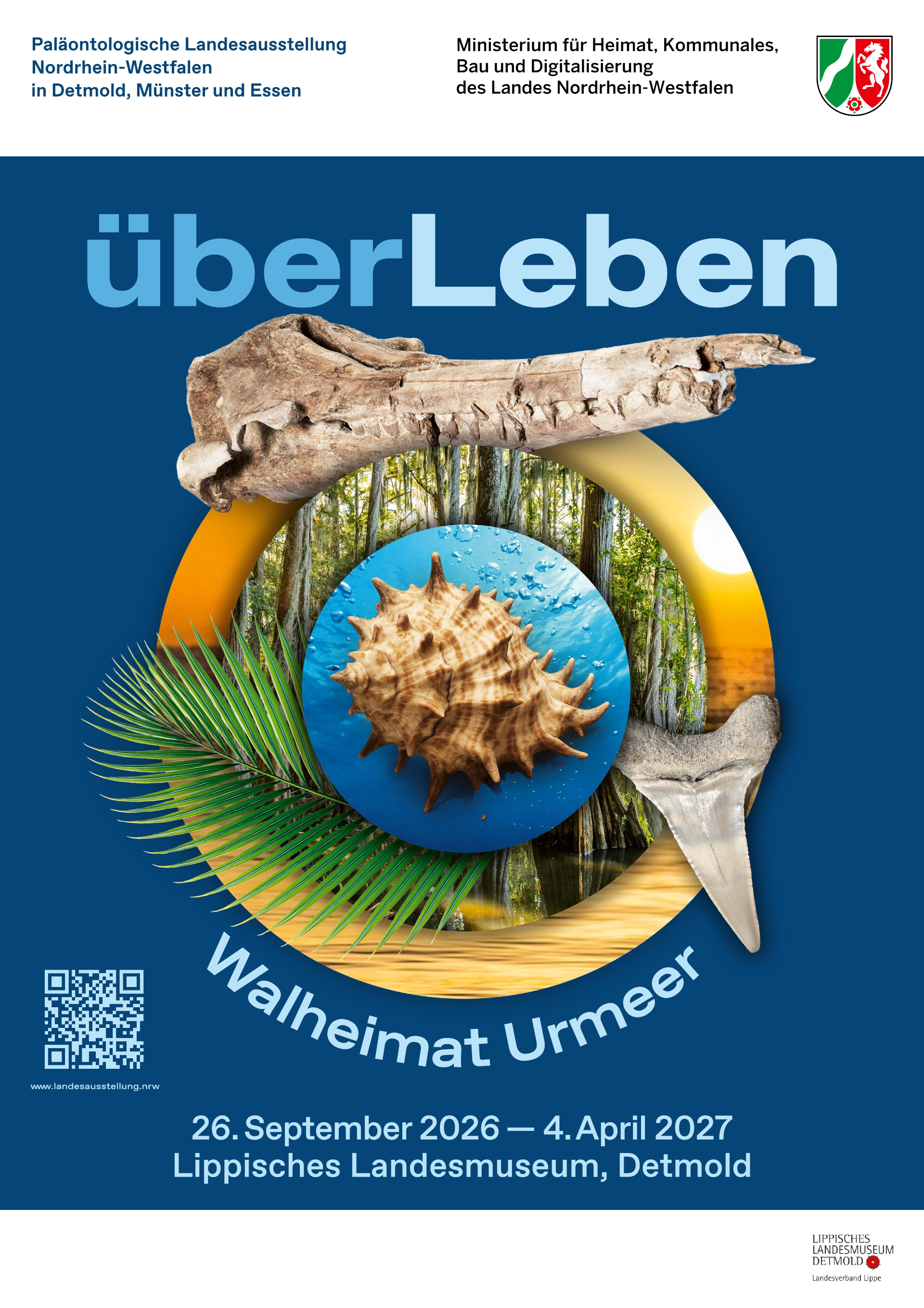
The third chapter of the state exhibition finally leads to Detmold, where the Lippische Landesmuseum will present “Walheimat Urmeer” from September 26, 2026, through April 4, 2027, demonstrating that large parts of present-day North Rhine-Westphalia were once covered by a warm shallow sea. The exhibition focuses on fossil whales, manatees, and seals—including the approximately 6.5-meter-long Kervenheim whale from Kevelaer, a significant find for the geology of the Lower Rhine Basin.