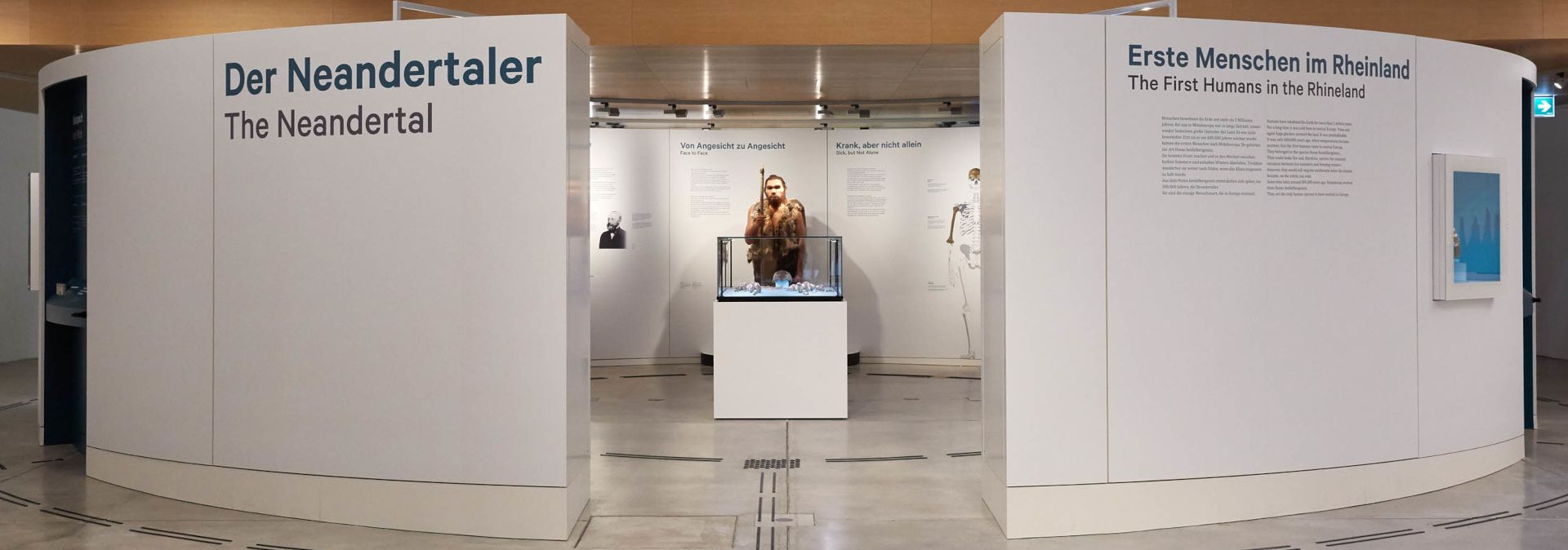
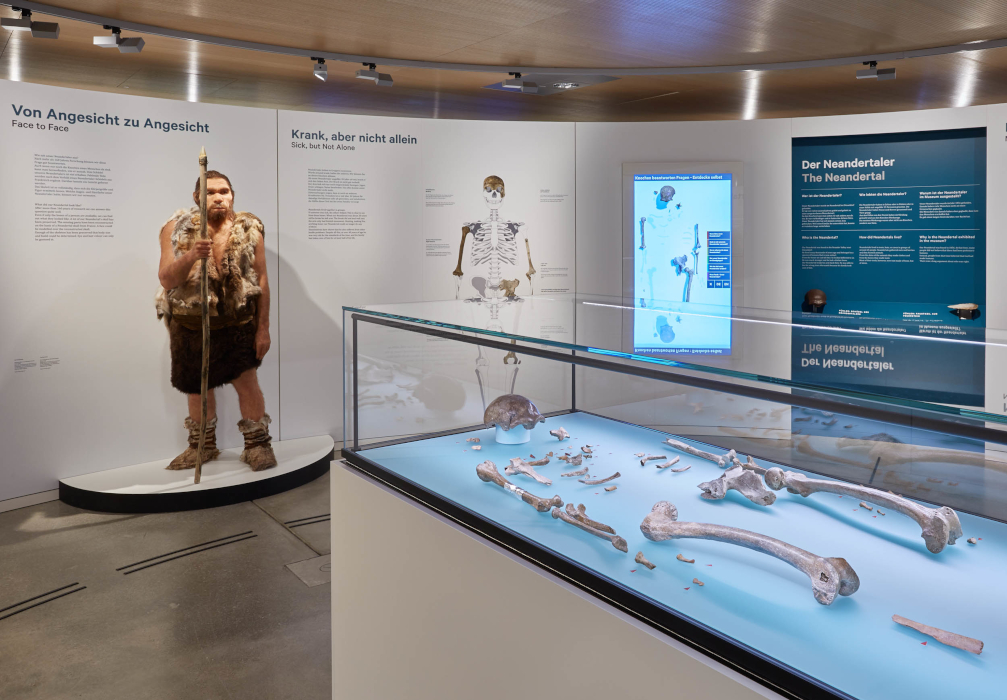
Thanks to its outstanding collection, the LVR-LandesMuseum is the only cultural history museum in the Rhineland to present the development of the region from its beginnings to the present day. Visitors can expect an eventful journey through time from the Stone Age to the present day in the permanent exhibition. The world-famous original Neanderthal man (42,000 B.C.) is on display, as is the largest Neolithic well in the world. Other highlights are the Fritzdorf gold cup from Mycenae in the Bronze Age, the Pfalzfeld column from Celtic times and the treasure of a Celtic princess from Waldalgesheim. The Roman period can be discovered through one of the best provincial Roman collections in Germany. Highlights from the Frankish period are the rich tomb of the Lord of Morken and probably the best collection of Frankish gold disc brooches in Europe. The Romanesque sculpture frieze from Gustorf, a highlight of 12th century art, leads into Christian Europe. Landscape painting from the Renaissance to the 19th century forms another focus. Modern painting from Expressionism and New Objectivity to Informel and contemporary art round off the collection. The important photo and graphic collection is presented with ever new thematic focuses.
This place is certified!




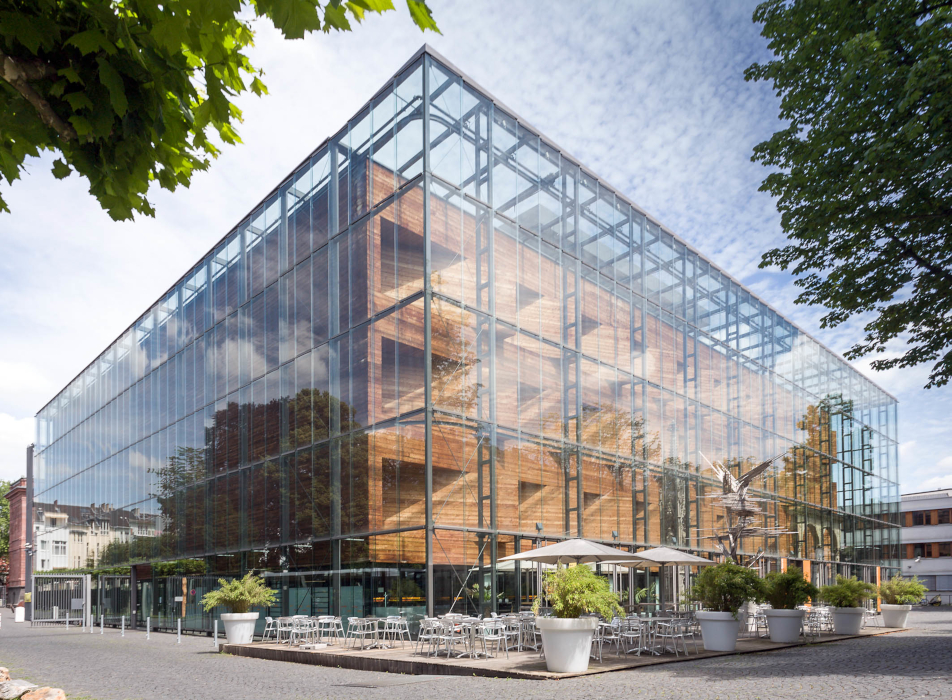
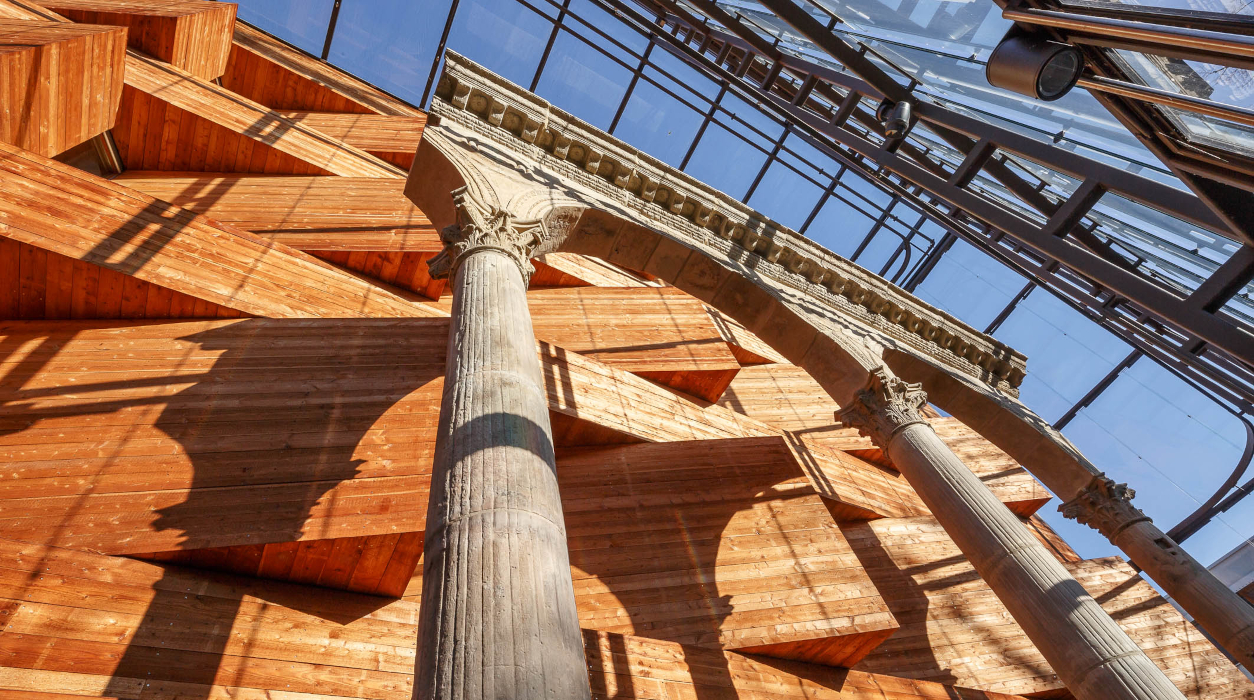
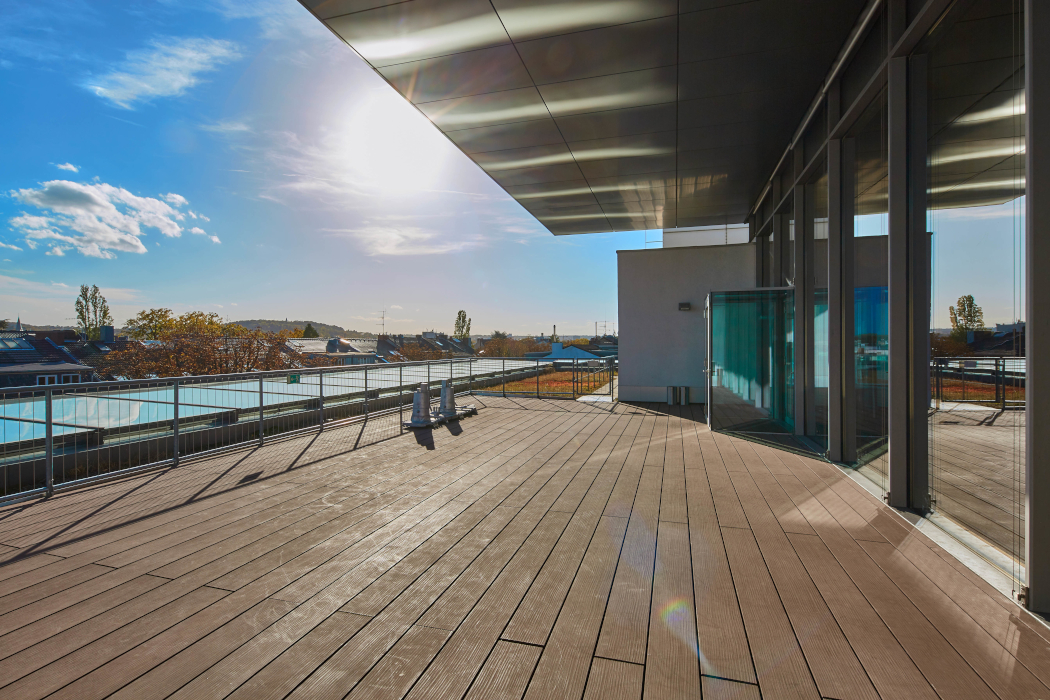
LVR-LandesMuseum Bonn, The LVR-LandesMuseum Bonn is one of the oldest museums in Germany. Its facade exudes modernity LVR-LandesMuseum Bonn, The museum gives visitors insight into the Roman era through more than just small exhibits LVR-LandesMuseum Bonn, The rooftop terrace of the LVR-LandesMuseum offers a wonderful view of the Bonn skyline LVR-LandesMuseum Bonn, Visitors can get a closer look at the world-famous Neanderthal in a rotunda in the museum foyer
Important information about accessibility: certificates
All areas relevant to the assessment meet the quality criteria for the "Accessibility Tested—Accessible for People with Mobility Impairments and Wheelchair Users" designation .
We have compiled some information on accessibility below. Detailed information can be found in the inspection report.
- There are four designated parking spaces for people with disabilities.
- Bonn Central Station is located approximately 500 meters away.
- The entrance to the building is step-free.
- All rooms and facilities accessible to guests are either step-free or accessible via elevators.
- All doors and passageways accessible to guests are at least 90 cm wide.
- The counter/ticket window is 78 cm high at its lowest point.
- The exhibits and information about them are mostly visible and readable while seated.
- The “DelikArt” restaurant features wheelchair-accessible tables (maximum height 80 cm; wheelchair access at a height of 67 cm with a depth of 30 cm).
- Public restrooms for people with disabilities are available, with at least one side accessible by wheelchair (minimum 80 cm). Fold-down grab bars are provided on the left and right sides of the toilet.
- The following assistive devices are available: wheelchairs
- Guided tours are offered for people with mobility impairments and for wheelchair users. Advance registration is required.
- The entire tour route is step-free and accessible to wheelchair users. Portable or fixed seating is available for people with mobility impairments and can be used during the tour.
All areas relevant to the audit meet the quality criteria for the "Accessibility Tested—Partially Accessible for People with Hearing Impairments and Deaf People" designation .
We have compiled some information on accessibility below. Detailed information can be found in the audit report.
- There is no visually noticeable alarm.
- An inductive hearing loop is available at the ticket counter.
- An outgoing emergency call in the elevator is confirmed by an audible signal. Stairs are available as an alternative.
- Information about the exhibits/objects is primarily provided in written form. Some information can be perceived through smell.
- The following technical options for conveying information are available: multimedia guides with a tour in German Sign Language
- The restaurant features tables with bright, glare-free lighting; there are no lamps standing on or hanging above the tables that obstruct the field of vision or eye contact.
- Guided tours are offered for people with hearing impairments and deaf people (in German Sign Language). Advance registration is required.
All areas relevant to the audit meet the quality criteria for the "Accessibility Tested—Partially Accessible for People with Visual Impairments and Blind People" designation .
We have compiled some information on accessibility below. Detailed information can be found in the audit report.
- Assistance dogs (service dogs, guide dogs, etc.) are permitted.
- Outdoor paths have visually high-contrast and tactile-detectable sidewalk boundaries.
- The entrance is not designed with high visual contrast but is identifiable by a tactile change in the flooring.
- Almost all surveyed areas accessible to guests are well lit—that is, bright and glare-free.
- A wayfinding system with floor indicators is in place.
- The signage is designed with easily legible lettering. Orientation information is tactile (e.g., raised or prismatic lettering).
- An emergency call made from the elevator is confirmed by an audible signal.
- Stairs have visually high-contrast edges on at least the first and last steps. Tactile information indicating the floor level is provided at the beginning and end of each flight of stairs.
- Stairs have handrails on both sides.
- The exhibits are generally well lit. There is visual contrast between the exhibits and their surroundings.
- Information about the exhibits is primarily provided in writing and is designed with high visual contrast, as well as being accessible via tactile means (Braille, prism braille). Audio information is also available.
- Guided tours are offered for people with visual impairments and blind people. Advance registration is required.
- Exhibits designed to be touched are incorporated into the guided tours.
- An audio guide is available that can be operated independently by people with visual impairments or who are blind.
- Assistive devices provided: illuminated magnifying glasses and monoculars, white cane holders on the exhibits
All areas relevant to the assessment meet the quality criteria for the "Accessibility Tested—Accessible for People with Cognitive Impairments" designation .
We have compiled some information on accessibility below. Detailed information can be found in the audit report.
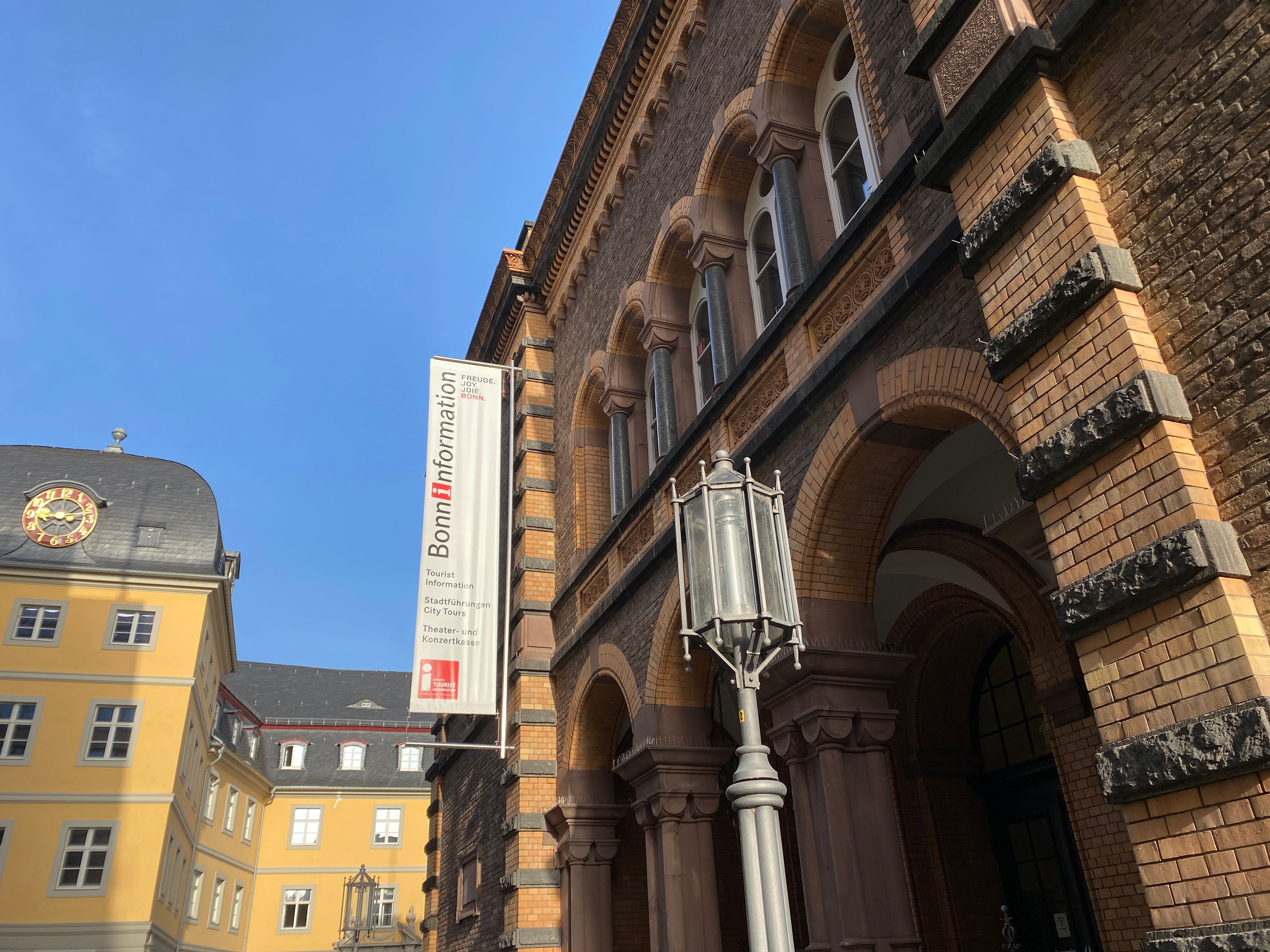
- The museum’s name or logo is clearly visible from the outside.
- The destination is within sight, or directional signs are placed at a distance that ensures they are always visible, or there is a continuous wayfinding system in place.
- Information about the exhibits is provided in simple language.
- The food in the restaurant is not visually displayed. There is no menu with pictures.
- An audio guide contains information in plain language.
- Guided tours for people with cognitive impairments are conducted in plain language. Advance registration is required for the tour.
Important information at a glance
Tuesday through Sunday and on holidays, 11 a.m.–6 p.m.
Open Dec. 26, 26
Closed Dec. 24, 26, Dec. 31, 26, and Jan. 1, 27https://landesmuseum-bonn.lvr.de/de/ihr_besuch/besuch_planen/besuch_planen.html
Open todayTuesday 11:00 - 18:00 Wednesday 11:00 - 18:00 Thursday 11:00 - 18:00 Friday 11:00 - 18:00 Saturday 11:00 - 18:00 Sunday 11:00 - 18:00