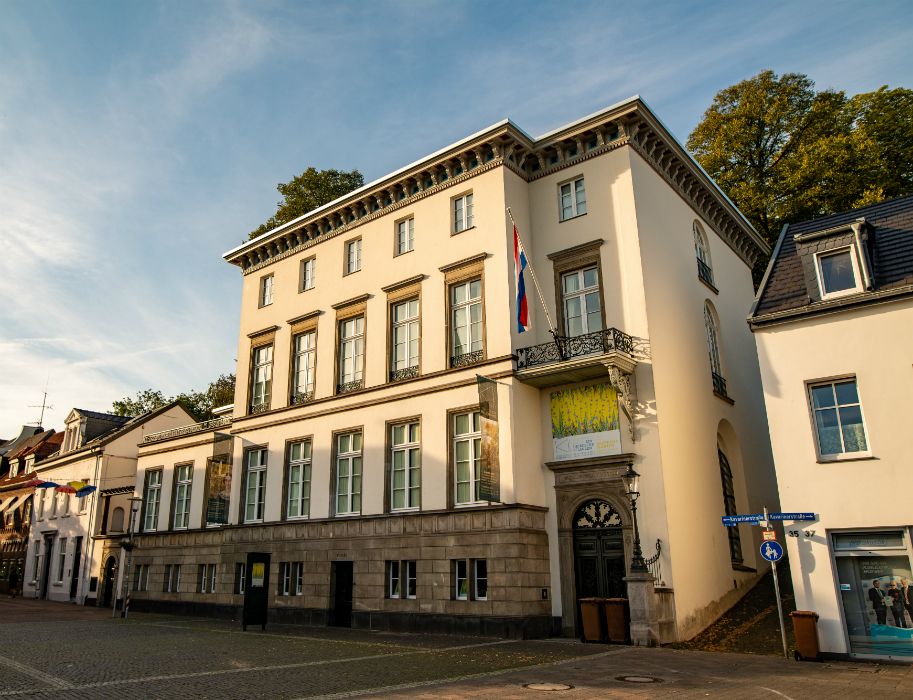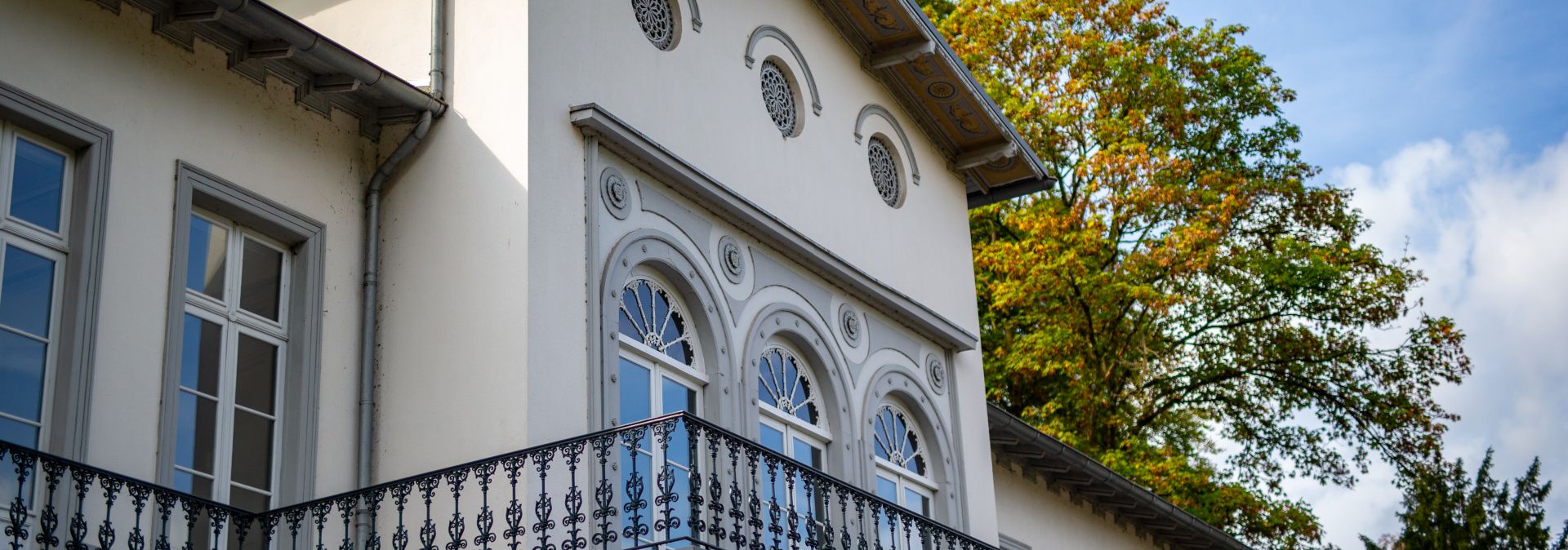
The Kurhaus dates back to the heyday of "Bad Cleve" - and you can still take a wonderful stroll around the building today. The building itself houses a museum that exhibits works from the Middle Ages to the present day, although the focus is on contemporary art. The museum's permanent collection includes the artistic estate of Ewald Mataré. Another highlight are the authentic studio rooms of Joseph Beuys in the former Friedrich-Wilhelm-Bad. Beuys worked there for seven years.
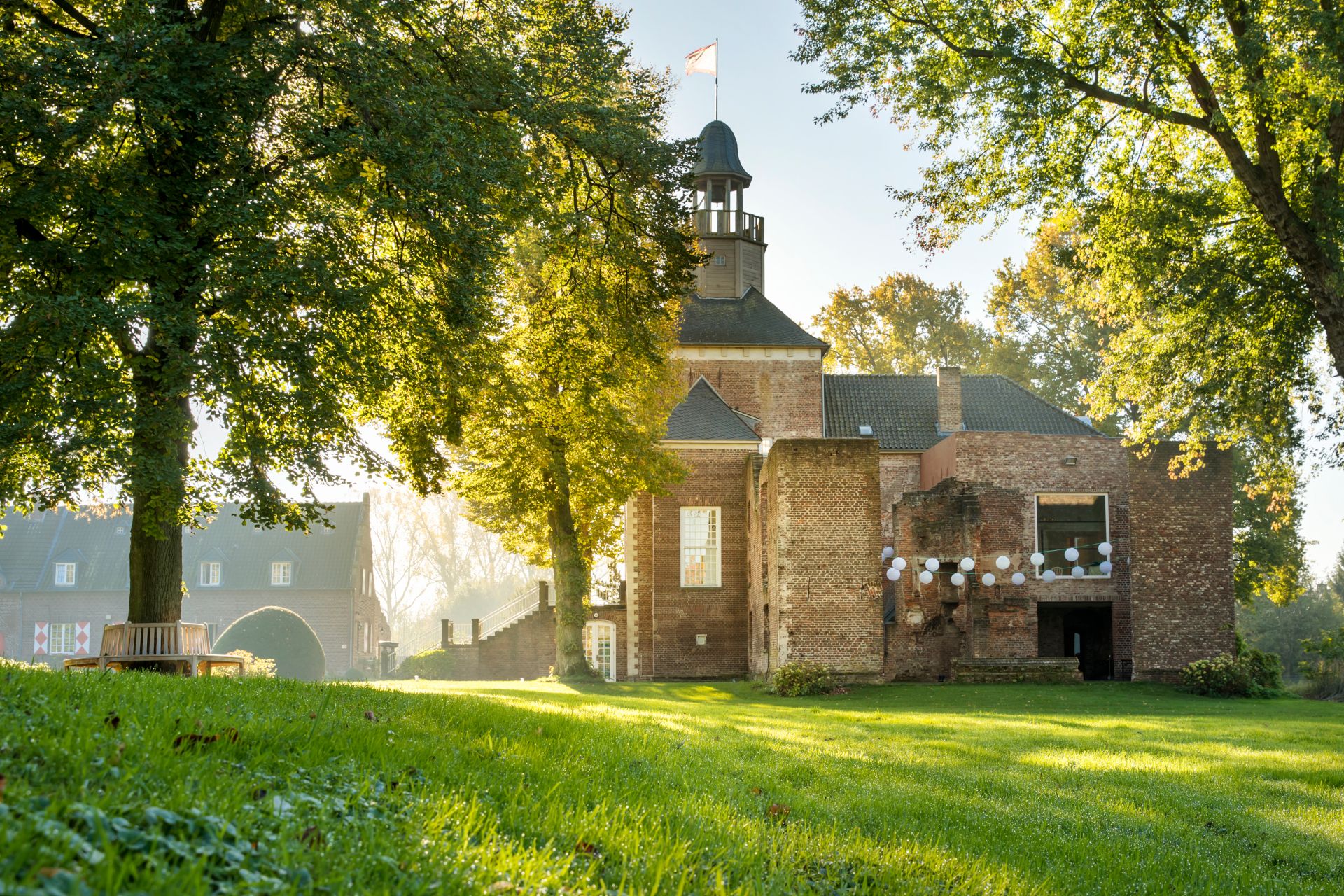
Garden art from different eras can be found around the Kurhaus: winding paths, ponds and various types of trees and plants invite you to take a stroll in the surrounding park. The Forstgarten was laid out in the 17th century as part of the Baroque gardens under Johann Moritz von Nassau-Siegen, an important general and diplomat who had a significant influence on the city as governor of Kleve.
In the 19th century, the Forstgarten was transformed into an English landscape garden under the direction of Maximilian Friedrich Weyhe, a well-known garden architect. Curved paths, picturesque lines of sight and varied planting bear witness to this
Sculptures and monuments, which pay tribute to historical figures and set artistic accents, are further eye-catchers in the grounds. The slightly elevated location also offers a wonderful panoramic view over Kleve and the surrounding countryside.