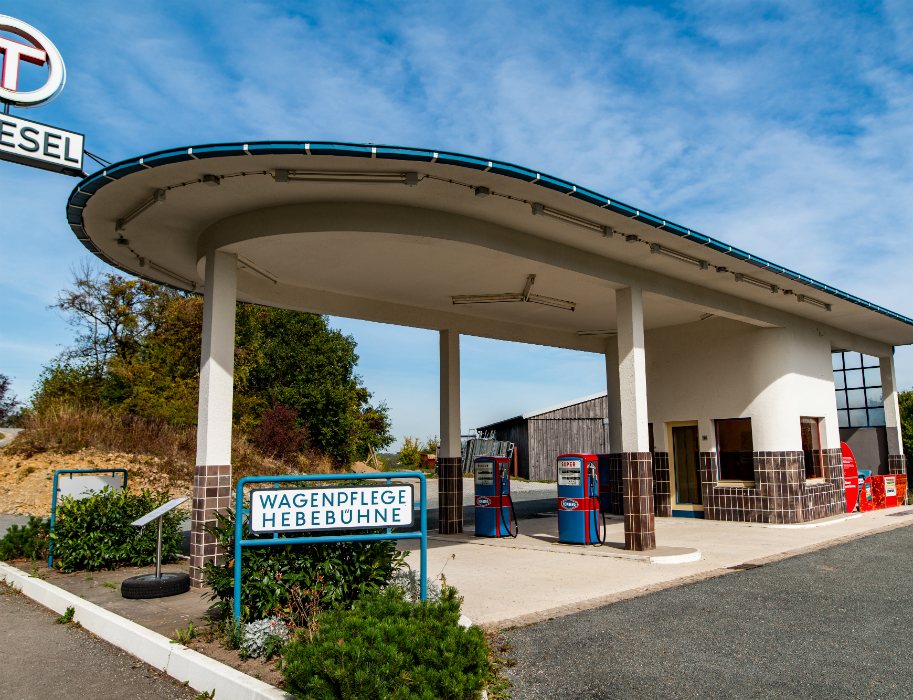
Westphalia Through the Centuries: In Germany’s largest open-air museum, 120 historic buildings—ranging from a 16th-century Lippe farmstead to a 1960s gas station—tell the story of everyday rural life across an entire region. At the foot of the Teutoburg Forest, visitors to Detmold can take a journey through time.
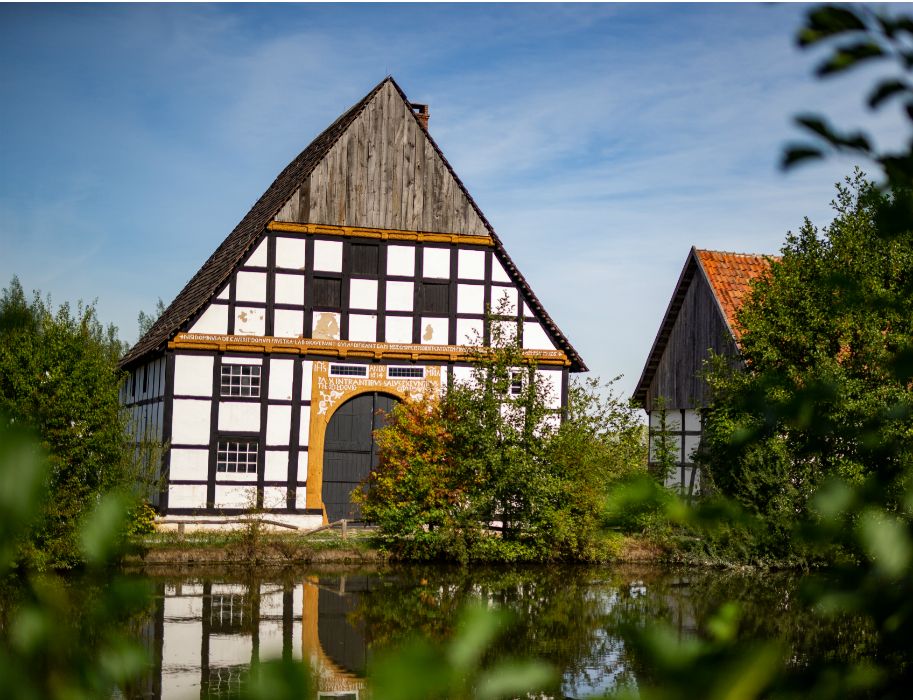
Eventually, the Osnabrück farmstead, the Tecklenburg cottage, and the Münsterland Gräftenhof would likely have fallen victim to the wrecking ball. But then, in the early 1960s, the Landschaftsverband Westfalen-Lippe stepped in. Through meticulous, painstaking work, it had the historic buildings—which had shaped the region’s character for centuries—dismantled at their original sites and rebuilt at the LWL Museum Hellerlecht in Detmold. Since then, several special and historically significant gems have been added, such as the historic Kuper photo studio from 1891 or the Uhlmann House, one of the last surviving houses in Westphalia that was inhabited by Jews from the time of its construction (1803–1805) until 1941.
Crafts in Historic Workshops
Take a walk or a ride in a horse-drawn carriage back in time. Whether at the blacksmith’s, the baker’s, the potter’s, or the miller’s, visitors can experience traditional crafts in the historic workshops. Or they can stroll through the carefully landscaped gardens and discover rare plants along the way. Those who’d like to can try their hand at using a scythe during courses held in the meadows or weave a basket for the potato harvest in their own garden. The present is quickly forgotten here. That’s because everything is true to the original—from the bakery with its stone oven to the gas station with its concrete canopy and tiled facade.
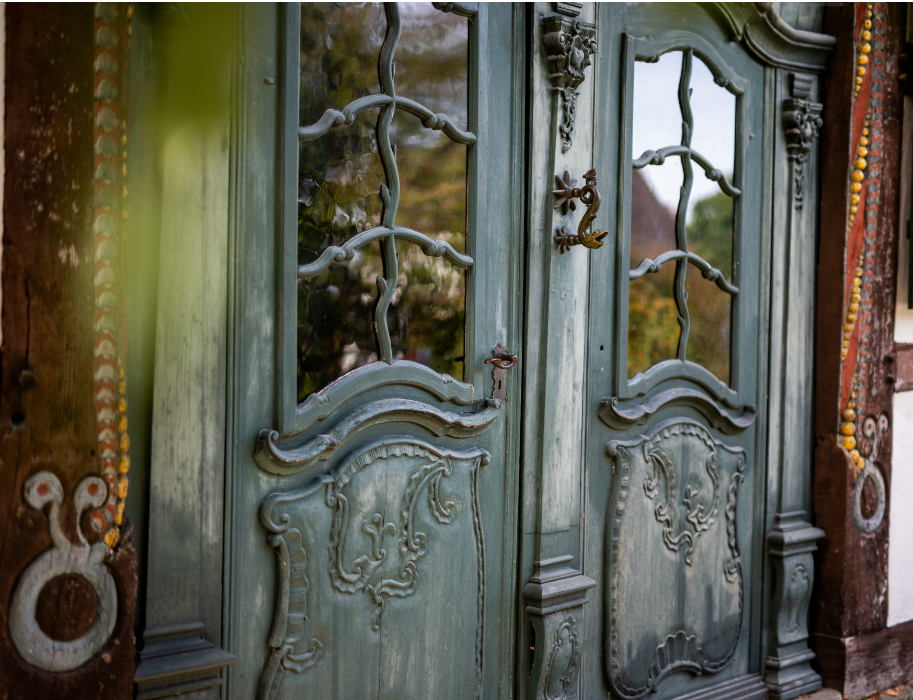
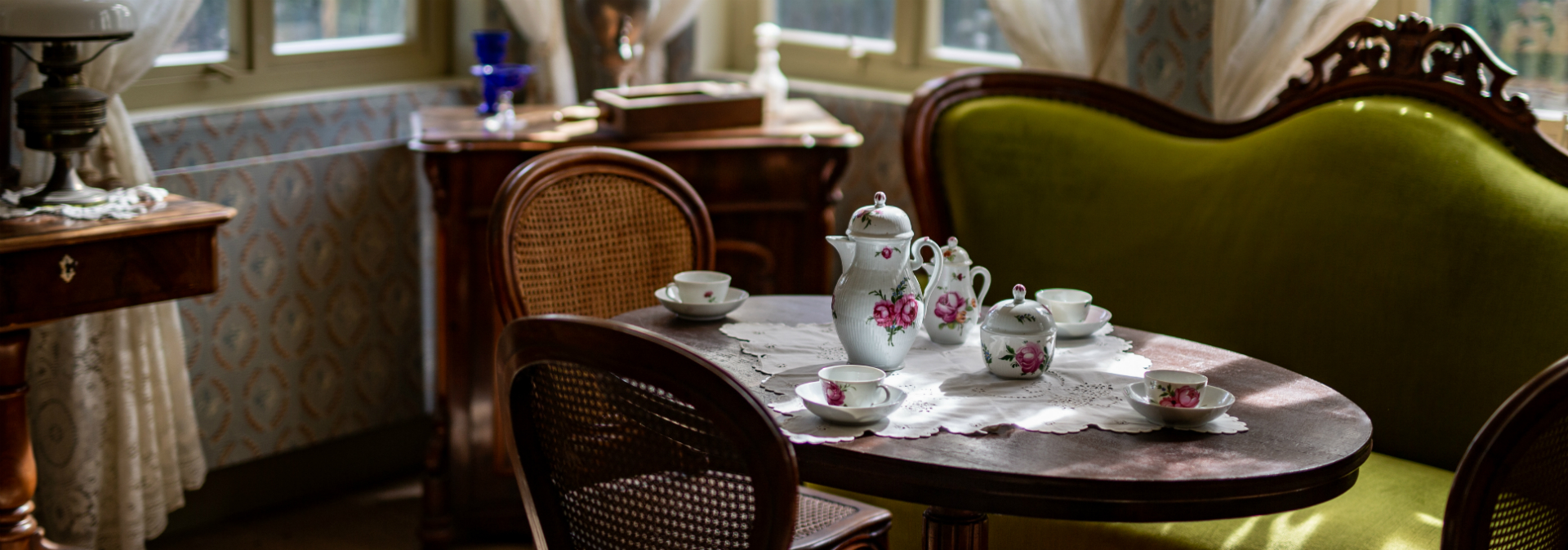
The LWL has now reconstructed and lovingly furnished a total of 120 historic buildings—most of them half-timbered—in the open-air museum. In the gardens, fields, and pastures, special crops are also cultivated that highlight regional differences. Historical animal breeds can be seen in the pastures and on the museum grounds, such as Senner horses, Lippe geese, and Bentheim sheep.
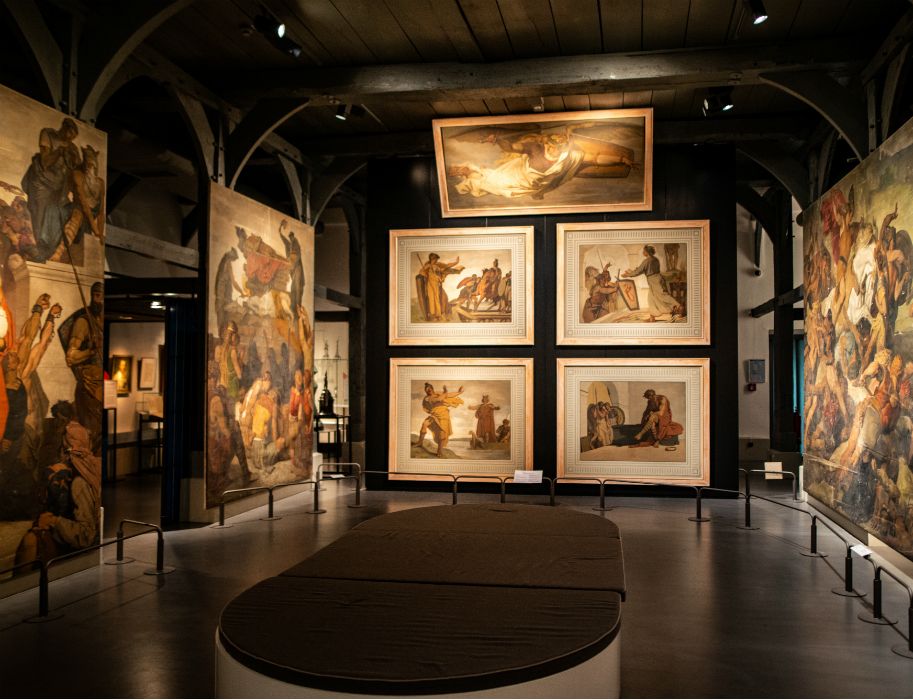
Visitors can learn even more about how people once lived and worked in the Westphalian countryside through special themed tours and hands-on programs, or by exploring the extensive collection. The museum has collected a staggering 250,000 everyday objects to date—ranging from collectible picture cards and school blackboards to a fire truck. Only five percent of the collection can be displayed in the permanent exhibition. The open-air museum presents additional treasures in special exhibitions, which have been on display in the new entrance and exhibition building since June 2026. The Forum, with its innovative architecture, features 800 square meters of exhibition space, lecture and workshop rooms, a mill workshop for children, and the “Bistro Hellerlecht.” So it’s definitely worth coming back a second or third time.