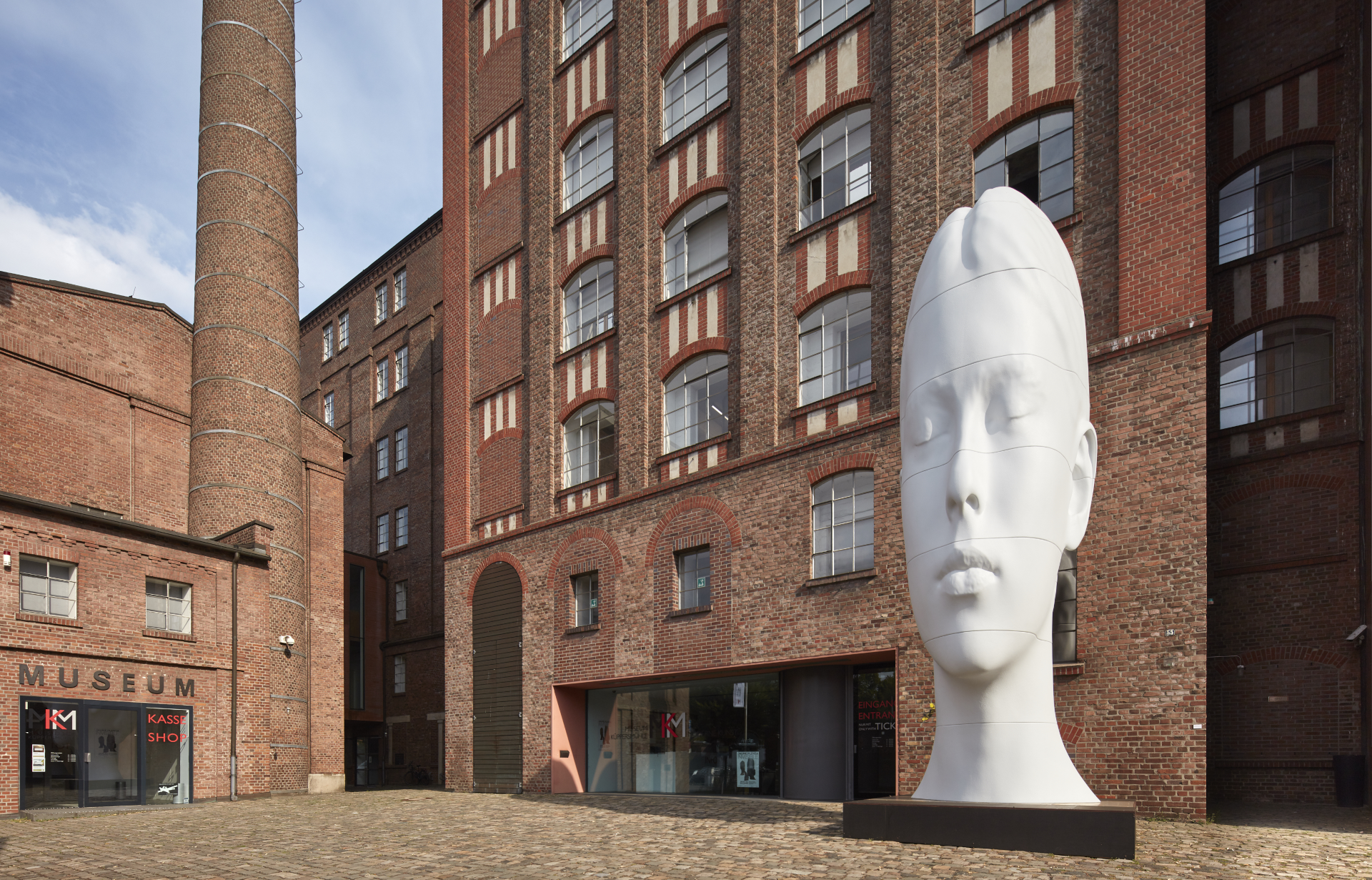
Even before reaching the Küppersmühle Museum in Duisburg’s Inner Harbor, visitors are greeted by the sculpture “Flora.” Visible from afar, the snow-white female head made of polyester resin is one of the highlights of the exhibition “Jaume Plensa – Invisible” and offers a glimpse of what lies within.
From June 26 through November 1, 2026, the MKM will present the artist’s most comprehensive solo exhibition in Germany in the past ten years. More than 50 sculptures, selected works on paper, and wall drawings created specifically for the museum create a special effect within the extraordinary architecture of the former grain silo, inviting visitors to immerse themselves in a world of large-scale sculptures, serene spaces, and striking materials.
An Invitation to the Senses
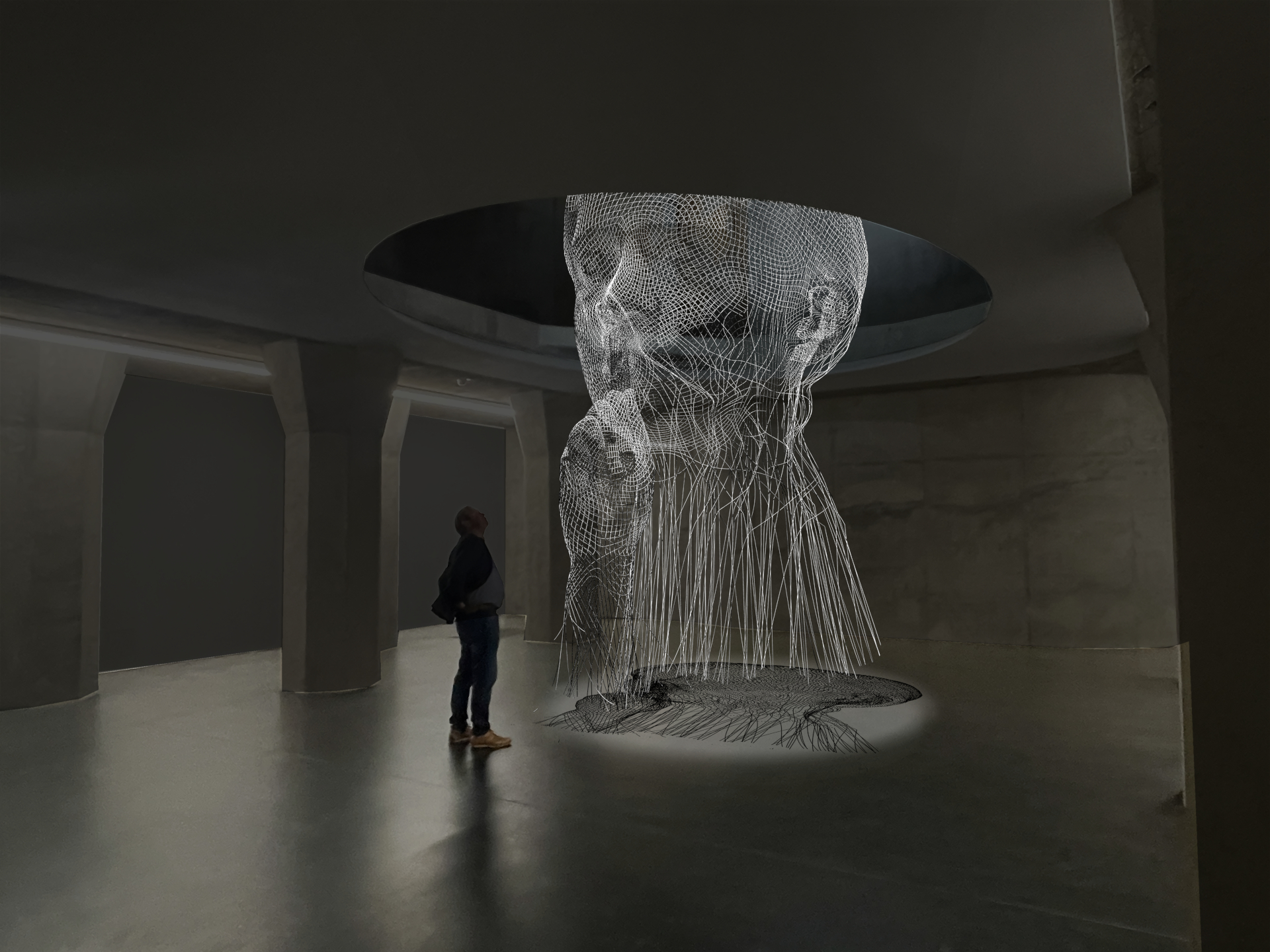
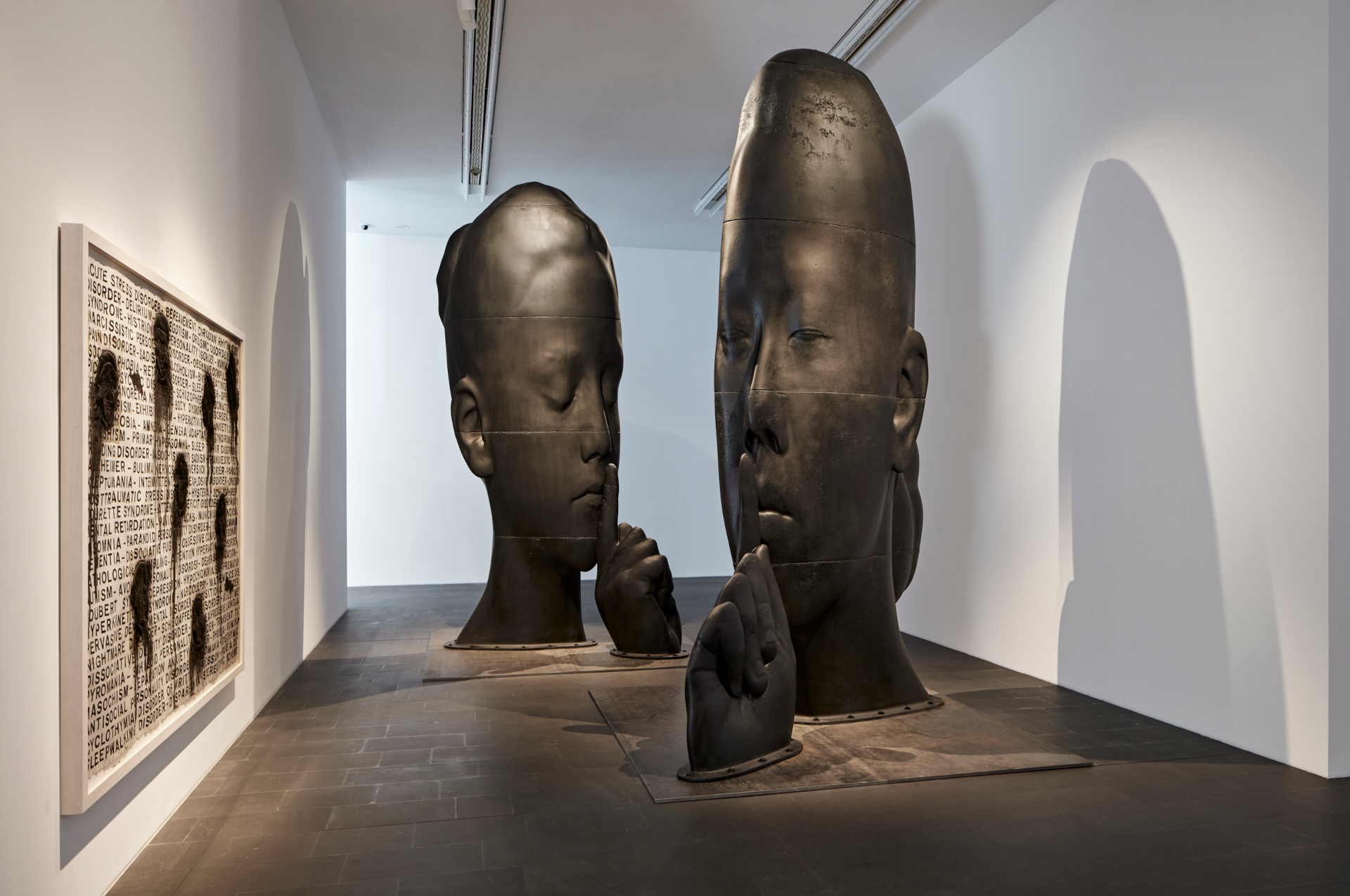
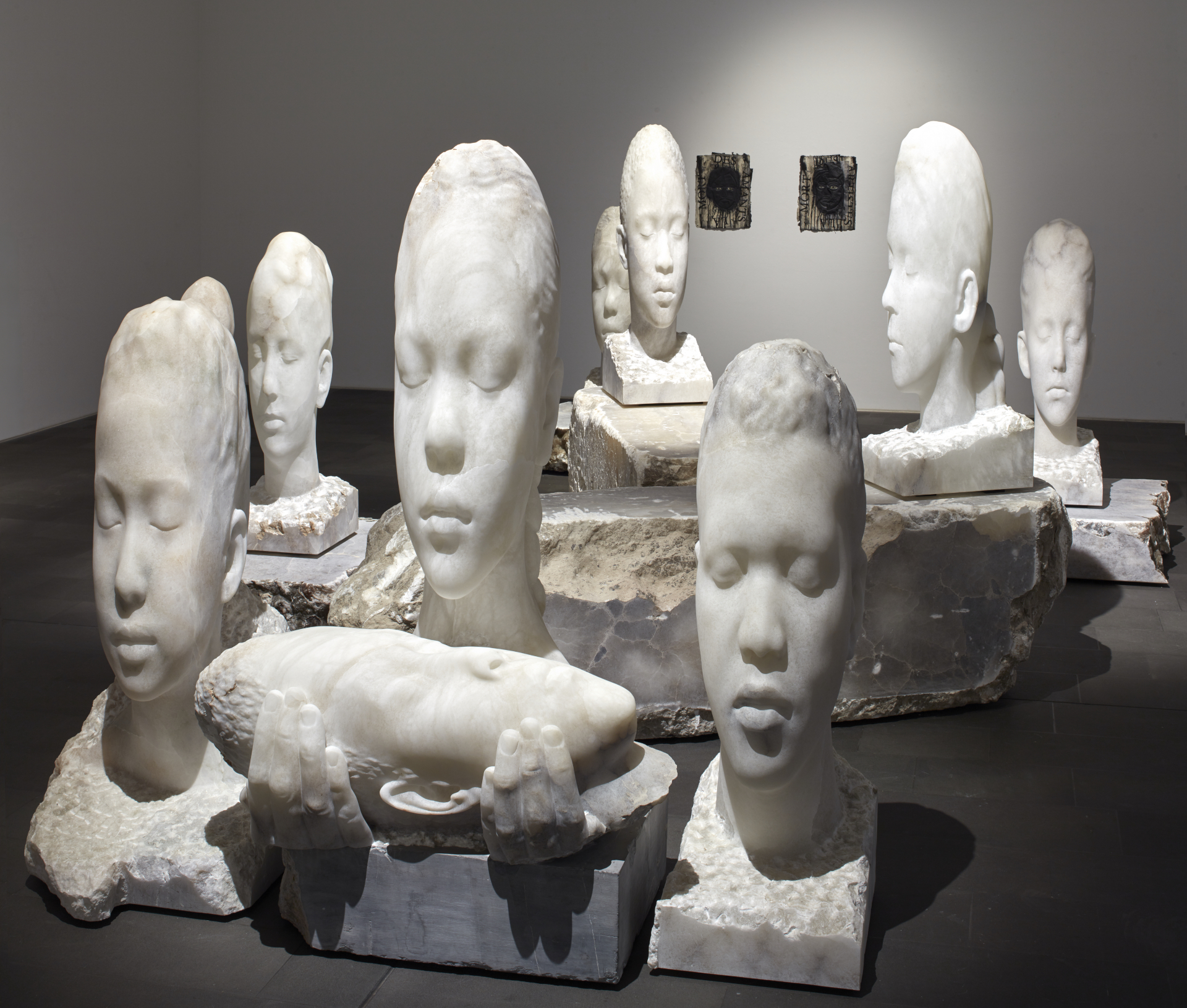
Inside, the approximately seven-meter-tall installation “Invisible Anna” from 2018 serves as the spatial focal point. The large, transparent head made of stainless steel rods appears to float visually in the tall, vertical silo space and, depending on the daylight, seems almost translucent. In the other exhibition rooms, the MKM presents the wide range of forms and materials found in Plensa’s work. Sculptures made of marble, alabaster, bronze, iron, steel, and plastic explore recurring themes such as identity, silence, language, and human connection. These are complemented by works on paper in which letters and characters from various cultures merge into delicate pictorial structures.
Born in Barcelona in 1955, the artist is considered one of the most significant contemporary sculptors and is known worldwide for his public art. His poetic sculptures grace squares and parks in major cities such as Chicago, Tokyo, and Salzburg. In Germany, he has created, among other works, the large-scale sculptures “Laurelle am Bahnhof” (2024) in Bonn-Bad Godesberg, “Body of Knowledge” (2010) in Frankfurt am Main, and “Gläserne Seele” (2000) in Potsdam. His works combine sculptural presence with a profound sense of calm, inviting viewers to pause and reflect on questions of identity and human coexistence.
It is precisely the interplay between Plensa’s quiet, focused sculptures and the striking industrial architecture of the MKM that gives the exhibition its special appeal. The contrast between the monumental female heads and the rough brick walls of the former grain silo creates an extraordinary interplay between art and space, turning a visit to the museum into an extraordinary experience.