Great Views from the Drachenfels
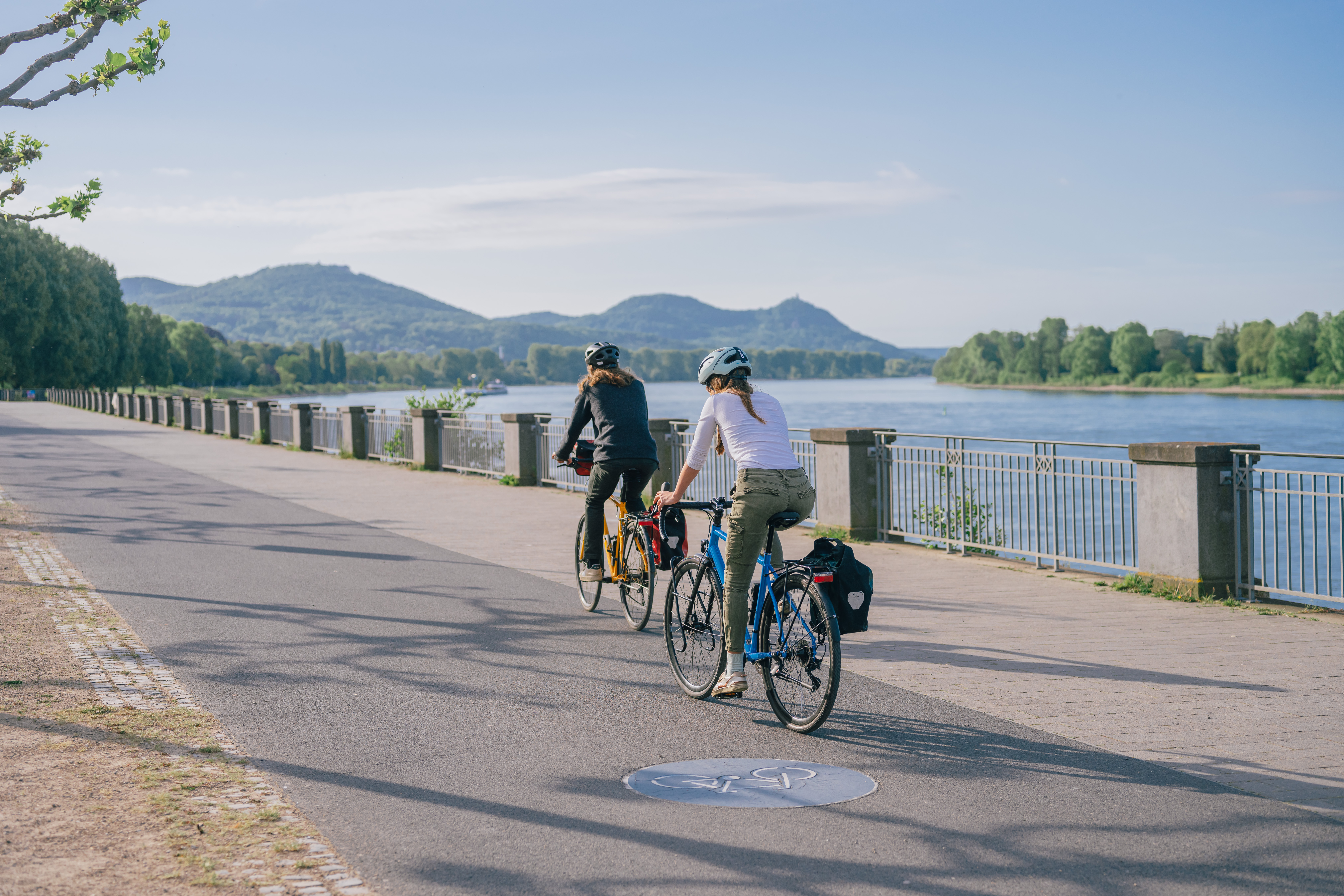
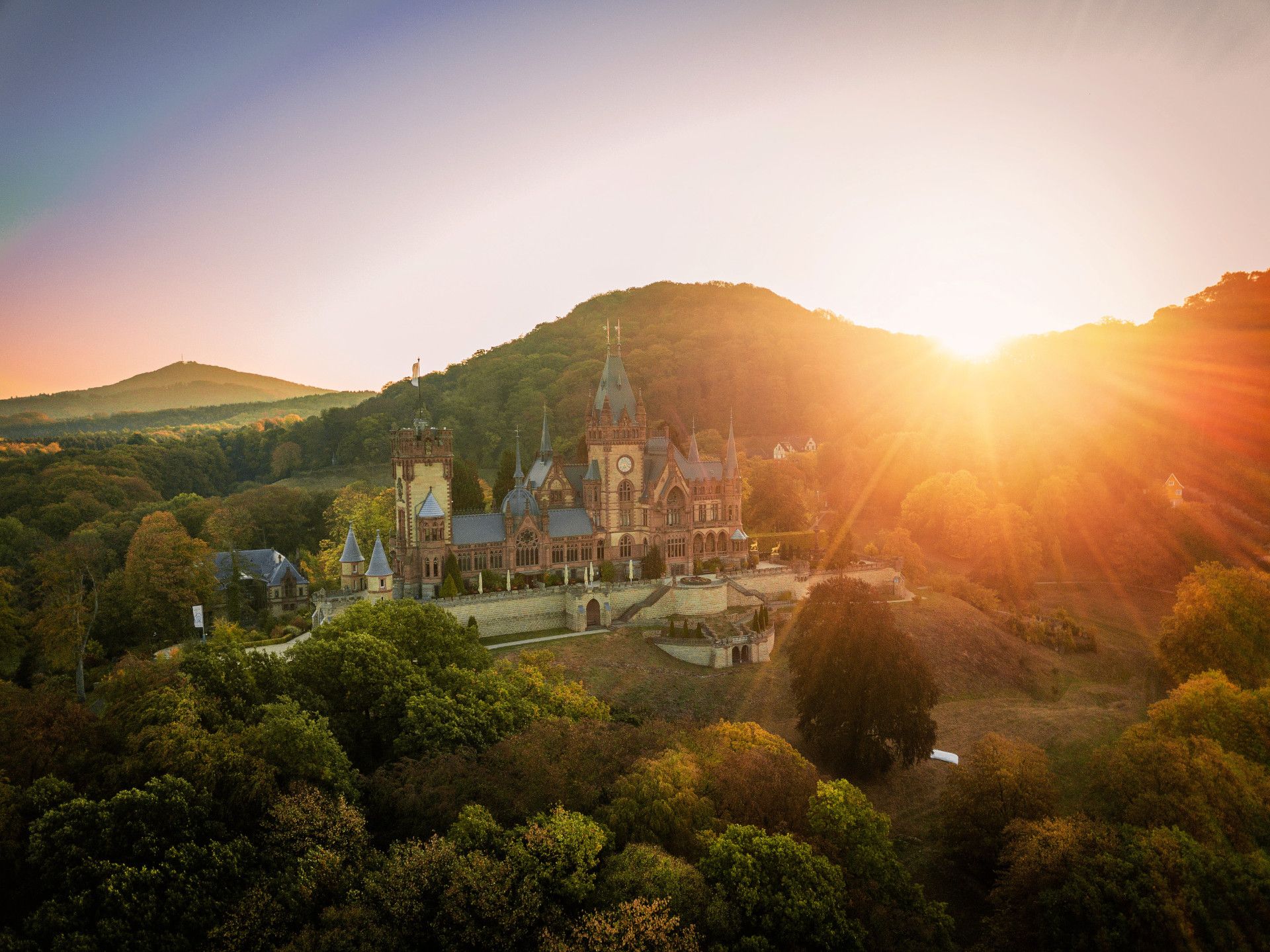
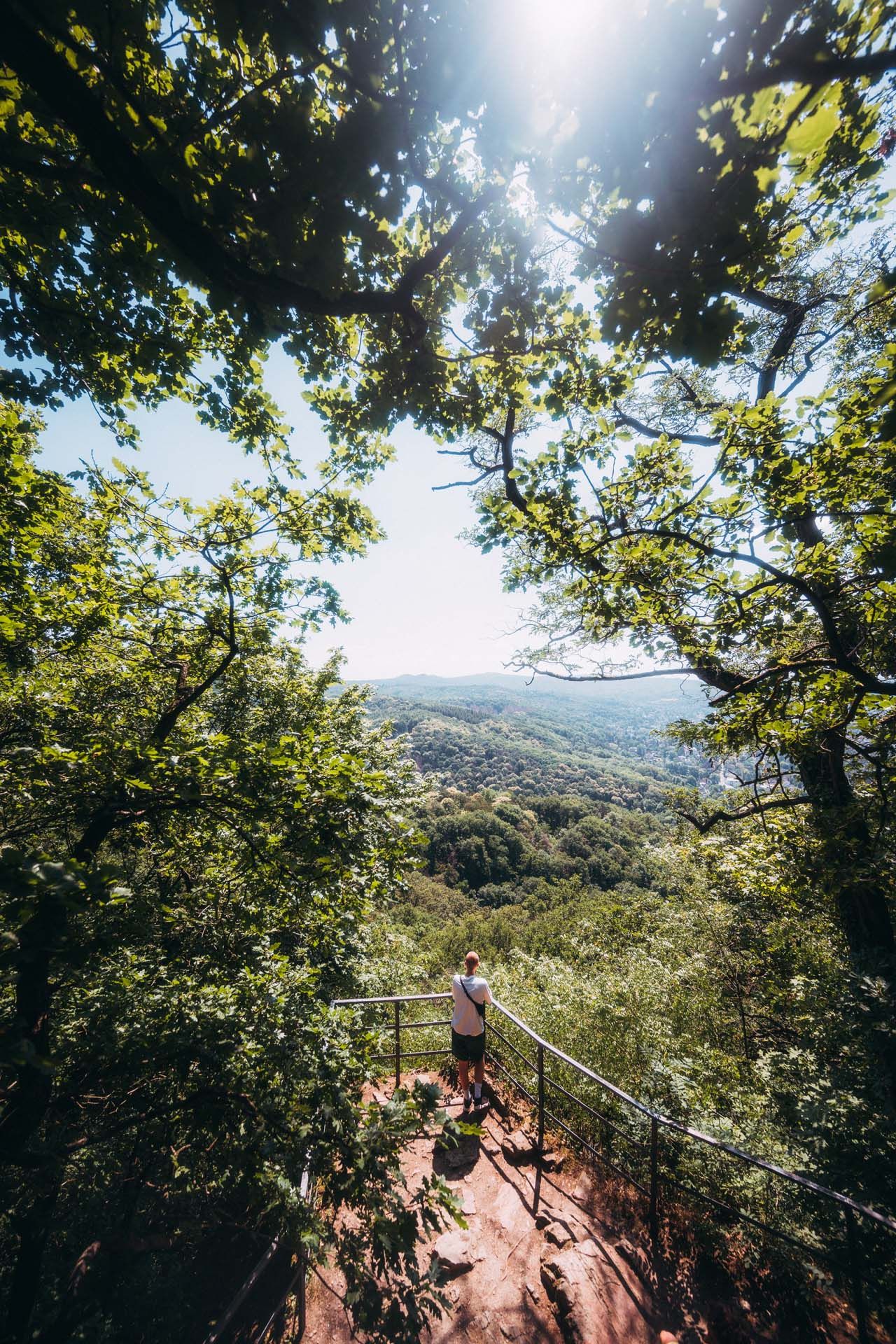
The route starts in Königswinter. Here, the bare rock faces of the Drachenfels are framed by lush trees. Visitors can easily reach the summit via the Drachenfelsbahn cable car—high up, the view of the Rhine amidst the rolling hills makes for a particularly beautiful spot to catch your breath. Those who still have some energy left and leave their bikes here can embark on beautiful hiking tours through the Siebengebirge that last several hours. An absolute must: a visit to Drachenburg Castle halfway along the route.
Monheim am Rhein
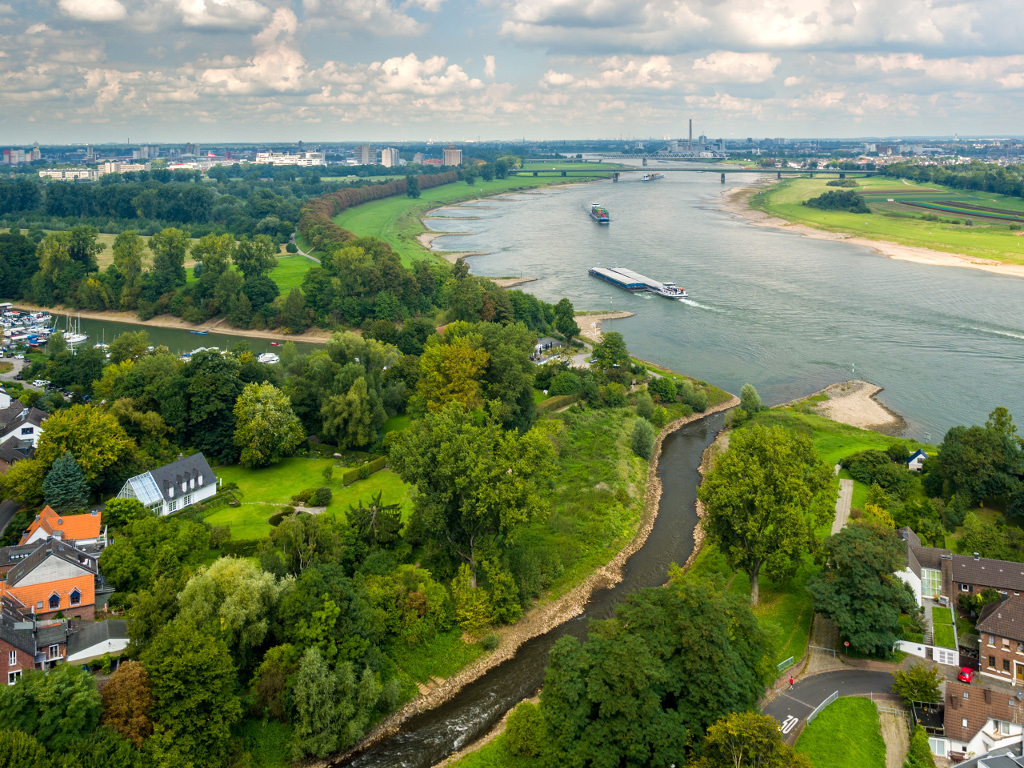
On the right bank of the Rhine, heading toward Monheim, the Rhine Cycle Route reveals its green side. In the Rhine bend, dike paths, meadows, and floodplain landscapes open up. In Monheim’s old town, a diverse range of dining options invites you to take a break. The route continues along the Rhine dike toward Baumberg. There, a museum ship—the former eel boat Fiat Voluntas—awaits visitors. Just a few more pedal strokes and the scenery turns green again. In the Urdenbacher Kämpe, the boundaries between city and nature blur. Here stands the former Roman fort Haus Bürgel, part of the UNESCO World Heritage Site Lower German Limes. Today, it houses, among other things, a Roman museum.
Luxury shopping and quaint breweries
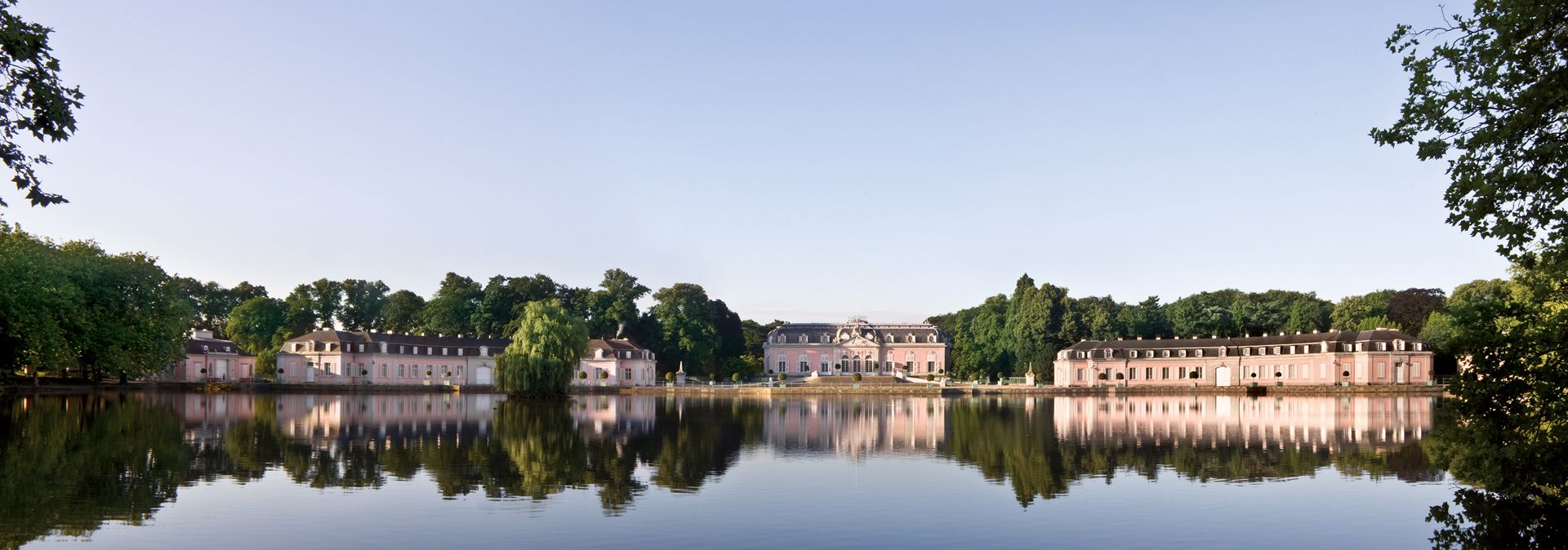
Cyclists can experience a wealth of art and architecture during a break in the cultural metropolis of Düsseldorf: sit on the banks of the Rhine, admire the architectural uniqueness of the Medienhafen, or enjoy a view of the city and the surrounding area from the top of the Rheinturm at a height of 172 meters. In Düsseldorf’s historic center, the Old Town, some 260 pubs, breweries, and nightclubs draw visitors to the “longest bar in the world.” Classic modern and contemporary art can be found at K20, K21, and the F3 Schmela Haus. If you still have room on your bike for shopping bags, you can go shopping at Gucci, Armani, and Chanel on Königsallee, the luxury shopping mile along the Rhine. But just strolling around and window-shopping is a pleasure in itself. But it’s not just the “Kö” that’s grand—Benrath Palace is considered Düsseldorf’s most significant architectural masterpiece. In the English Garden with its rare trees and the French Garden with its water features and flower beds, cyclists can enjoy a break far from the hustle and bustle of the big city.
Ancient Ancestors in Neanderland
The district of Mettmann, which borders the capital of North Rhine-Westphalia to the east, is also known as Neanderland. As early as the mid-19th century, the 42,000-year-old skeleton of a prehistoric human—the Neanderthal—was discovered in the Neander Valley. The Neanderthal Museum in Mettmann is dedicated to this unique human ancestor and explains everything worth knowing about Neanderthals and the evolutionary history of modern humans to both children and adults.
The region’s most famous hiking trail also runs right past the Neander Valley: The Neanderland-Steig connects picturesque old towns and historic city centers, such as Wülfrath or Velbert-Langenberg, with the Niederbergisch landscape, characterized by numerous lakes, moors, and expansive heathlands.
A break at the world’s largest inland port
The journey continues to Duisburg. Where grain was once stored and milled, weary cyclists can now enjoy a cappuccino with a view of the water: Duisburg’s inner harbor brings a Mediterranean flair to the city. The old harbor area is a particularly attractive urban district; three times a day, boat tours depart from here through the Port of Duisburg, the world’s largest inland port.
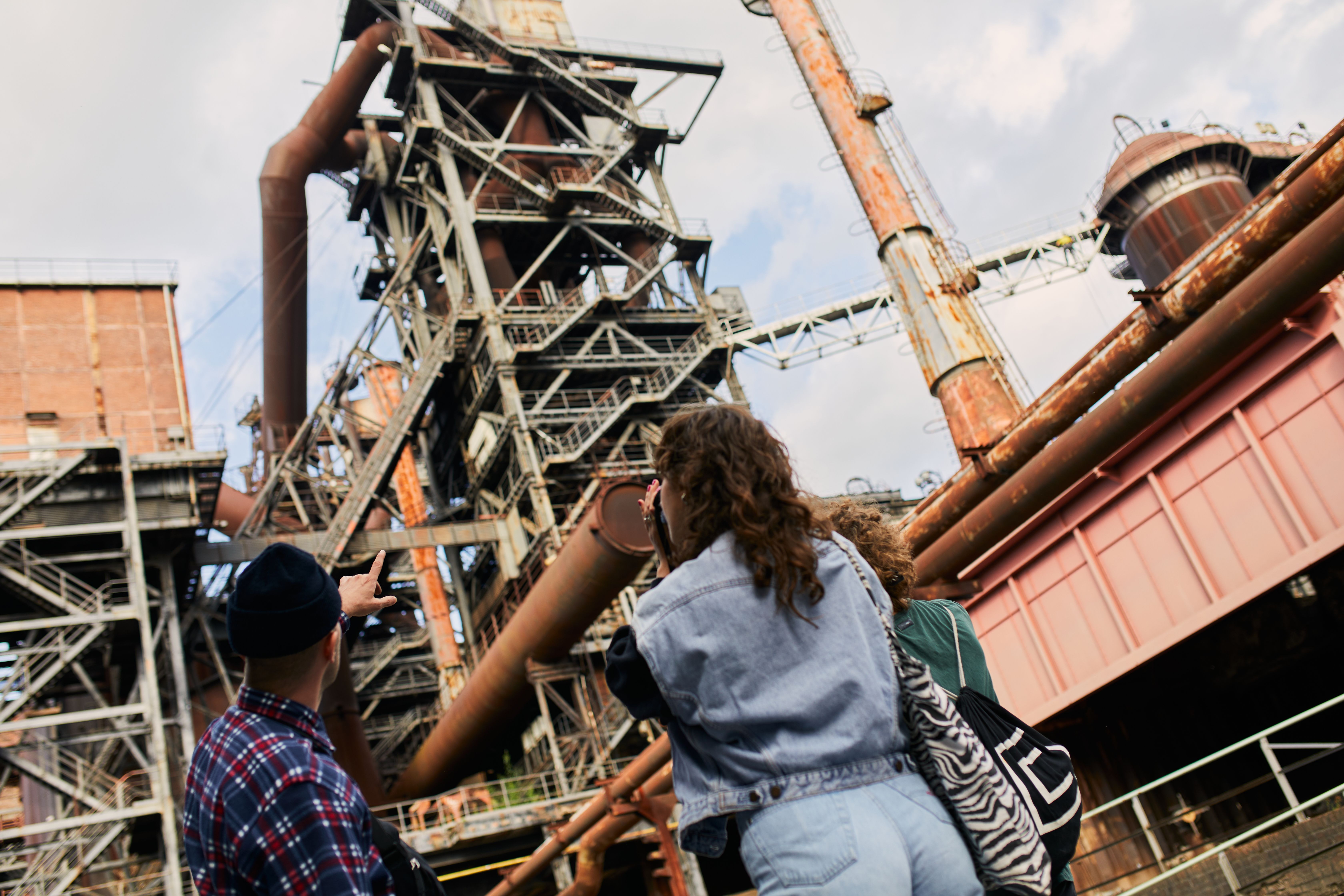
Nature experiences against a breathtaking industrial backdrop await at the Duisburg-Nord Landscape Park. At its center stands a decommissioned steel mill, which is illuminated in red, green, and blue at dusk. Those with a head for heights can enjoy a breathtaking view of the Ruhr region from the blast furnace.
View of Germany’s longest suspension bridge in Emmerich
Continuing along the right bank of the Rhine toward Emmerich, a particularly beautiful Rhine promenade invites you to take your next break. Park your bike, take a stroll, and sit in one of the many cafés and restaurants to watch the ships go by—it’s relaxing and recharges your batteries. From here, visitors not only have a view of the river, which is particularly impressive at this point, but also of an impressive structure: at 803 meters, the Emmerich Rhine Bridge is Germany’s longest suspension bridge. On the other side lies the small town of Kleve, whose skyline is dominated by the Schwanenburg. From the Schwanenturm, an impressive panorama stretches across the Rhine Valley all the way to the Netherlands.