How did Neanderthals live in North Rhine-Westphalia? What tools did they make? And what did they eat? The Neanderthal Museum has answers to these questions. Human evolution is the focus of the museum’s permanent exhibition.
Visitors to the Neanderthal Museum in Mettmann embark on a journey through time into the history of human evolution. Not far from the site in the Neander Valley where the museum stands today, the human fossil of a Neanderthal was discovered in 1856. According to the latest findings, this early human is believed to have lived in the Neander Valley about 42,000 years ago.
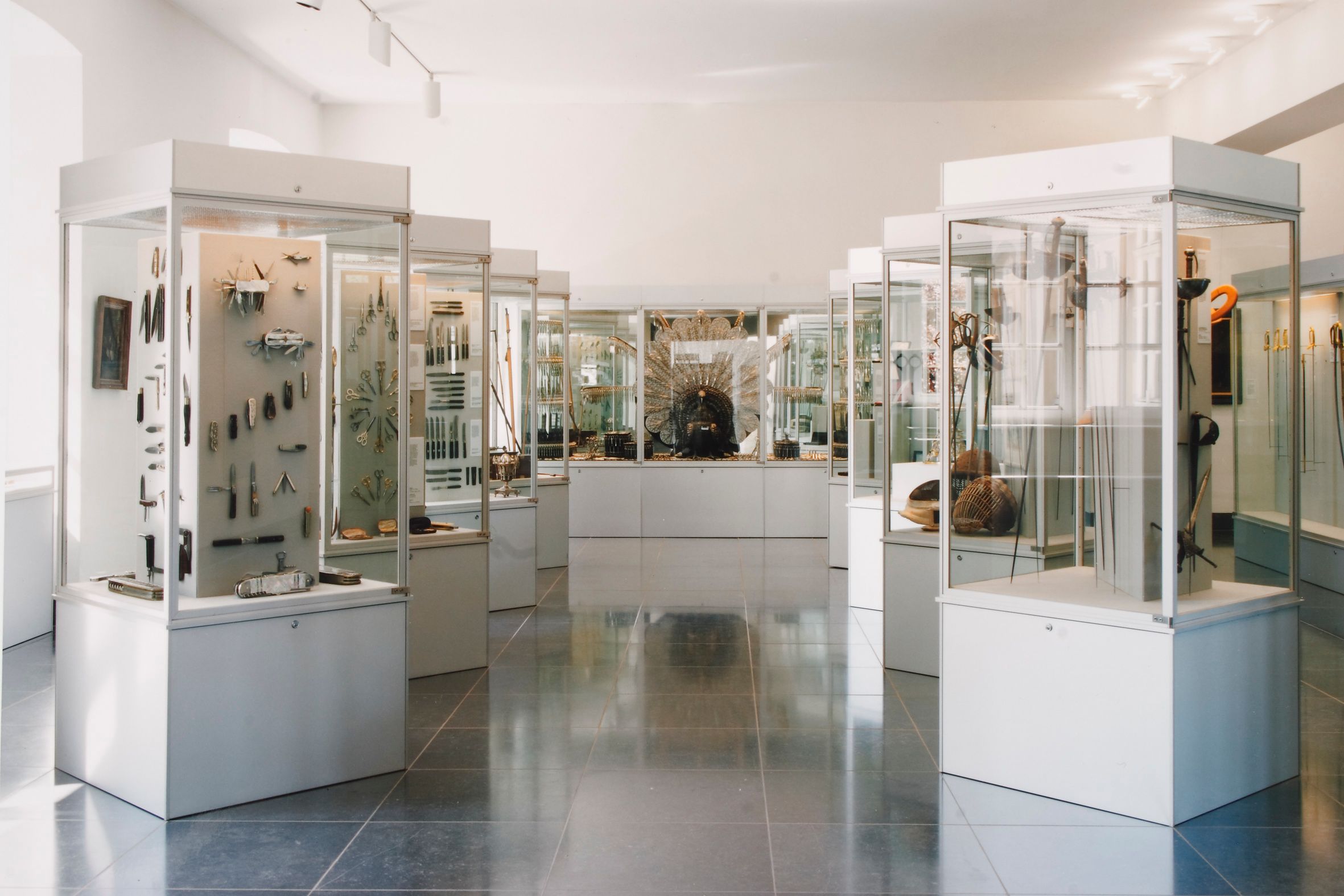
The Neanderthal Museum, which was rebuilt in 1996, displays not only the eponymous skeleton from 1856 but also finds from more recent excavations at the original site in the Neander Valley. An oversized “workbench of inventions” showcases milestones in human ingenuity, from flint to the fuel cell.
Make tools in the Stone Age workshop
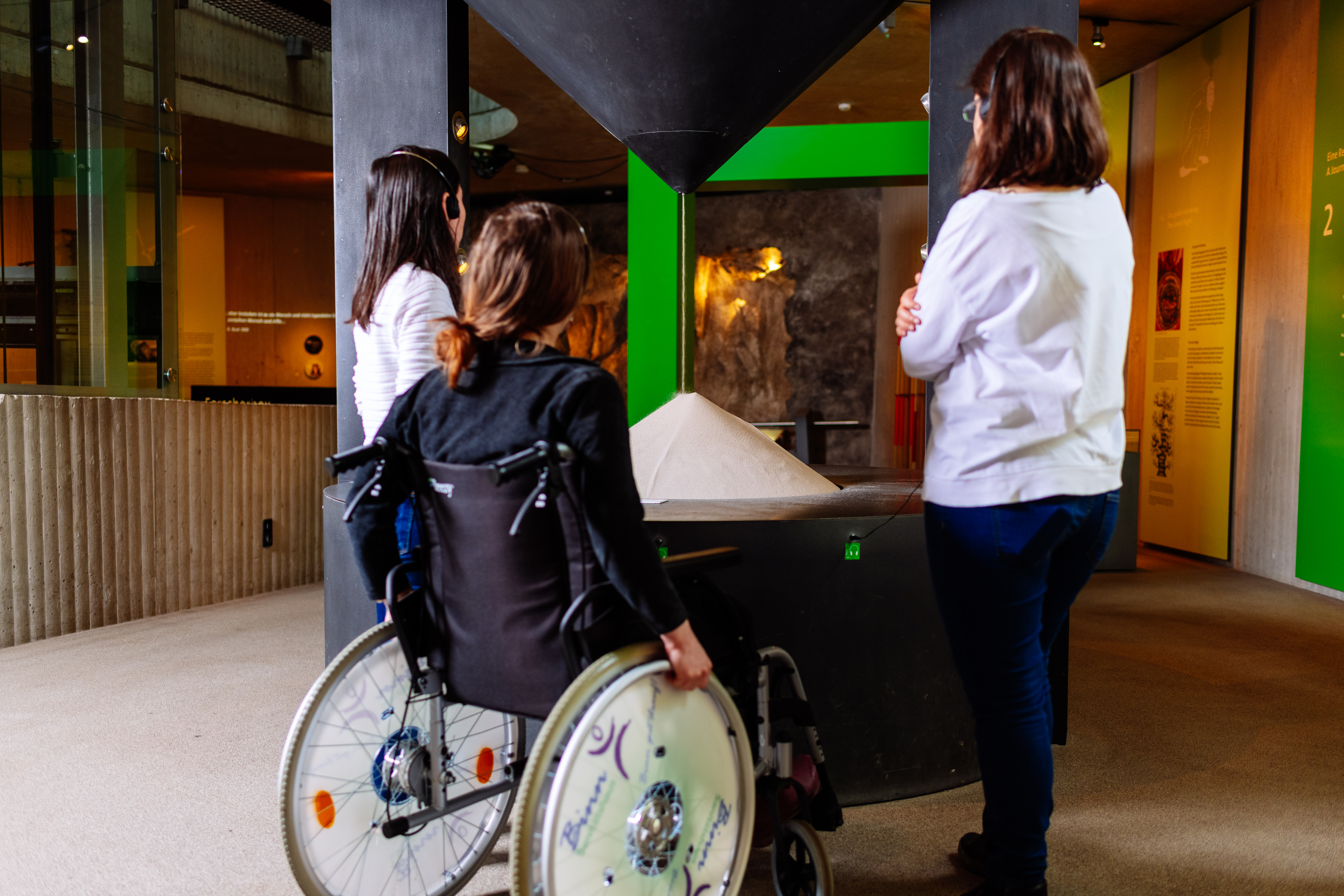
The interactive permanent exhibition also features five thematic areas that provide a chronological overview of human history and help narrow down this complex topic: “Life and Survival,” “Tools and Knowledge,” “Myth and Religion,” “Environment and Nutrition,” and “Communication and Society” vividly explain to visitors the fundamental aspects of human development.
Particularly exciting for children is the Stone Age workshop, where young craftspeople can try their hand at making tools the way early humans did. Here, they can sew with bone needles, make knives with flint blades, craft bows and arrows, and examine casts of human bones and famous fossil finds in great detail.
The “Traces of Humans” art trail is likely to appeal more to adult visitors, who can view ten sculptures by various artists along the path that starts right at the museum and winds its way around the Düssel River. Meanwhile, children can visit prehistoric animals in the wildlife enclosure adjacent to the art trail. Here, bison, aurochs, and Tarpan wild horses roam freely—recreated versions of Ice Age animals that went extinct hundreds of years ago.
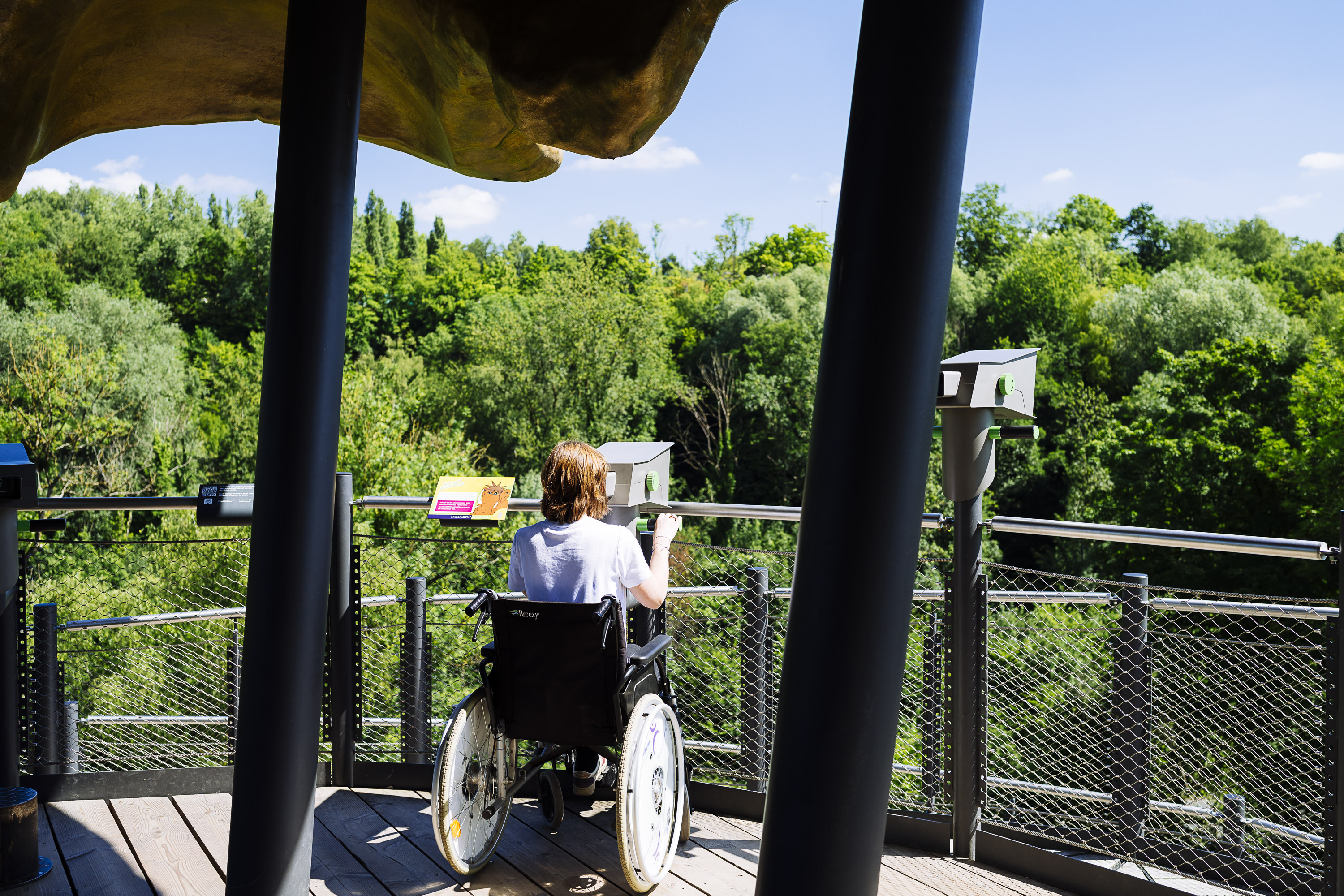
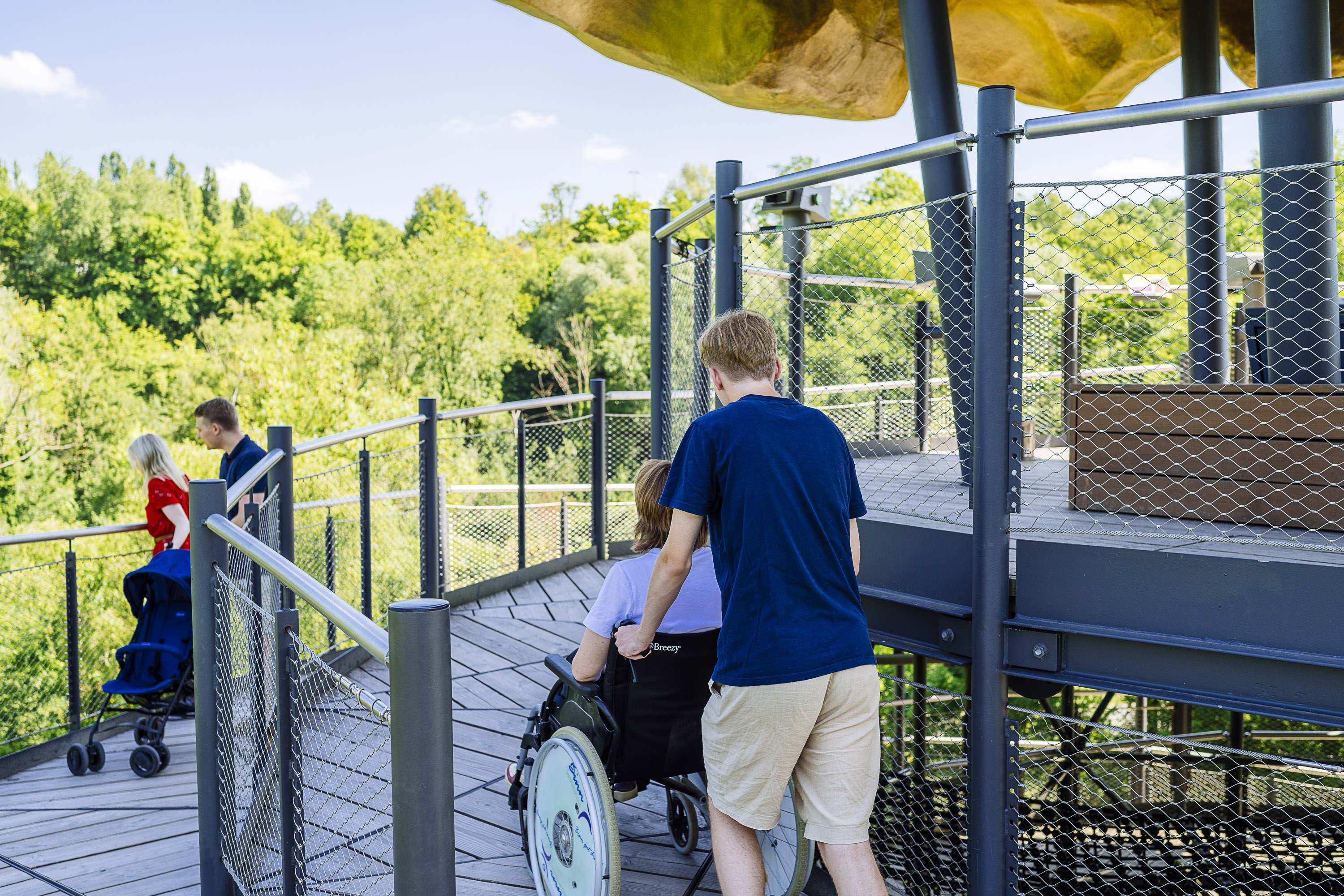
There is also plenty to discover outside the museum building: Not far from the museum lies the world-famous site where the Neanderthal, discovered in 1856 and named after the Neander Valley, was found. The “Höhlenblick” observation tower was built here in the fall of 2022. The open steel structure stands exactly where the Feldhofer Grotte—the cave where the Neanderthal remains were found—once stood; the cave was destroyed in the 19th century by limestone mining. Thanks to interior and exterior ramps, the tower is accessible over a distance of more than 360 meters, and visitors can quickly exit via an interior spiral staircase.
Crowning the 22-meter-high, multimedia adventure tower is a replica of the original skull, magnified fifty times, which creates a “cave-like atmosphere” on the top platform. Below, visitors can use state-of-the-art augmented reality technology to travel back to the Stone Age and experience the daily lives of Neanderthals. Guests with a particularly strong head for heights can get a sense of the valley’s once-deep gorges at a height of 20 meters on a large climbing net inside the tower.
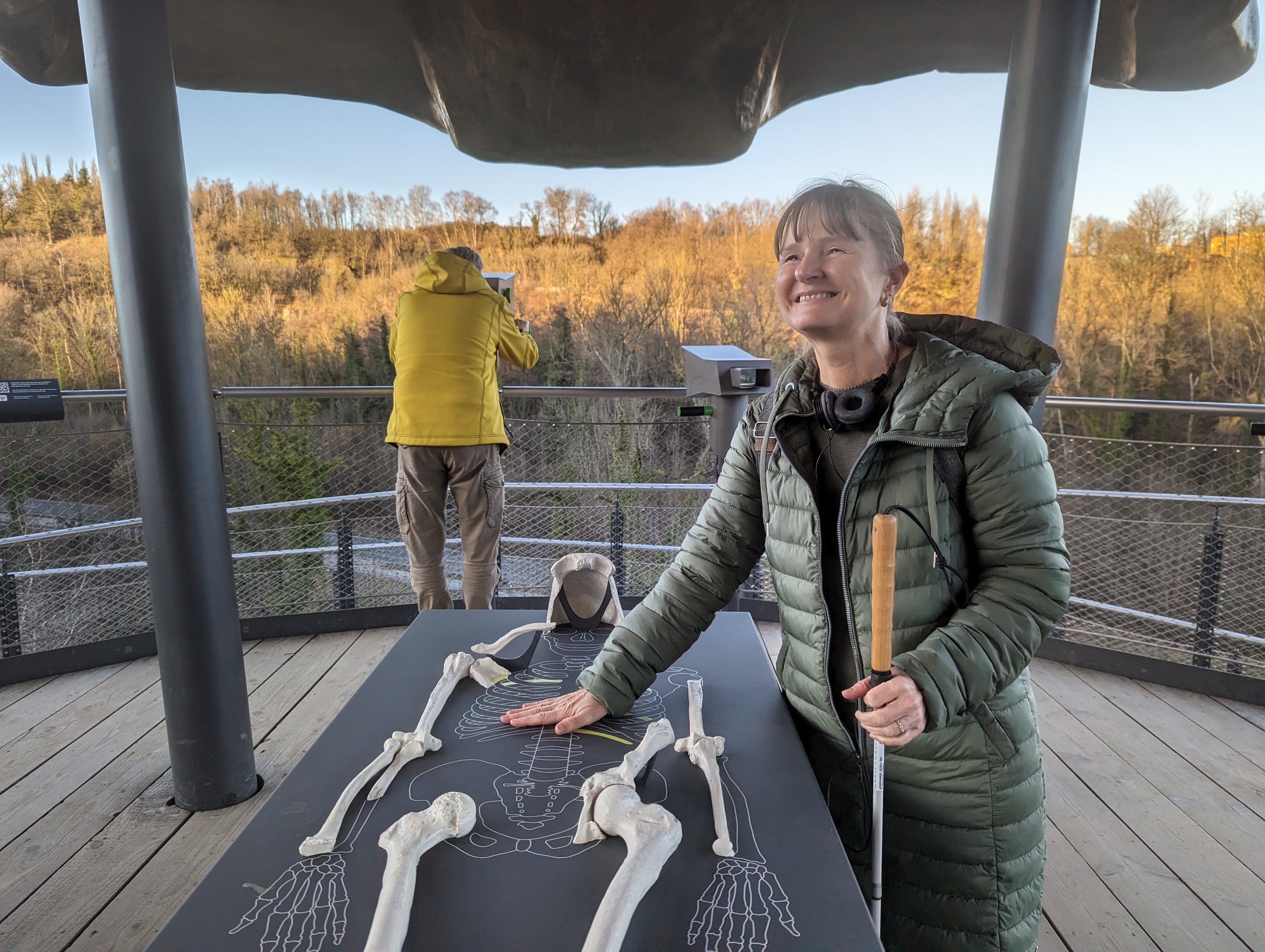
In collaboration with blind and visually impaired testers, NMsee developed a new tour at the Neanderthal Museum. Using a floor-guidance system and the central railing, guests are guided to a total of 17 new tactile stations featuring Braille and raised lettering. Here, in addition to authentic Stone Age hunting weapons, Neanderthal skulls, and a 3D print of the skeletal remains discovered in 1856, they’ll find the inclusive mobile game “Neanderthal: Memories.” In this game, visitors join the hunter Nami in discovering memories of Nami’s long-past life in the Stone Age. The game can be played by both sighted and visually impaired players and is available for free download on Android and Apple devices.