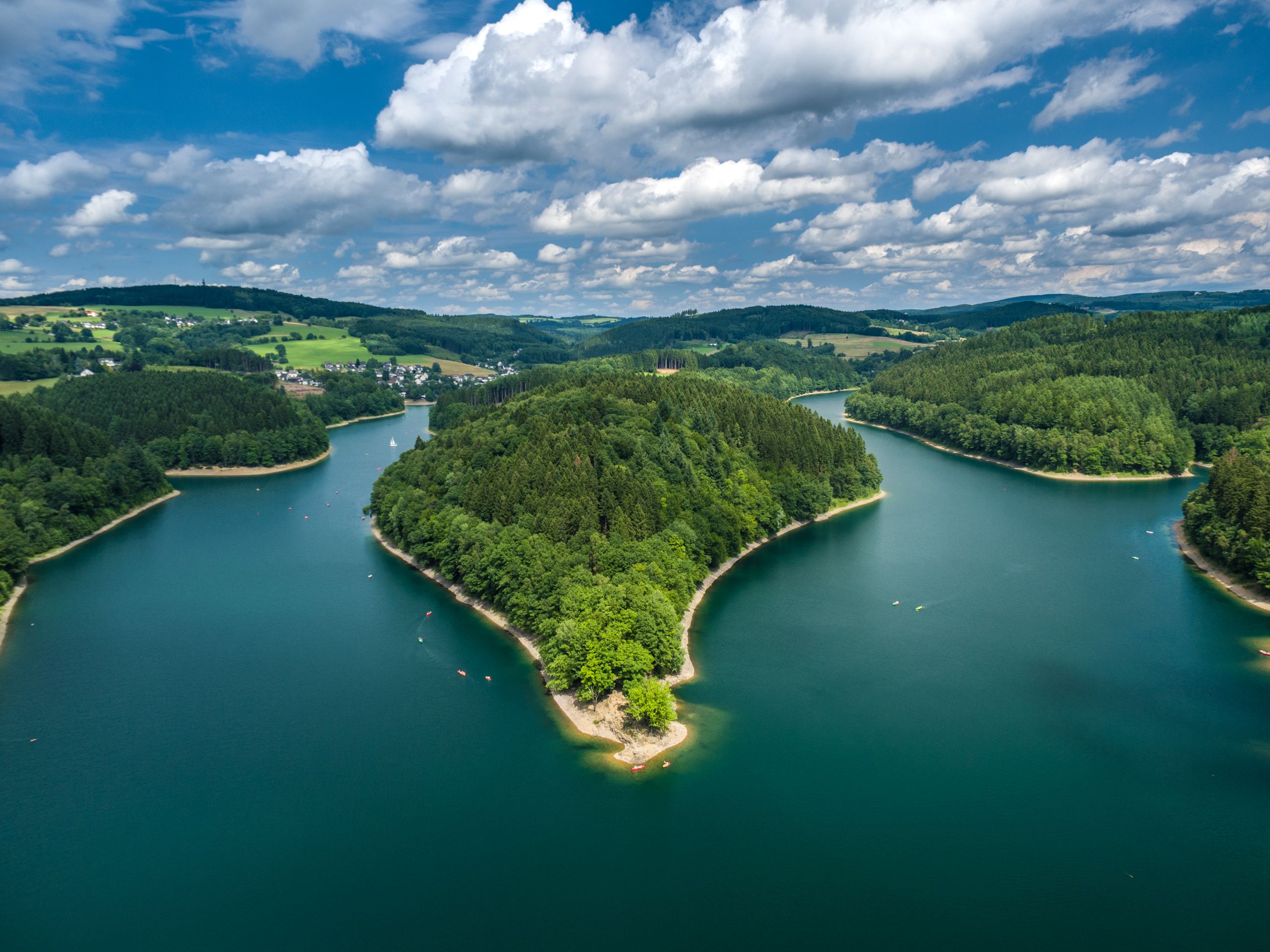
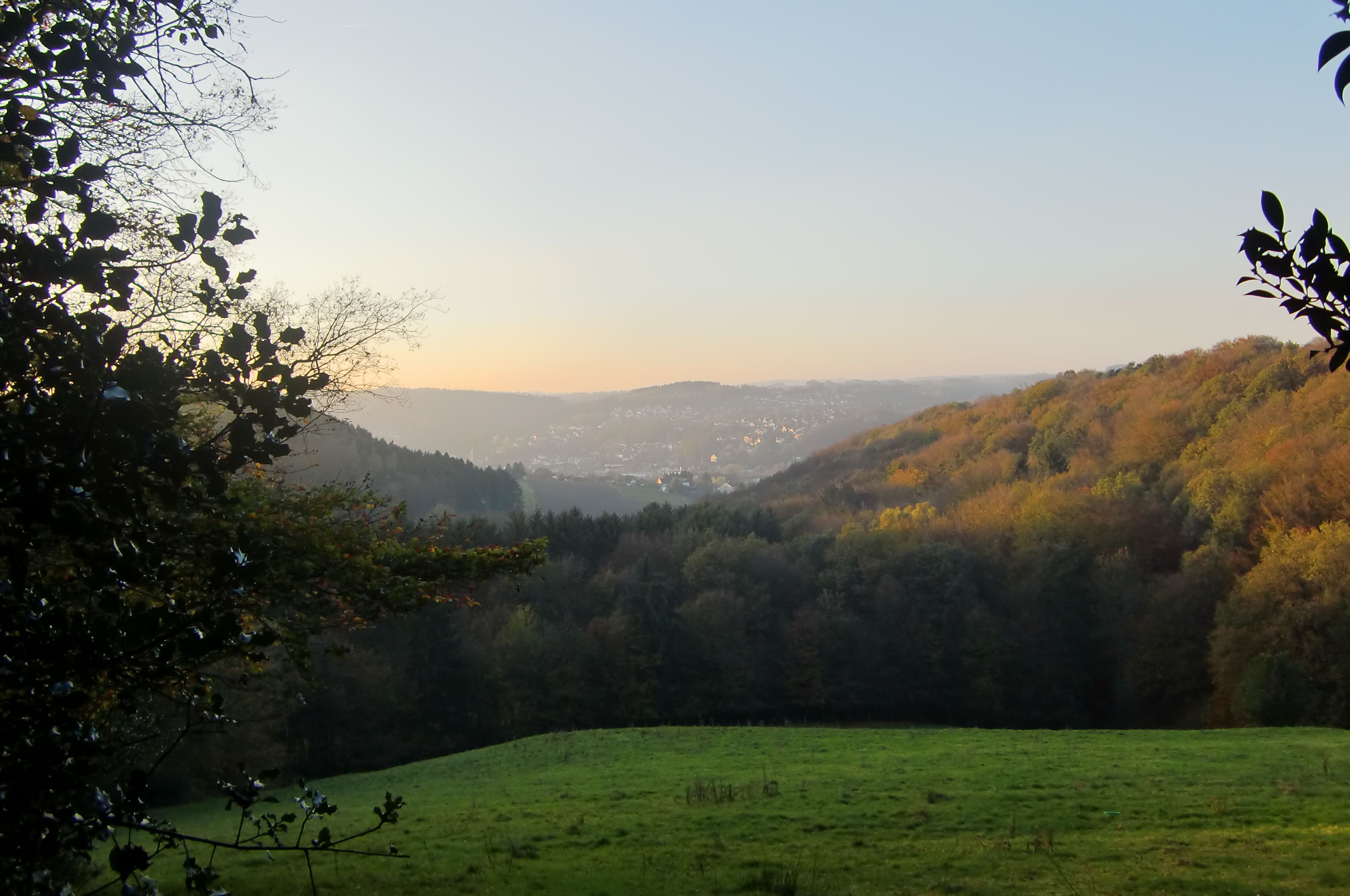
As late as the 19th century, life in the Bergisches Land was characterized by low-yield agriculture and grueling industrial labor in the numerous forges and cottages. For visitors to the LVR Open-Air Museum in Lindlar, what this meant for people back then is more than just a theoretical concept.
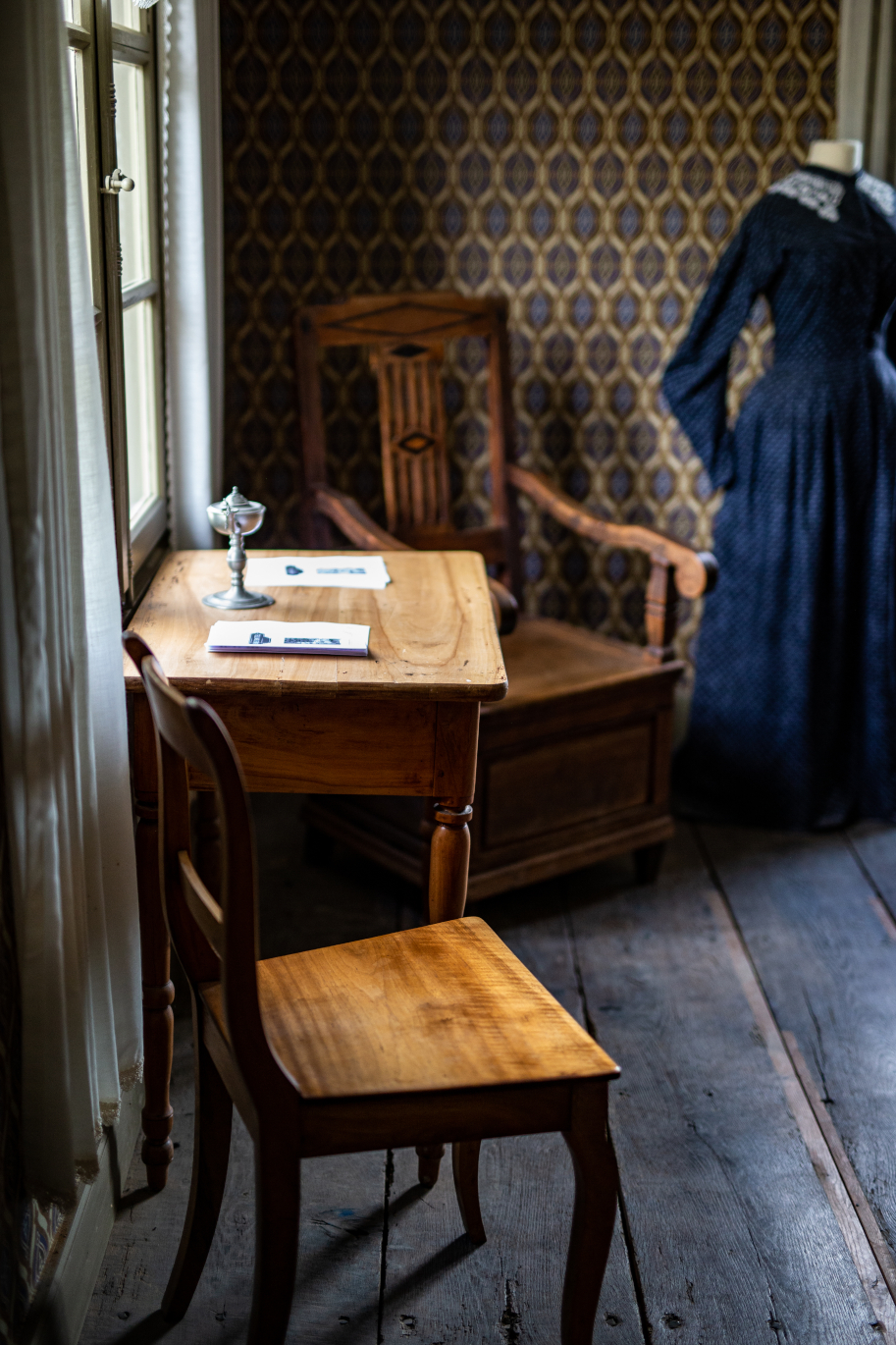
Washing without running water. Buckets made of straw. Recycling rags. How was that even possible? Visitors to the Lindlar Open-Air Museum will be surprised by the variety of things that existed and what shaped everyday life for people in the Bergisches Land around 1900. With numerous exhibitions in historic buildings, the museum, spread over an area of about 25 hectares, brings the past 200 years back to life.
Surrounded by small, fragmented fields—typical of the Bergisches Land around 1900 and still cultivated today using traditional methods—groups of houses from different historical periods are gathered around the center in the Lingenbach Valley. The oldest group of buildings, the “Hof zum Eigen” with its combined living and barn house, bakehouse, and barn, dates from around 1800. In the hamlet of Steinscheid, there is a blacksmith’s shop and a wheelwright’s workshop from the 1940s. Here, it’s certainly not just the blacksmith but also his audience who work up quite a sweat as he shapes the red-hot iron with his heavy hammer.
Exhibitions and Demonstrations
After all, work is also done at the museum. Things get noisy in the ribbon weaving workshop, for example, when the 150-year-old wooden loom starts moving. The scent of fresh bread wafts through the air once the historic wood-fired oven in the bakery is finally preheated. And in the rope-making workshop, the rope-maker is happy to let his guests lend a hand with the “beating” process—provided they aren’t busy tackling a few tests of strength on the water trail themselves or discovering, to their surprise, that the saddler doesn’t actually make saddles at all.
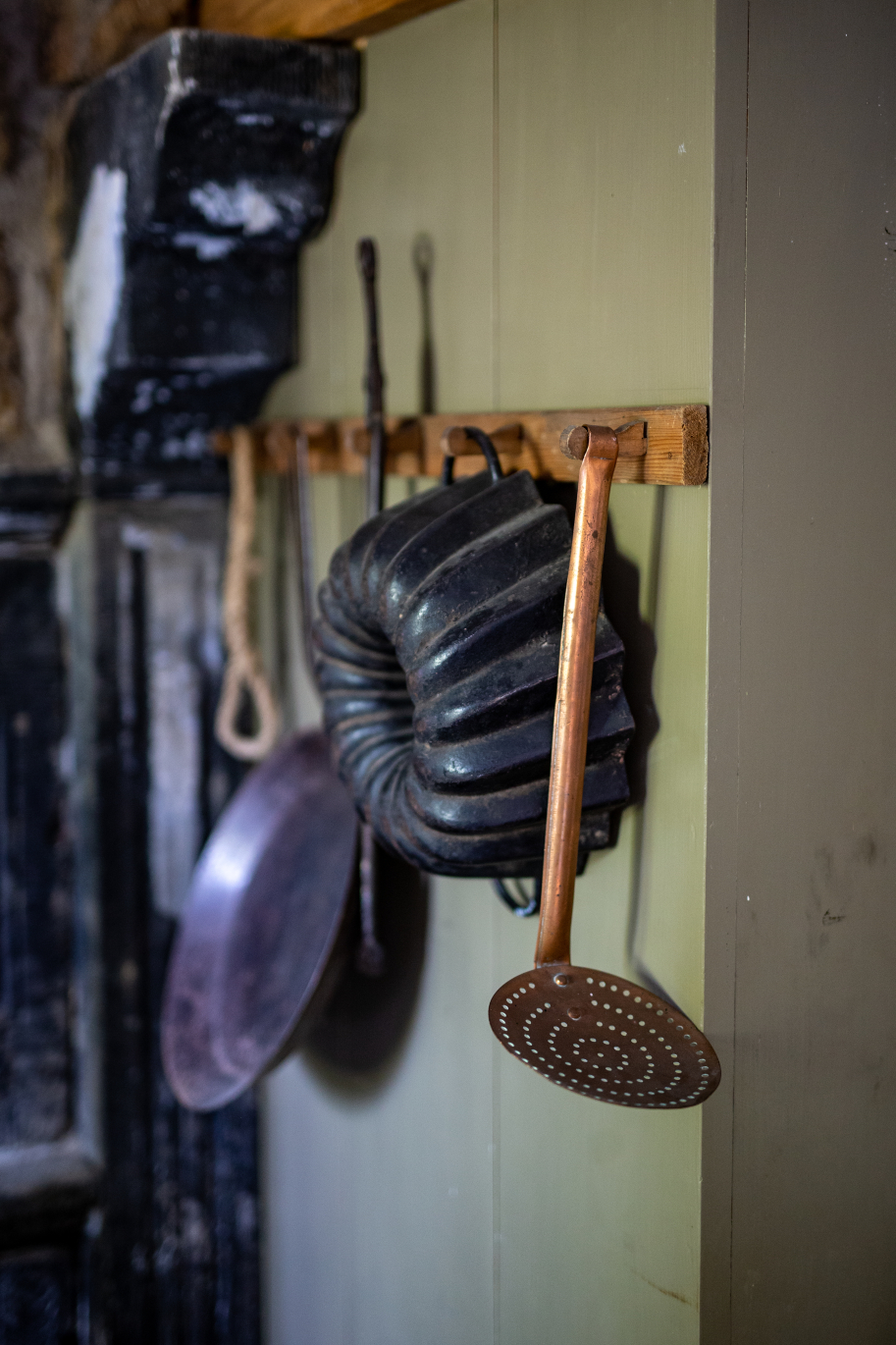
Speaking of which: The numerous permanent exhibitions in the historic buildings are full of surprising facts. For example, visitors learn that straw could even be used to make waterproof buckets, how artificial wool was produced from rags, and why we celebrate Corpus Christi in the first place.
If that’s too much for one day, you can simply stay at the “Museum Inn.” The reconstructed barn and coach house of the Dahl estate offer a unique kind of lodging. After all, guests find themselves back in the 19th century.