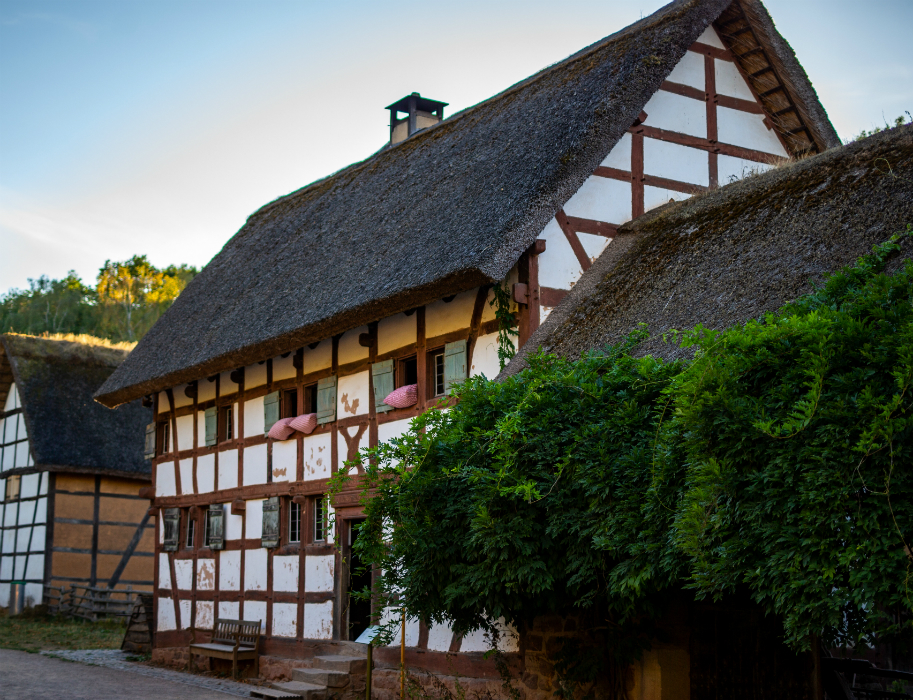
A journey through time at the LVR Open-Air Museum in Kommern in the Eifel takes visitors back 500 years. One of the largest museums of its kind in all of Europe transports visitors right into the world of our ancestors. In 75 historic buildings, including farms, workshops, windmills, and watermills, visitors experience firsthand how people in the Rhineland once lived and worked.
It’s as if time has stood still. The scent of freshly baked bread wafts through the air. Geese and chickens scurry excitedly across the cobblestones. Mouse-trap seller Regine “Jien” Braconnier loudly touts her wares. From the blacksmith’s shop comes the loud clang of the hammer on the anvil. Welcome to the past. Welcome to the Kommern Open-Air Museum.
Smokehouses and half-timbered buildings
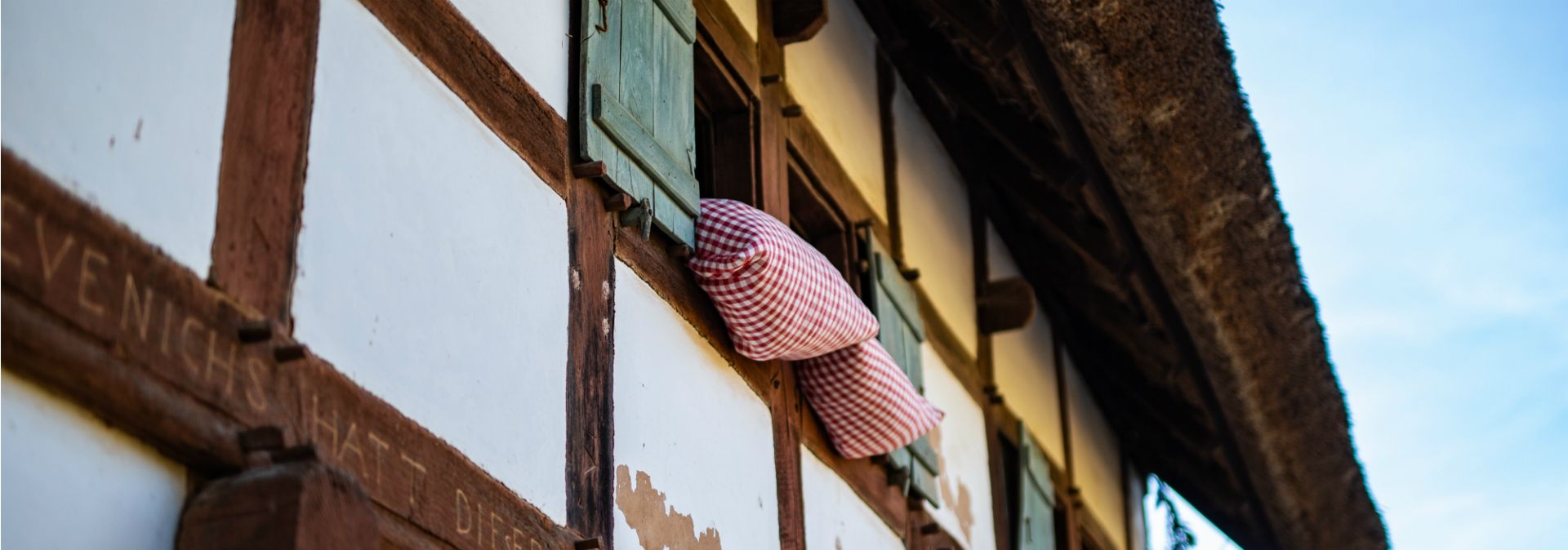
Throughout the year, visitors can gain insight into village life in the former Prussian Rhine Province. Various projects and activity days offer the chance to get involved. A total of 75 historic houses and barns were dismantled in the Rhineland and rebuilt on the museum’s 100-hectare grounds. Simple smokehouses without chimneys, typical of the Westerwald as late as the 16th century. Half-timbered buildings from the northern Eifel. But also farmsteads and barns where people in the Lower Rhine and Bergisch regions lived under one roof with pigs, horses, and chickens.
As they stroll through the villages and hamlets, fields, and orchards, visitors also encounter “real” people from the past, such as Sister Clara Fey, who once cared for poor, abandoned children, or the farmer’s wife Anna Ippendorf. At regular events such as “After the Harvest,” “Cabbage-Wiping Day,” or “Advent for All the Senses,” she vividly recounts stories of cooking over an open fire, spinning at the spinning wheel, and the laborious work of tending the garden.
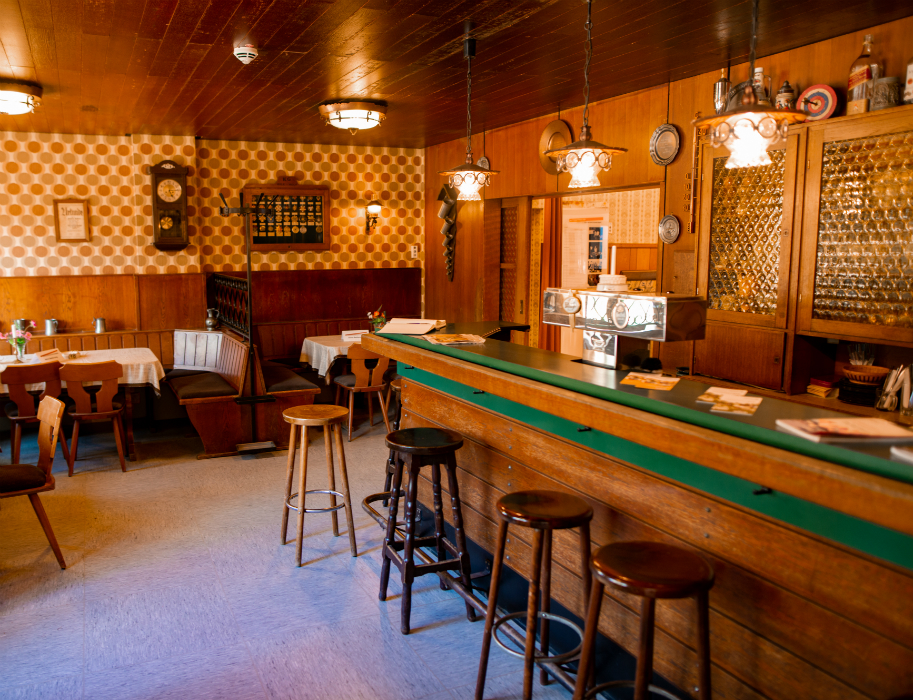
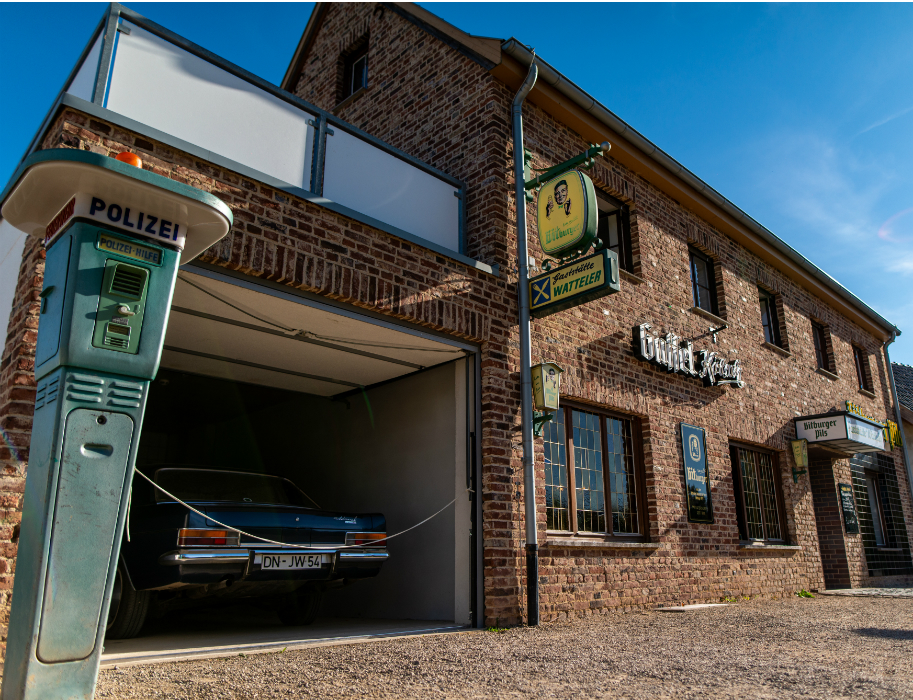
It’s just a few steps from everyday village life to the more recent past. In the narrow streets of the small town of Rhenania, visitors stroll through time—from the French occupation through the German Empire to the postwar era. From here, they reach the Rheinland Market Square, which brings the 1950s through the 1990s back to life. Some visitors may still remember those days—for example, the prefab house from the Quelle catalog, the first bungalows, and the emergency call box, also known as the “Iron Policeman.” But visitors can also explore an old air-raid shelter, Nissen huts—which served as temporary housing for numerous families whose homes had been bombed—and a temporary shelter for refugees: a container from 1991. A special highlight is the “Time Portal,” which, against an appropriate backdrop, brings back the feeling of what life was like 50 years ago. Visitors are invited to immerse themselves in their own personal memories here and relive their own past.