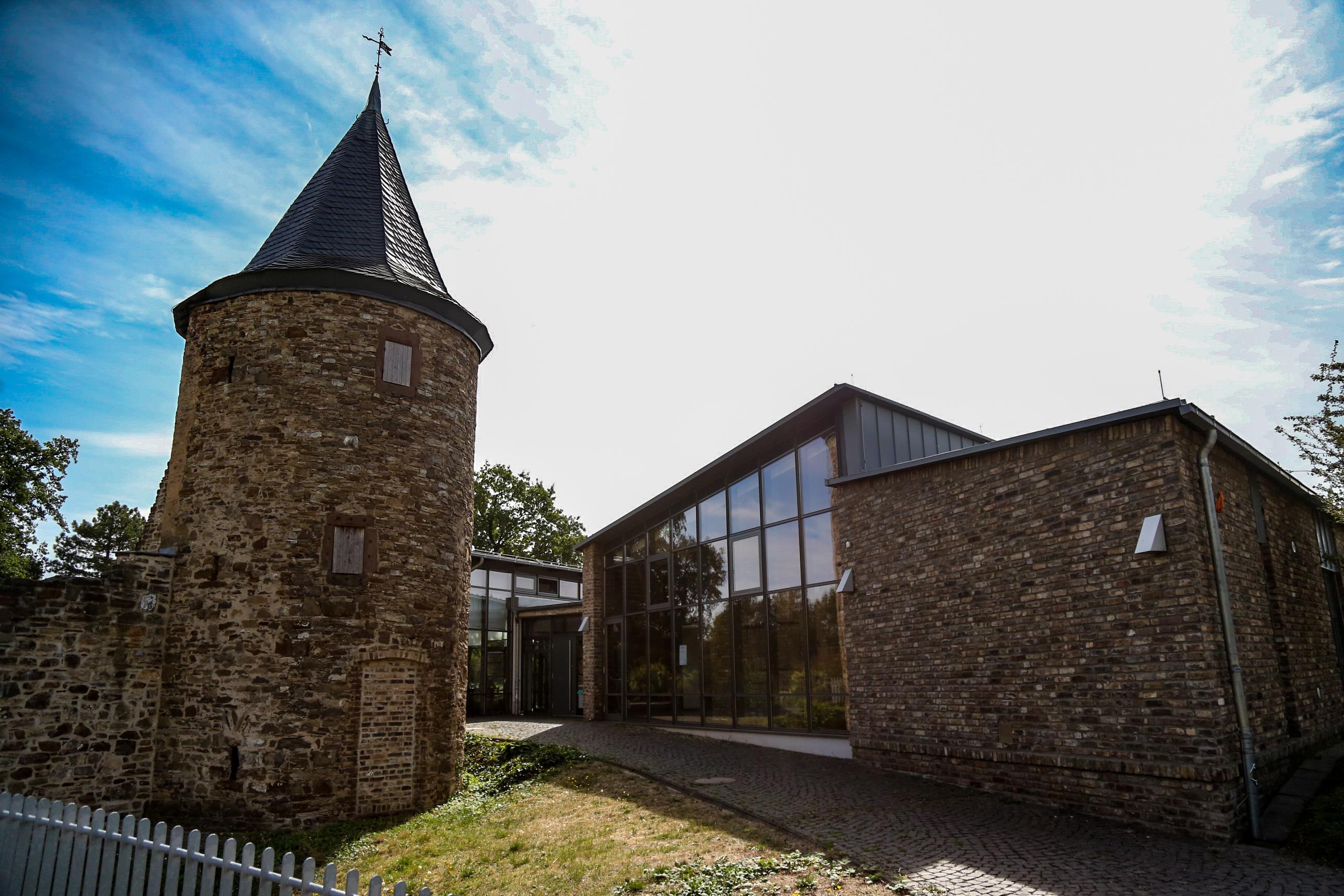
Business was slow when Kurt Müller, a cloth manufacturer from Euskirchen, shut down the machines in 1961 and locked the gates of his once-thriving factory in Euskirchen. Today, the old looms are running again—at the LVR Industrial Museum: Müller Cloth Factory.
It’s as if time has stood still: a tear-off calendar from 1961 hangs on the wall. On the door of the dye house, the recipe for a dye solution—which Ludwig Müller wrote there in chalk more than 60 years ago—is still faintly visible. Piles of handwritten notes lie scattered across the weavers’ workstations, with the occasional half-empty cigarette pack here and there. Even an old coffee mug is still sitting there, as if its owner were about to return from a break at any moment.
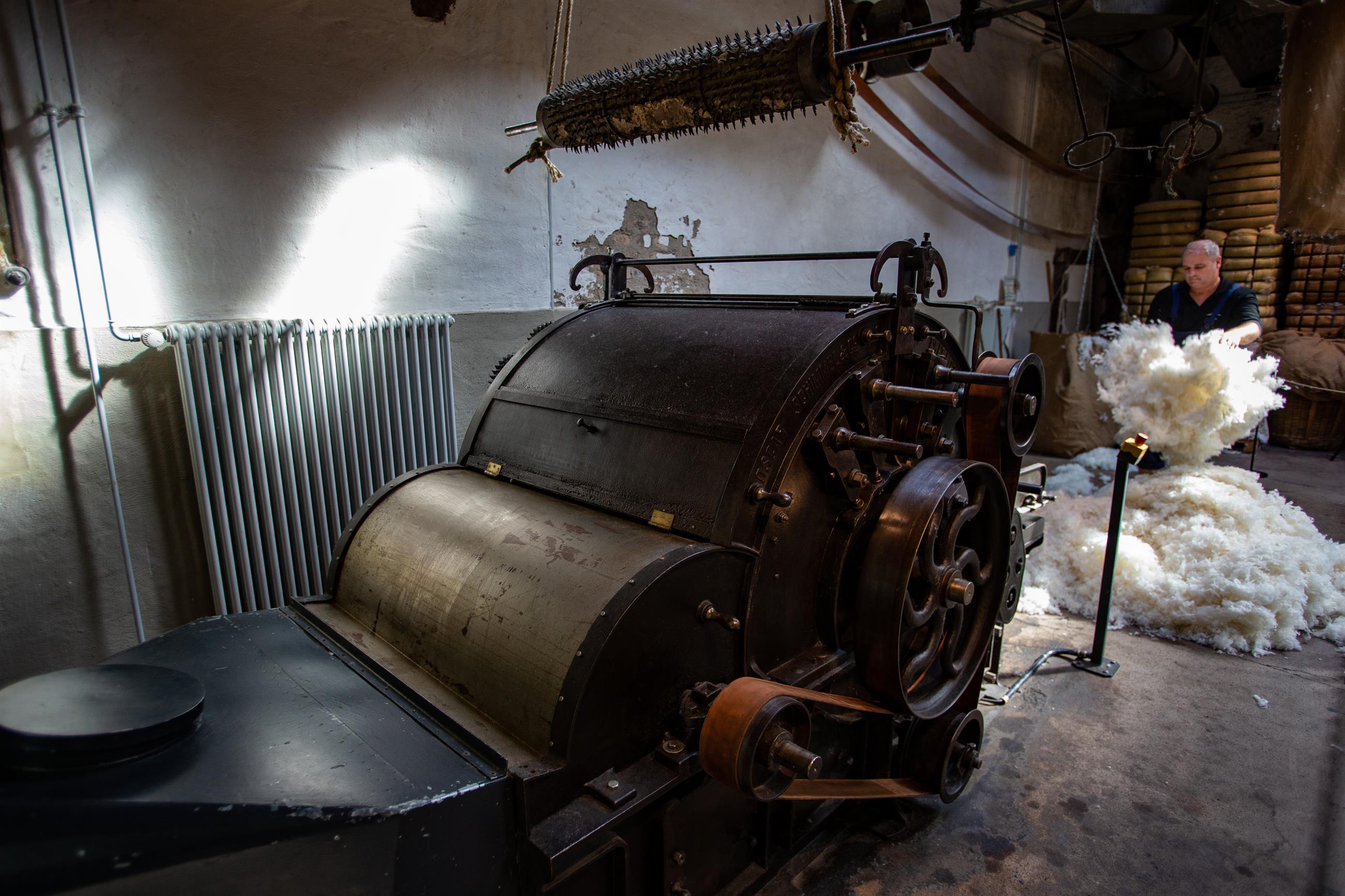
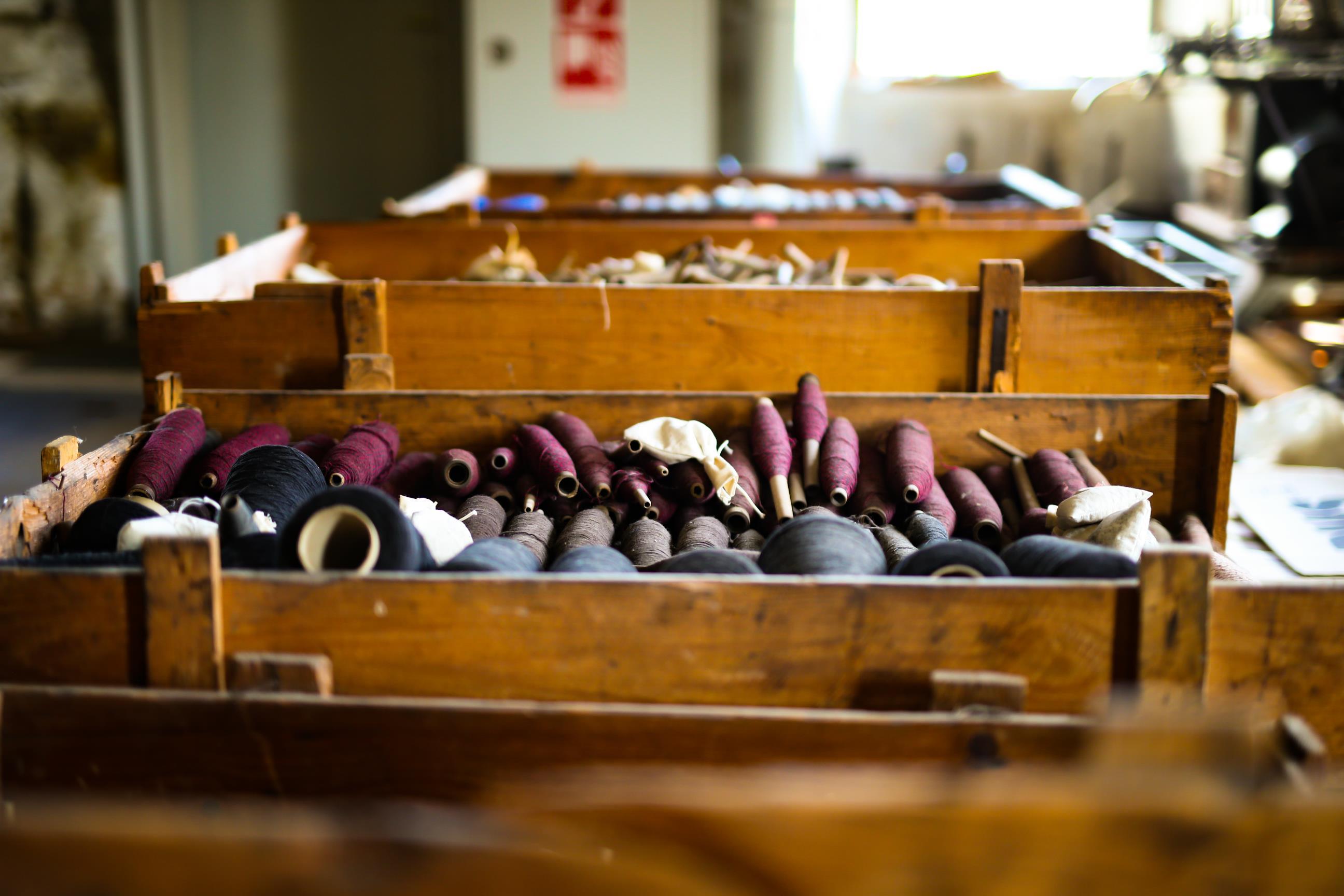
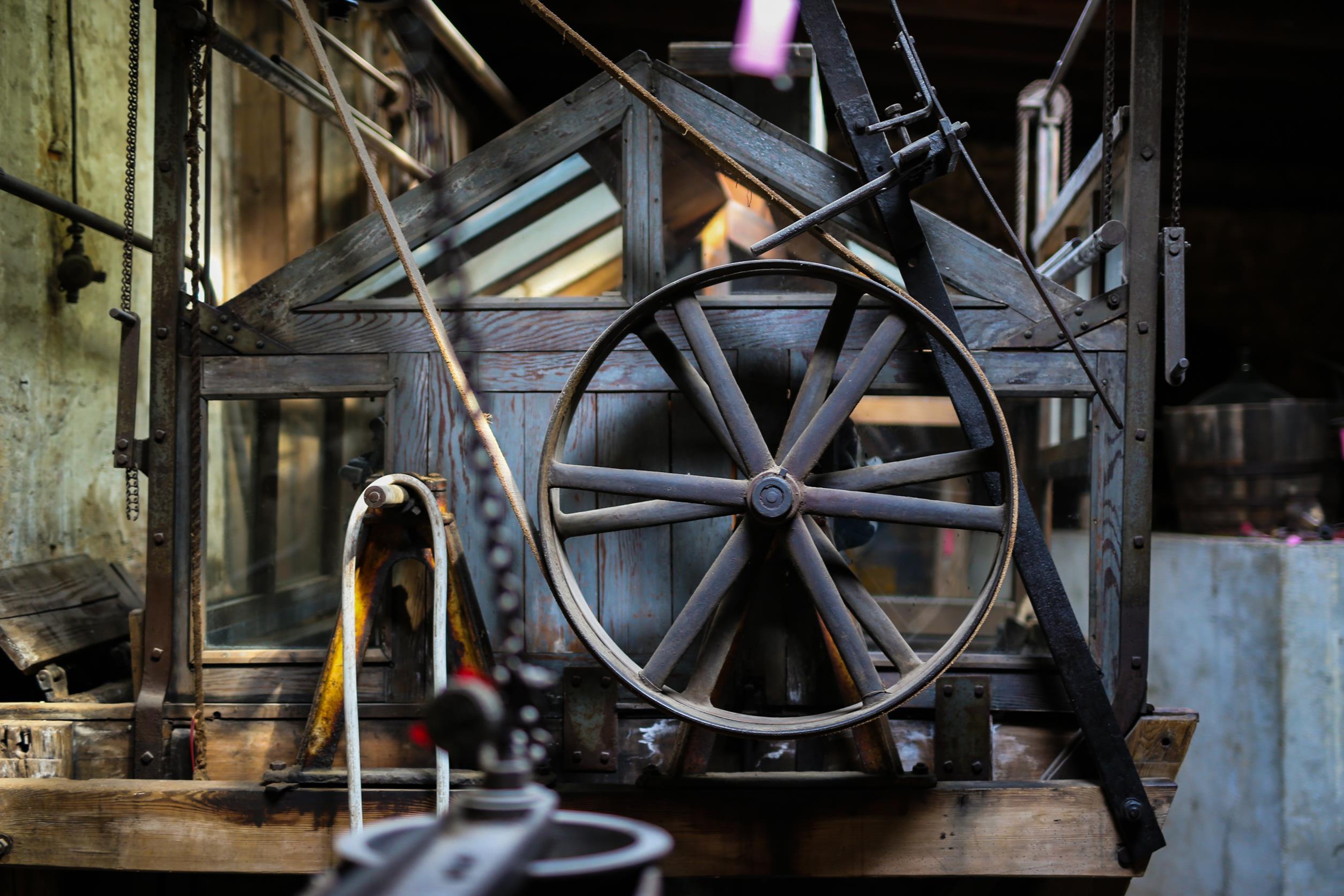
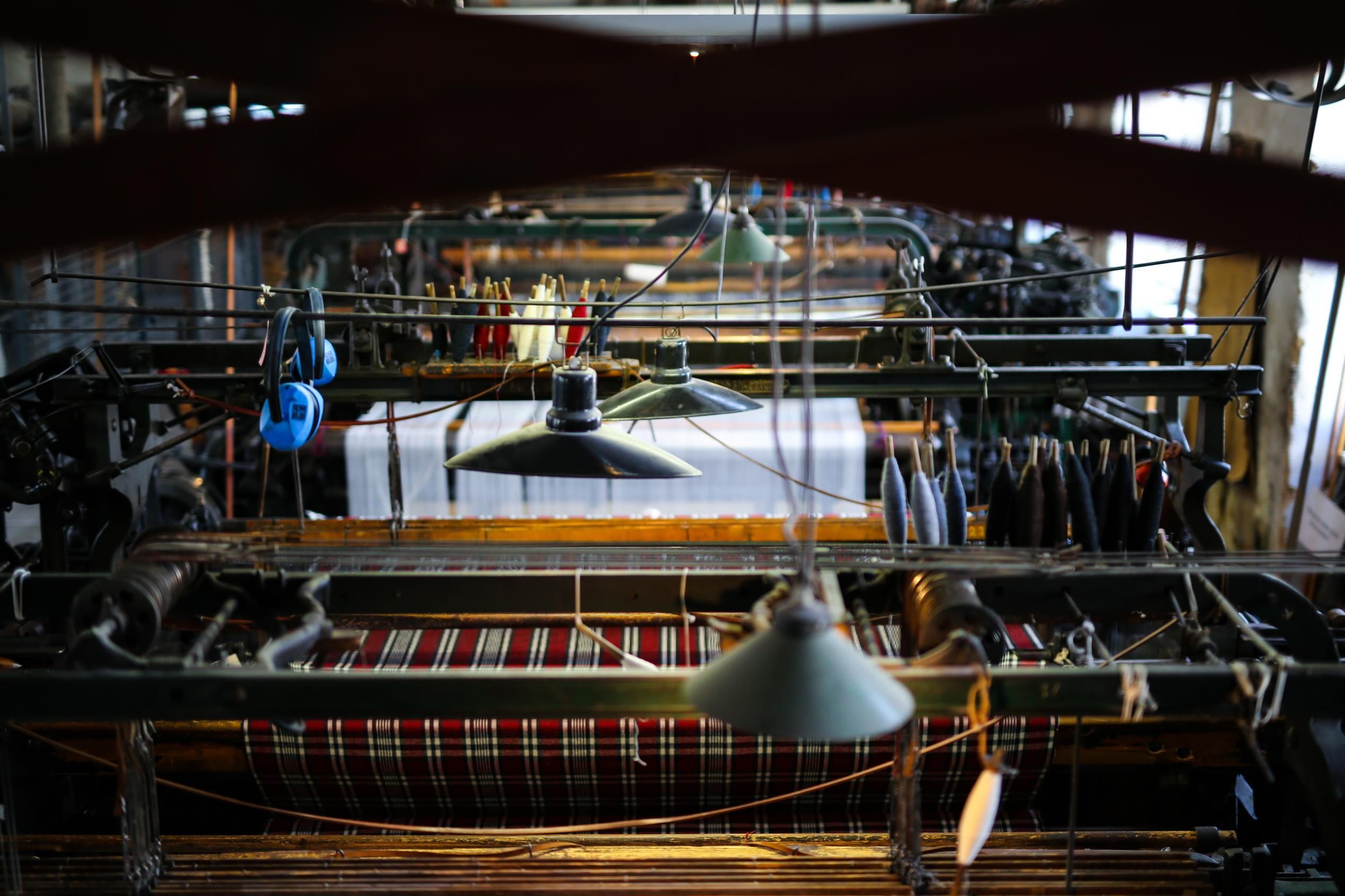
It was to be a long break. It wasn’t until nearly 40 years after the last owner had closed the factory that the gates opened again for the first time. And nothing had changed. The facility was still completely intact and is now back in operation. After the machines were cleared of dust, rust, and cobwebs and lovingly restored, one of the LVR’s most unusual industrial museums opened in the factory building in 2000. Since then, during regular guided tours, the weaving shuttles have been whizzing back and forth once more, turning loose wool into fine cloth. Visitors can watch live as powerful carding machines comb the wool and delicate spinning machines form a fine thread of yarn. The massive steam engine from 1903 can also be admired in action during the regularly held “Steam Sundays.”
The Müller Cloth Factory also exemplifies the rise and fall of the Rhineland textile industry, which actually began with paper production. Originally built as a paper mill at the beginning of the 19th century, the factory was converted into a spinning mill and fulling mill 40 years later—and experienced a veritable boom. That is, until Kurt Müller, as mentioned, shut down the machines one day in 1961 and left the factory just as it was. For today’s visitors, this is a true stroke of luck.