The painter, sculptor, and cosmopolitan Max Ernst (1891–1976) once declined honorary citizenship of the city of Brühl, stating that it was “incompatible with his way of thinking, acting, and behaving.” However, large parts of his artistic legacy found their way back to his hometown in the Rhineland. The Max Ernst Museum opened in 2005 in the former “Brühler Pavillon.” In addition to several early paintings, it showcases nearly the entire body of graphic work as well as 70 sculptures by the Dadaist and Surrealist, who was primarily active in France and the United States.
Max Ernst was arguably one of the most creative and imaginative artists of the 20th century. In his search for ever-new forms of expression beyond convention and the “rule of logic,” he developed techniques that offer space for mental games, associations, and dreams. This gave rise to bizarre figures, poetic landscapes, and fantastical compositions whose allure the viewer cannot resist. Together with Hans Arp, he founded the Cologne Dada movement as early as 1919; two years later, he moved to Paris and achieved worldwide fame as a co-founder of the Surrealist movement.
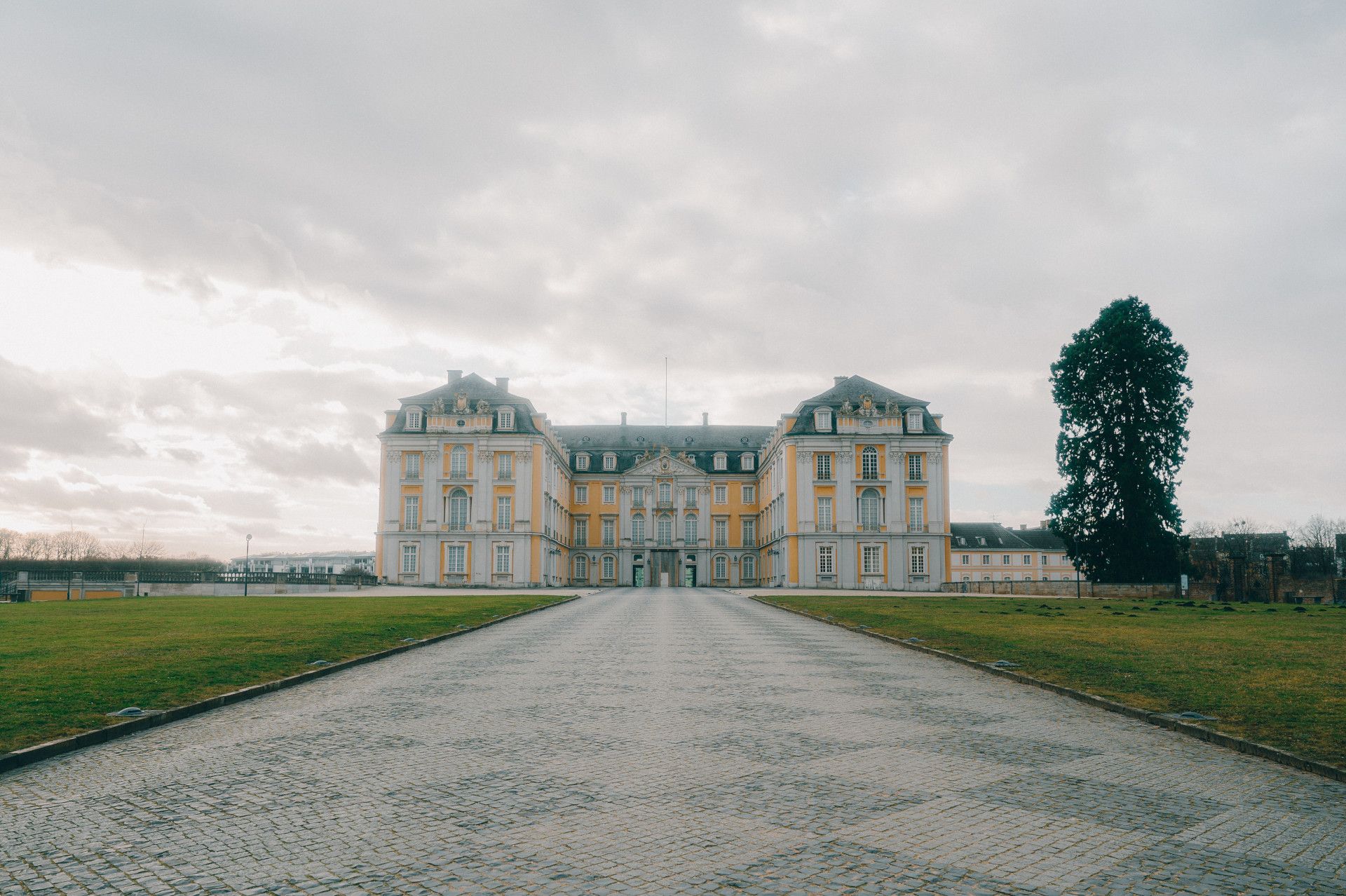
The Max Ernst Museum of the LVR in Brühl is the only museum in the world that can look back on some seventy years of this exceptional artist’s creative work. Not far from Augustusburg Palace, where the largest retrospective to date was held in 1951, the Max Ernst Museum opened in 2005 in the former “Brühler Pavillon.” The three-winged, 19th-century neoclassical complex was once a popular destination for day trips, which Max Ernst also enjoyed visiting in his youth. For the museum, which, thanks to the Schneppenheim Collection, holds nearly the entire body of Max Ernst’s graphic work, the complex was expanded to include a central glass pavilion and a “floating” entrance platform.
In addition to his graphic works, the LVR Museum’s permanent exhibition includes 70 sculptures made from everyday objects such as egg cartons, spools of thread, and wires, as well as a unique collection of more than 700 photographic documents by the artist. Finally, 36 “D-paintings”—all of which were birthday and love gifts to his wife, the artist Dorothea Tanning—offer a glimpse into the soul of Max Ernst.
The Max Ernst Museum in Brühl, however, sees itself not merely as a museum exhibition space, but also as a “fantasy laboratory.” Since 2012, in the artist’s birthplace—a building constructed in 1885 in the late-Classical style—as well as in a light-filled extension, visitors have been able to try out techniques such as frottage and collage for themselves and discover their own creativity. Just as their great role model would have intended.