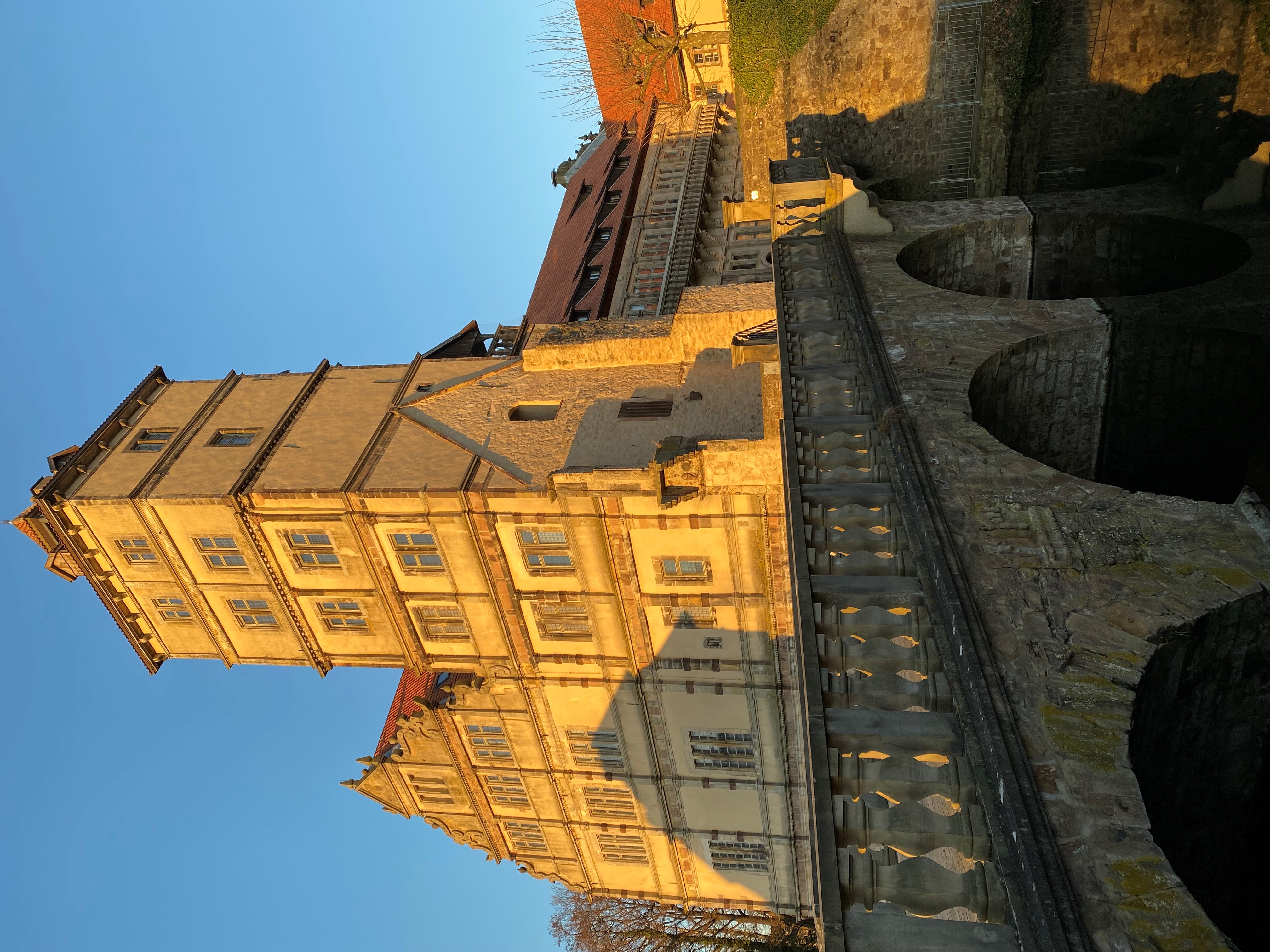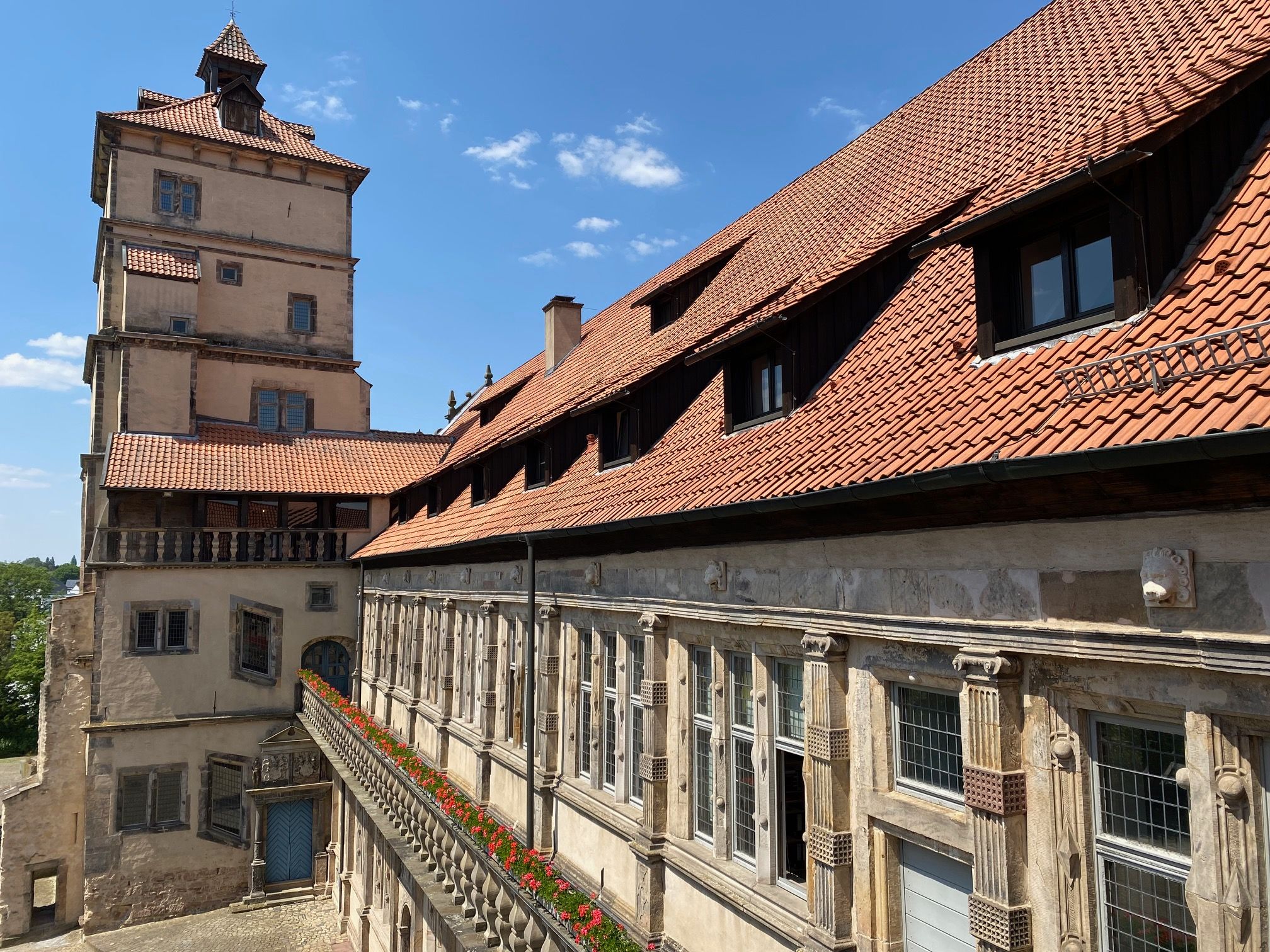
Brake Castle was extended from 1584 as the residence of the Counts of Lippe in the Renaissance style.
It is surrounded by a moat and stands on the foundations of one of the largest medieval castles in northern Germany. The striking tower makes it a landmark of the old Hanseatic town of Lemgo that can be seen from afar. The buildings in the immediate vicinity of the castle still convey an impressive image of an early modern residence, including the domain, three historic mills and a wash house.
The Renaissance castle was built by Count Simon VI zur Lippe (1554-1613).
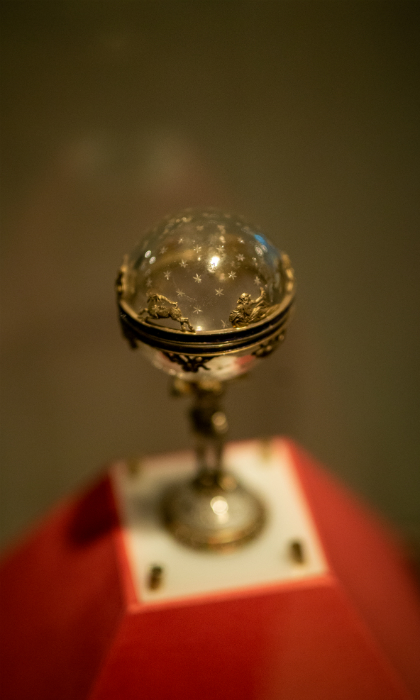
As an envoy, court councillor and art agent to Emperor Rudolf II, he often spent time at the court in Prague and in the Netherlands. Simon represented the type of educated Renaissance prince who was interested in art and science. He owned a collection of paintings and an extensive library. He observed the stars from his castle tower.
The current shape of the castle is the result of changes and renovations. In the 19th century, the west wing was demolished, the castle's inventory was auctioned off and a princely model brewery was set up in the east wing.
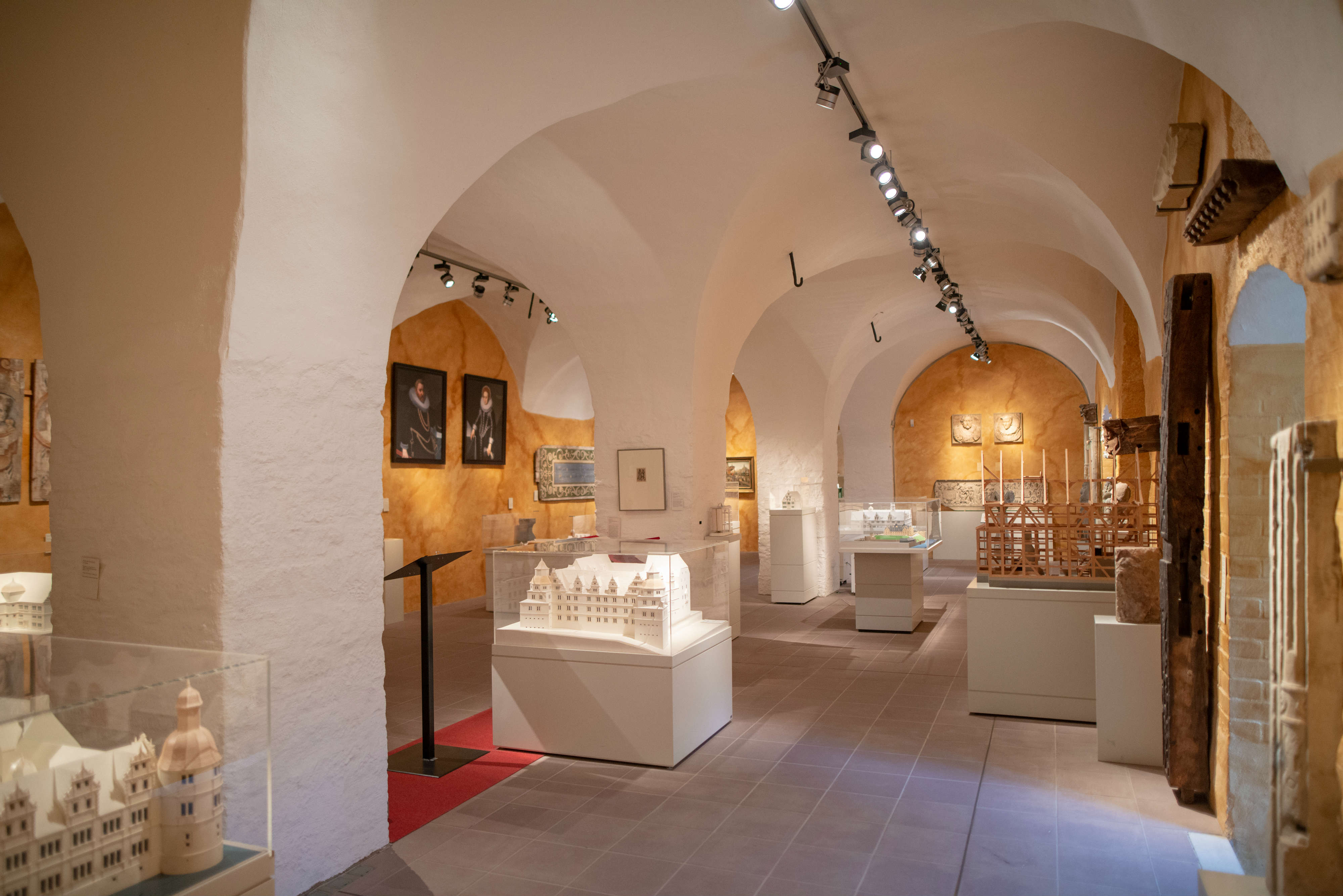
Brake Castle had been the seat of the Lemgo district administration since 1932 and was taken over by the Lippe state association in 1973. The Weser Renaissance Museum was established in one part in 1986.