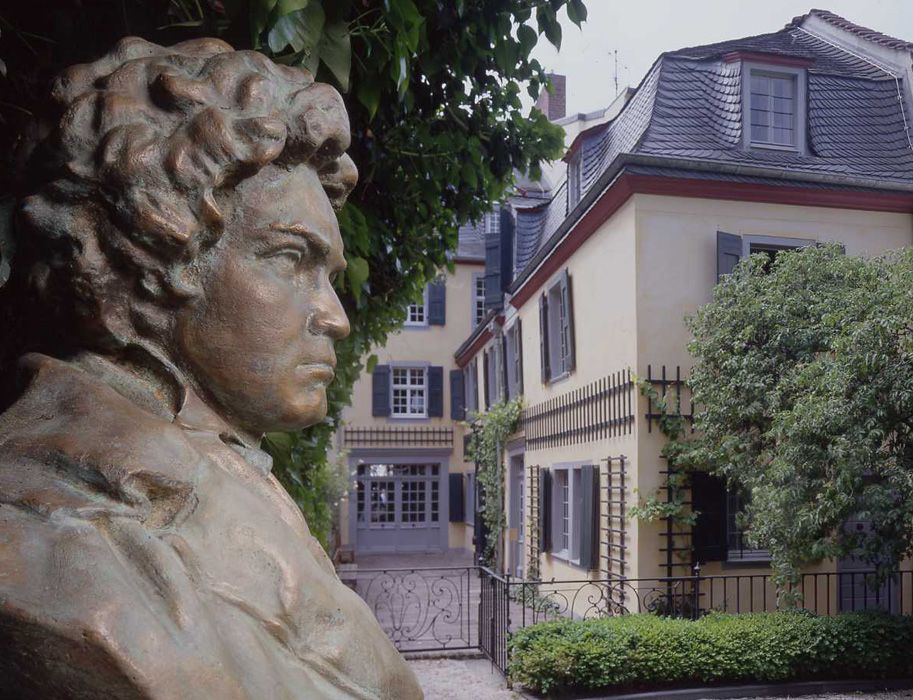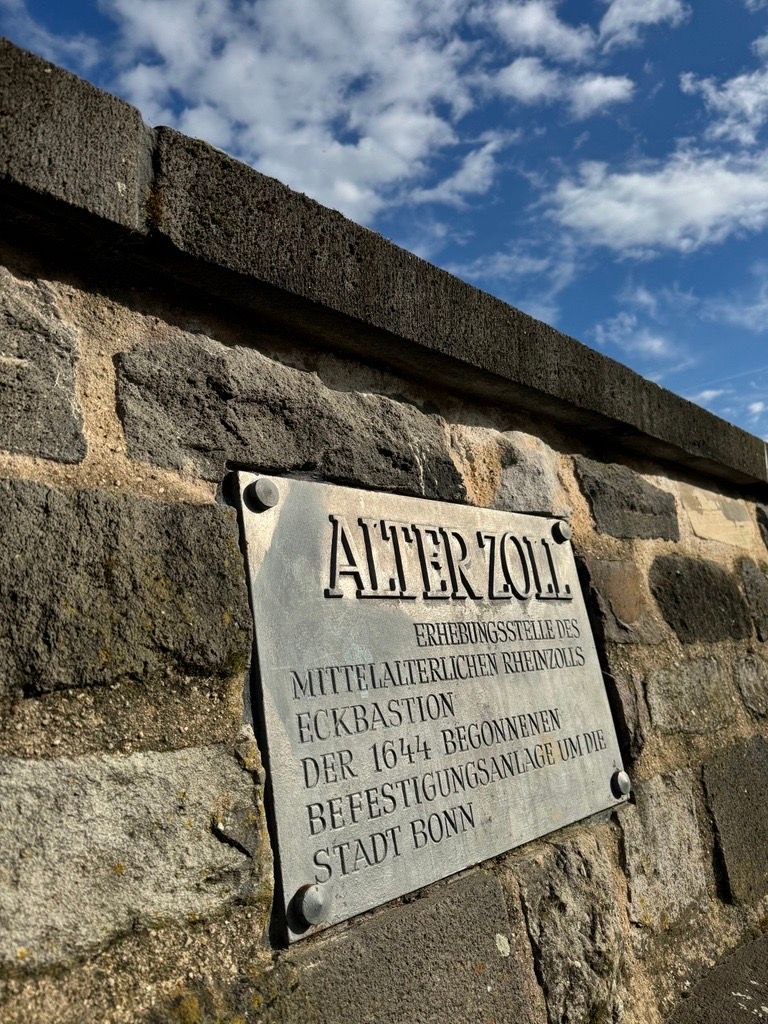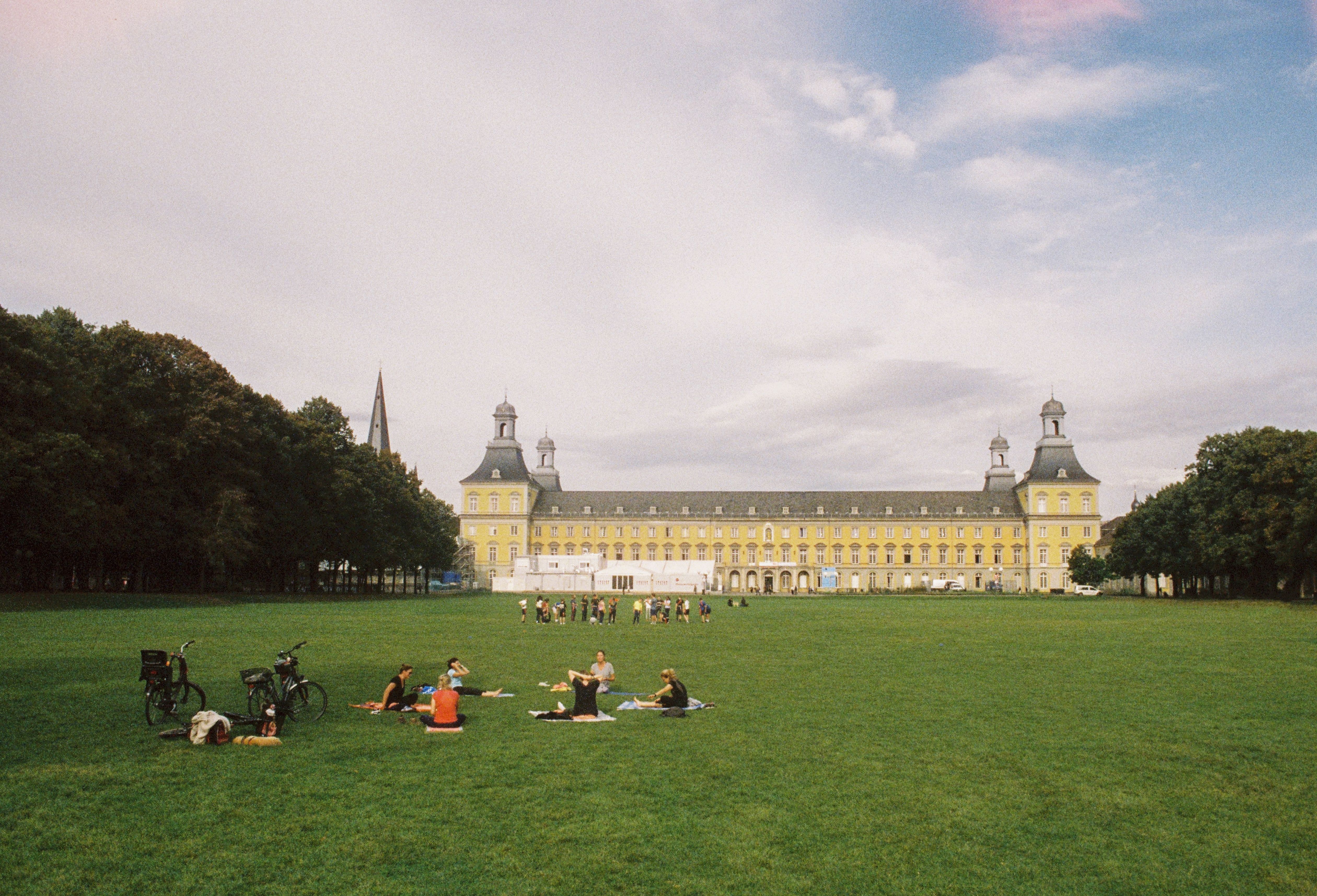
The very first stages reveal what makes this trail so special: The Rheinsteig isn’t a trail along the river, but a trail above it. Starting in Bonn, the city of Beethoven, the route leaves the city, crosses the Rhine, and climbs up to the heights of the Siebengebirge. Below, ships glide by; above, forest sections, rocky ridges, and sweeping views of the Rhine Valley alternate.
In the Land of the Dragon
Gorge-like valleys, densely forested peaks, basalt and trachyte cliffs: the Siebengebirge provides the backdrop for the romance of the Rhine. More than forty peaks characterize the nature park, including Stenzelberg, Petersberg, Großer Ölberg, Löwenburg, and Drachenfels. The Rheinsteig leads right into the heart of this landscape steeped in legends and stories.
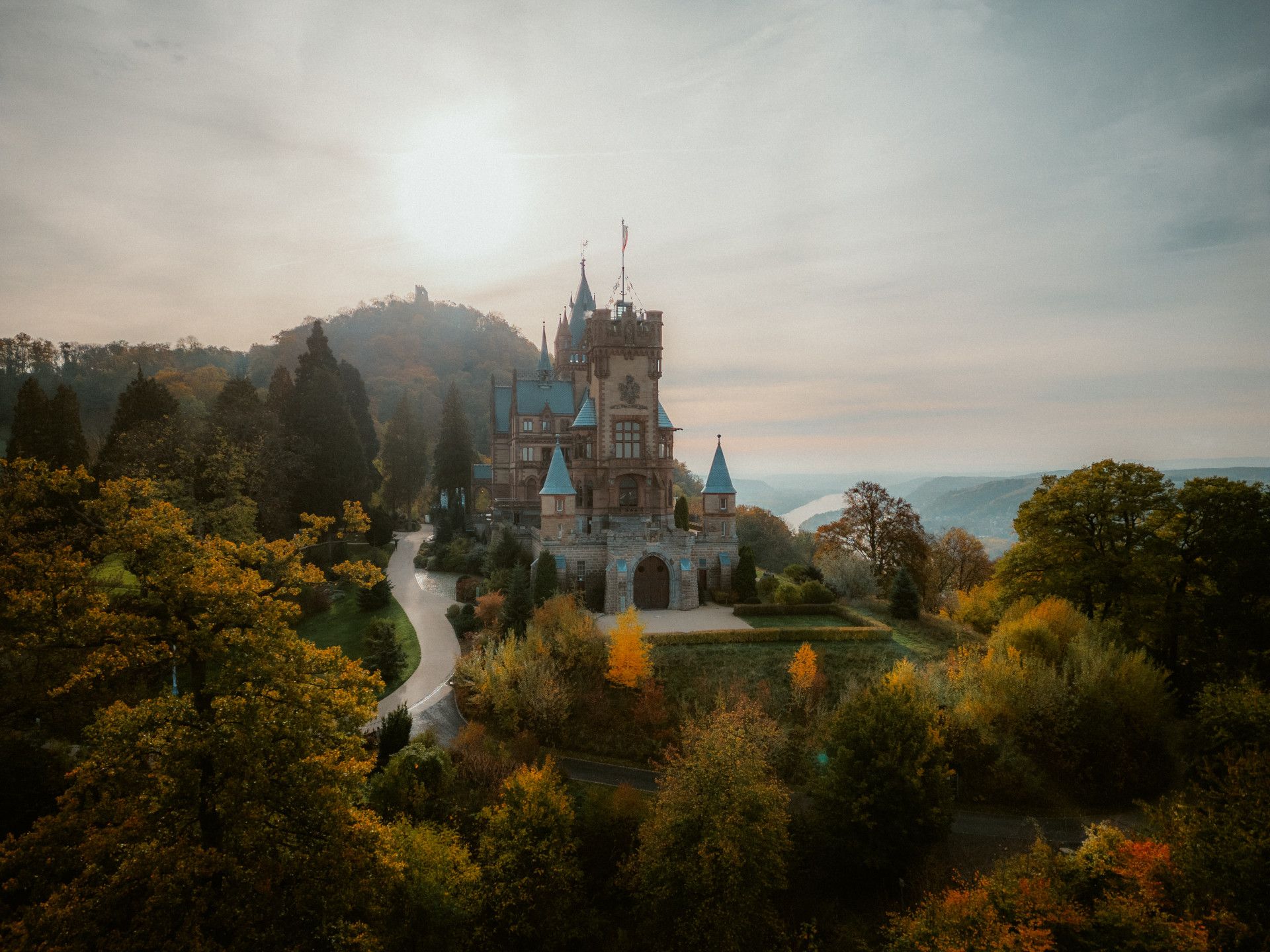
At Drachenfels, for example, the Nilung legend tells of the hero Siegfried defeating a dragon. Here stand the ruins of Drachenfels Castle, below which lies Drachenburg Castle with its towers, gables, and terraces. From the lookout points, the view extends over the Rhine, Königswinter, Bonn, and the hills across the valley. Not far away is the Nibelungenhalle, which continues the tale of the legend.
History also comes to life at other points along the way. The ruins of Heisterbach Monastery serve as a reminder of the former Cistercian abbey in the valley. On the Petersberg stands the former guesthouse of the Federal Republic, where state guests were received and political talks were held. Near Rhöndorf, the Adenauer House pays tribute to the first Federal Chancellor and the early days of the Federal Republic.
Poets, Rocks, the Rhine
The fact that the Siebengebirge is still associated with the romance of the Rhine today is also due to the people who described, painted, and set this landscape to music. Ludwig van Beethoven knew the Bonn area. Heinrich Heine wrote about the Drachenfels. Lord Byron made the rock famous beyond Germany’s borders with his verses about the Rhine. Later, painters, writers, and travelers further shaped the image of the Rhine Valley with its castles, ruins, vineyards, and rocks.
Its alternation between natural terrain and cultural landscape is one of the defining features of the Rheinsteig. In the Siebengebirge, forest trails lead to lookout points and rocky outcrops. Further south, vineyards come closer to the trail. Vines grow on slopes, paths run above villages, and stairs and trails connect higher elevations with riverside towns. Time and again, the Rheinsteig leads out of the forest, opens up the view, and shortly thereafter disappears again among trees, rocks, or walls.
The trail demands physical fitness. The stages include ascents and descents, narrow passages, and sections that require sure-footedness. Hikers quickly realize: The Rheinsteig thrives on its ups and downs. It is precisely this that constantly changes the perspective on the Rhine. Sometimes it lies deep down in the valley, sometimes it moves closer to the trail, and sometimes only a silver ribbon is visible between the tree trunks.
Hike as you like
The official stages serve as a guide. However, nothing is set in stone. Along the Rheinsteig, sections can also be combined differently, shortened, or planned as day hikes. The towns along the route have public transportation connections, and many Rhine towns also have train stations. Yellow-marked access trails connect town centers, train stations, and boat docks with the blue-marked main trail.
This way, you can start in the morning in Bonn, Königswinter, or Bad Honnef, ascend the Rheinsteig, and return later by bus, train, or boat. The boats of the Cologne-Düsseldorf Rhine Navigation also complement the trail: first on foot over the hills, then back through the valley on the water. This way, you can experience the legendary romance of th