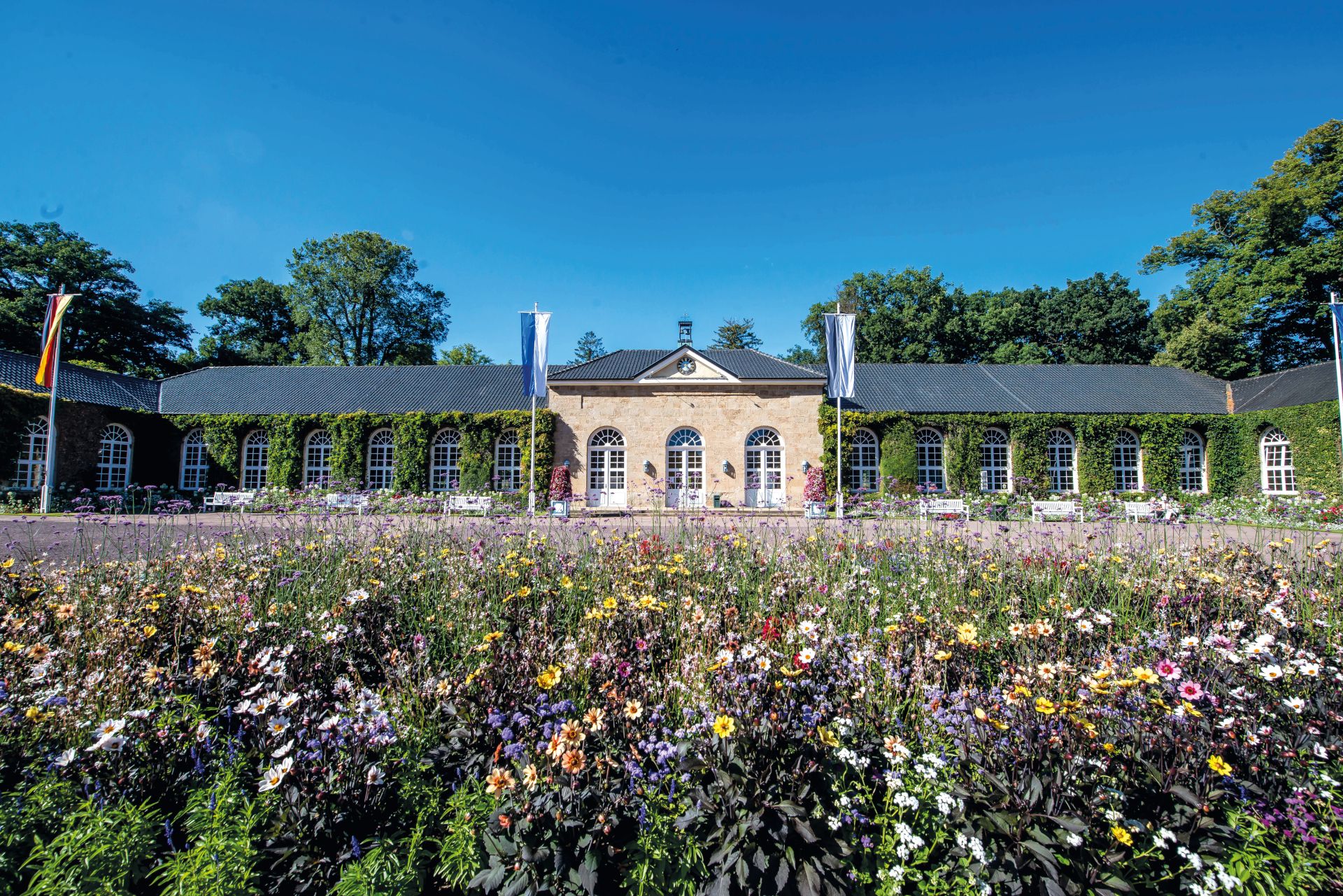
A gentle morning mist hangs over the vast meadows of the Gräflicher Park in Bad Driburg. The first rays of sunlight break through the canopy of majestic chestnut, linden, and oak trees, bathing the artfully arranged flower beds in warm light. The scent of roses, lavender, and freshly cut grass fills the air. Only the soft splashing of a water feature breaks the silence. Where might that sound be leading?
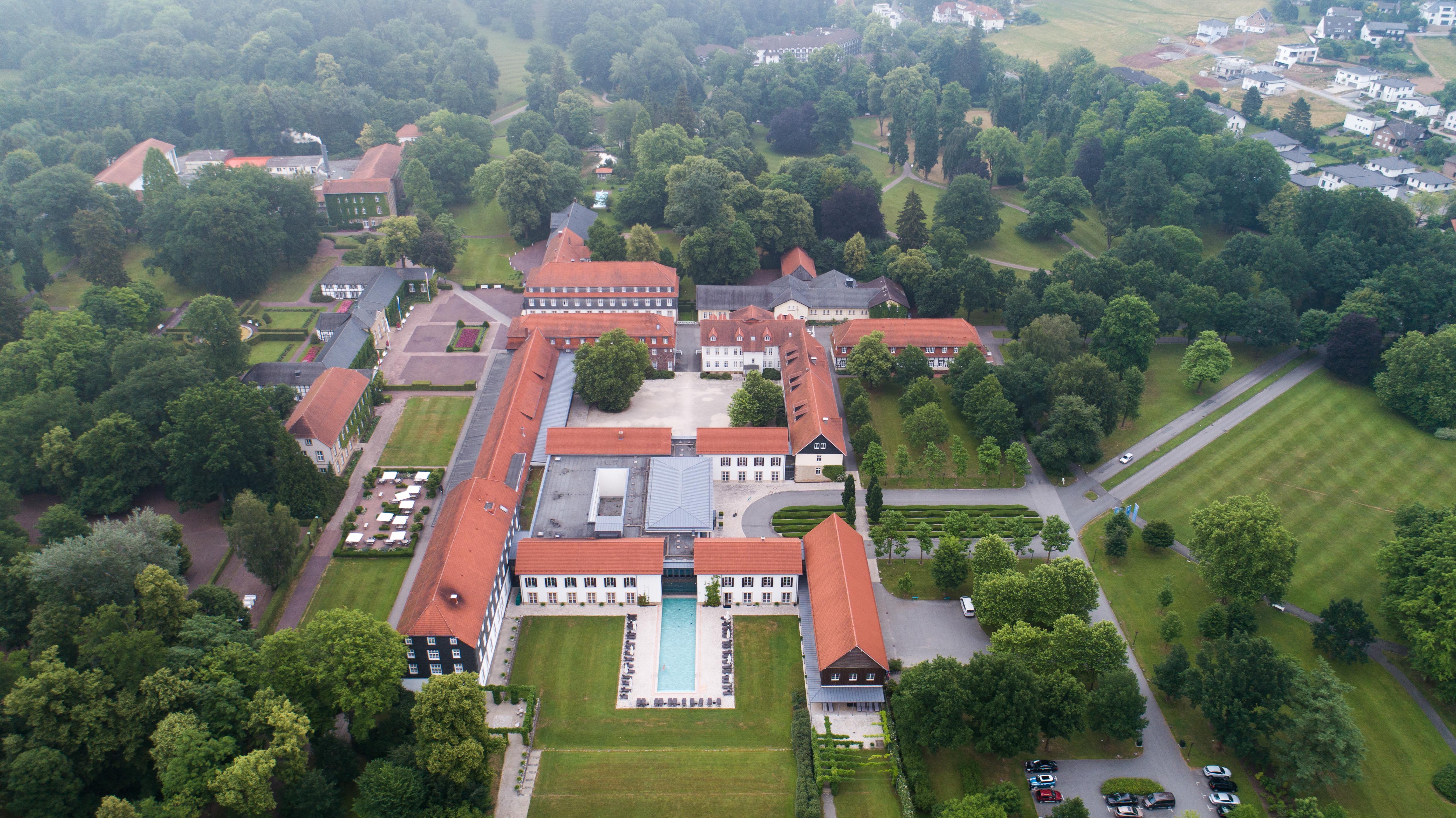
Anyone who enters this 64-hectare green space on the edge of the Teutoburg Forest embarks on a journey through centuries of garden art: The origins of the Gräflicher Park date back to 1781, when Caspar Heinrich von Sierstorpff, a nobleman with a passion for art, acquired the rights to the Driburg springs and vigorously developed the surrounding grounds in the years that followed. What once began as a spa resort evolved over the centuries into one of Germany’s most impressive garden complexes. To this day, the park—designed in the style of an English landscape garden—remains family-owned and is maintained with great dedication.
This is evident in several themed gardens that offer guests a journey of discovery through various stylistic worlds of garden art: Particularly impressive, for example, is the rose garden created in 1932 by the British garden designer, photographer, and writer Peter Coats: Thousands of roses of the most diverse varieties bloom here in soft pastel shades and vibrant colors, framed by artfully trimmed boxwood hedges. In the midst of this scene stands a round, Greek-style columned temple. It is not only wedding couples who capture their most beautiful moments against this magical backdrop.
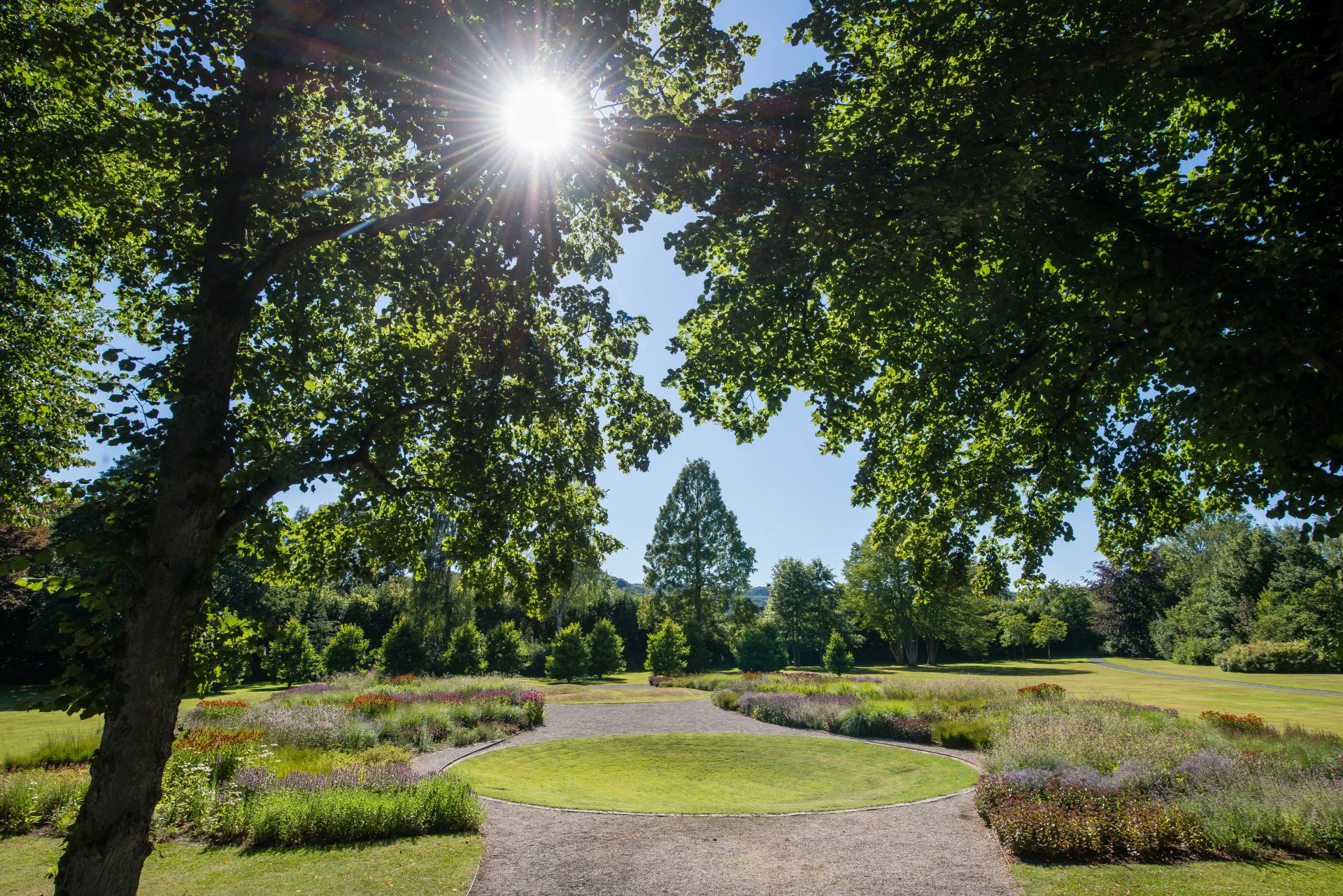
A few steps further south, visitors will find the next highlight. The perennial and grass garden by Dutch garden artist Piet Oudolf has been attracting visitors since 2009 with its nature-inspired design in a “natural meadow style.” It captivates with a ribbon of perennials meandering organically through the grounds, featuring a path in its center with rounded junctions that, in turn, frame circular lawns. The Piet Oudolf Garden appears both dynamic and perfectly formed. It is designed to evoke movement. The dense clumps of carefully coordinated plants—including yarrow, anemones, asters, echinacea, geraniums, irises, lemons, sage, and speedwell—emphasize this effect.
Healing and Mineral Springs
No less impressive is the lily meadow, which landscape architect Gilles Clément created behind the fountain arcades as the culmination of a white “waterfall.” Gypsophila, cosmos, and gladiolus embody the bubbling power of water. They symbolize a constantly changing natural world.
Speaking of water: Part of the park experience also includes relaxation at the historic resort with its spa facilities and guesthouses. This oasis for body and mind makes use of, among other things, the healing waters from the park’s own natural springs. The water flows into pools and is used for drinking cures.
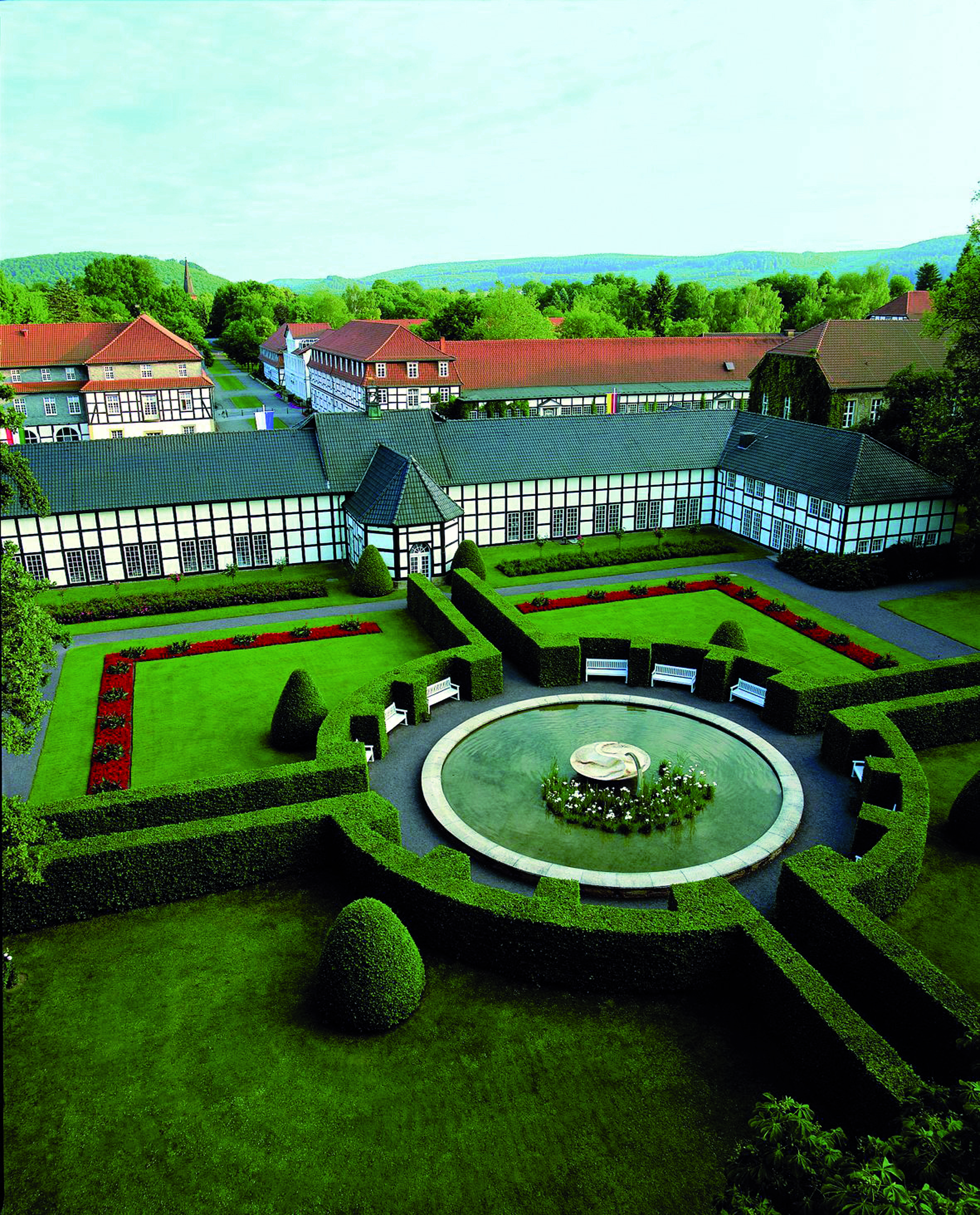
Other impressive highlights of the anchor garden of the “European Garden Heritage Network” (EGHN) include the hedge garden with a yin-yang water feature by British sculptor Angela Conner, the Hölderlin Grove with Diotima Island, the tulip meadow with 29,000 tulip bulbs, the maze featuring the walk-through sculpture “Head and Body” by artist Michael Sailstorfer, and an approximately 8-hectare wildlife reserve with fallow deer and Jacob sheep, home to about 50 animals.
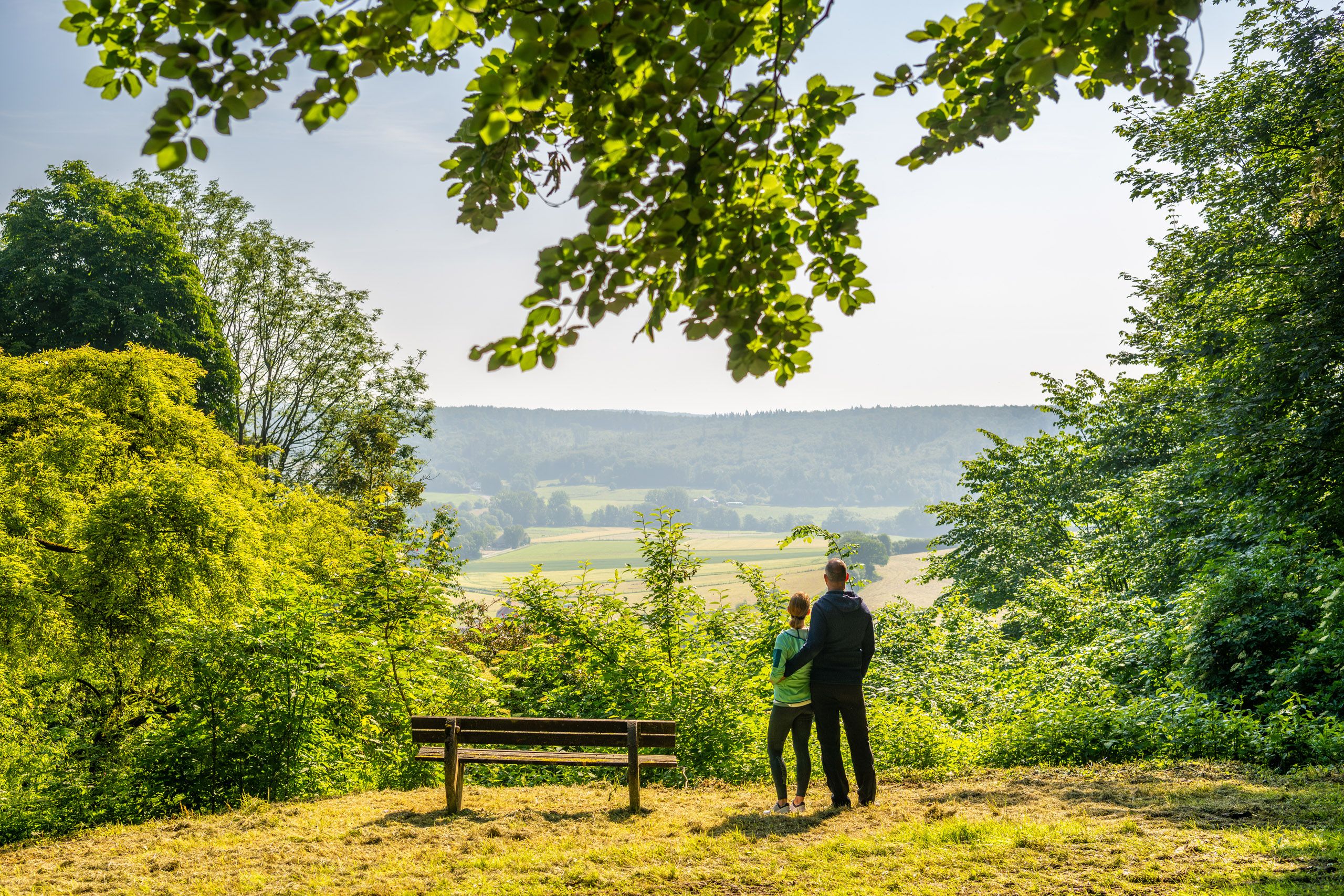
Travelers planning a longer stay in Bad Driburg should definitely visit the Driburg Therme and check out the Leonardo Glass Cube—a modern architectural masterpiece that serves as a showroom for glass products. For hiking enthusiasts, we recommend a tour along the 18-kilometer-long Sachsenring circular hiking trail, which passes by the Buddenberg Arboretum—home to a collection of more than 100 exotic trees—and the ruins of Iburg Castle. Fun Fact: Bad Driburg is named after the Iburg, earning it the title “Town at the Foot of the Iburg.”